Building Code
2018 International Building Code adopted statewide by the Oklahoma Uniform Building Code Commission
Oklahoma · Licensed Professional Engineering
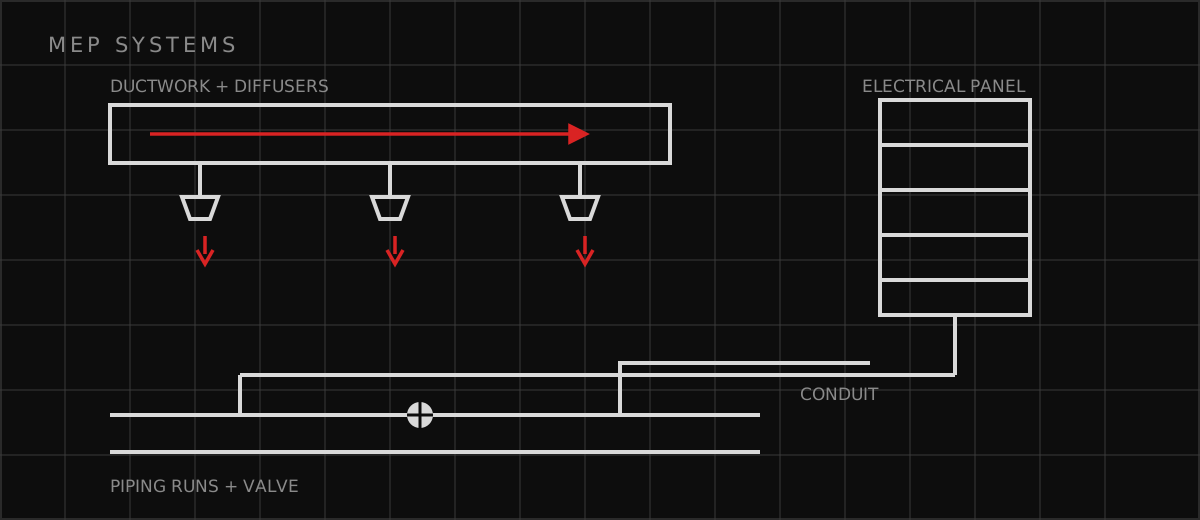
Coordinated mechanical, electrical, and plumbing design — engineered as one system, stamped by licensed professionals, and documented for fast permit approval.
Permit stuck waiting on a seal? Apex Grid's licensed engineers provide fast MEP review-and-seal for drawings in Oklahoma and across the state — reviewed under responsible charge and sealed for submittal to the applicable Oklahoma permitting authority. Typical turnaround is 3–5 business days once we have a complete package.
MEP engineering in Oklahoma has to respect a climate that swings hard in both directions — hot, humid summers give way to sharp winter cold snaps, so we size heating and cooling for a wide design-temperature band rather than a single dominant season. In climate zones 3A through 4B, that means balanced equipment selection, freeze protection on exposed piping, and controls that transition cleanly between modes. Because Oklahoma adopts the 2018 IECC statewide, our HVAC, lighting, and service designs are documented to that edition, with ASHRAE 90.1-2016 available as an alternate path. Storm resilience shapes the electrical scope more than in calmer states: we frequently coordinate standby power and hardened distribution for facilities that double as shelter or must stay operational through severe-weather events. Hail exposure also pushes us toward protected or elevated equipment locations on rooftop mechanical layouts.
Code adoptions change on multi-year cycles and many states allow local amendments. The researched source verification date is 2026-07-28; we verify the governing edition with your permitting jurisdiction at project kickoff.
Because the state adopts a uniform base code, the governing edition is more predictable than in home-rule states, but Oklahoma City and Tulsa administer their own plan review, amendments, and inspection programs. Storm-shelter and safe-room review has become a routine part of commercial and institutional permitting in tornado-prone jurisdictions.
Oklahoma offers licensure by comity for NCEES-record engineers and requires a Certificate of Authorization for firms. Digital seals are accepted per board rules.
Oklahoma's construction market is anchored by energy-sector facilities, aerospace and defense around Oklahoma City and Tulsa, healthcare expansion, and a growing logistics and data-center presence. Public-sector and education construction remains steady, with storm-resilience features increasingly specified.
Key markets: Oklahoma City, Tulsa, Norman, Broken Arrow, Edmond, Lawton.
Our highest-demand markets for mep engineering in Oklahoma.
For projects whose jurisdiction, discipline, and scope pass review, an available licensed PE and coordinated team can be identified. Send us your scope for a proposal; timing and fee depend on the project.
Request a ProposalReviewed and sealed by licensed PEs. “Solid engineering and clear communication from start to finish.” — Jason Mitchell, Principal Architect
Tell us what you need and where the project is — quotes back within 12–24 hours on qualifying scopes.