Building Code
Arkansas Fire Prevention Code, Volume II (based on the International Building Code) enforced statewide
Arkansas · Licensed Professional Engineering
Coordinated mechanical, electrical, and plumbing design — engineered as one system, stamped by licensed professionals, and documented for fast permit approval.
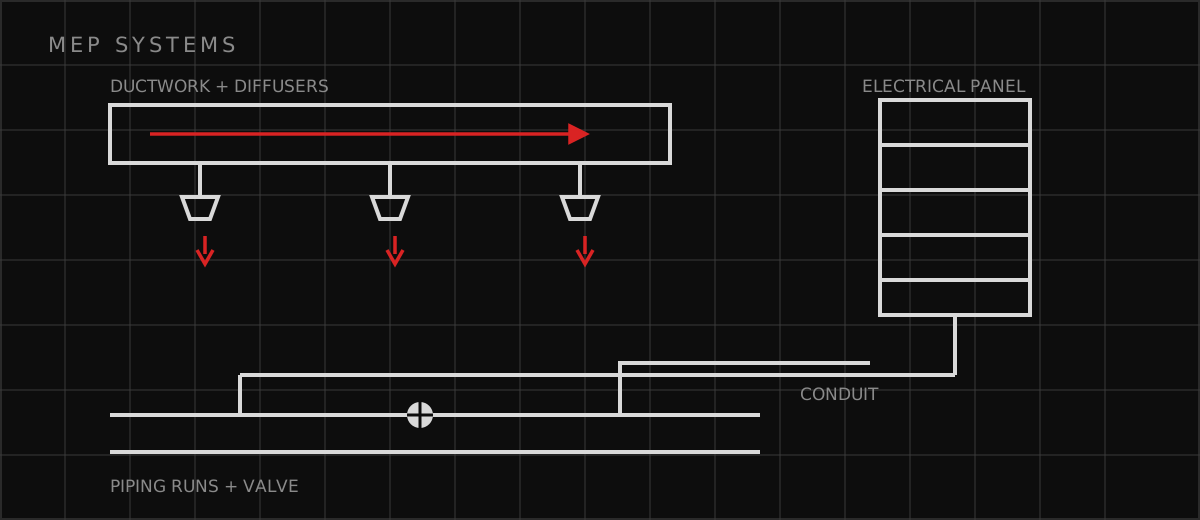
Permit stuck waiting on a seal? Apex Grid's licensed engineers provide fast MEP review-and-seal for drawings in Arkansas and across the state — reviewed under responsible charge and sealed for submittal to the applicable Arkansas permitting authority. Typical turnaround is 3–5 business days once we have a complete package.
MEP engineering in Arkansas serves a genuinely mixed climate: hot, humid summers in climate zone 3A demand real dehumidification, while winters — especially up in the 4A Ozark highlands — impose heating loads that hot-Southern states never see. We size equipment for that two-season reality rather than optimizing for cooling alone, and we detail freeze protection and combustion or heat-pump heating appropriate to the northern markets. Northwest Arkansas's explosive growth means a lot of our work is distribution, manufacturing, and corporate build-out, where right-sized electrical service, efficient large-volume HVAC, and lighting controls drive both cost and code compliance. Because the state adopts a recent IECC edition for commercial energy, our HVAC, lighting, and plumbing documentation is matched to the enforced edition with ASHRAE 90.1 available as an alternate. Severe-weather resilience — standby power and hardened distribution — is a frequent add for facilities that must stay operational.
Code adoptions change on multi-year cycles and many states allow local amendments. The researched source verification date is 2026-07-28; we verify the governing edition with your permitting jurisdiction at project kickoff.
Statewide enforcement through the Fire Prevention Code gives Arkansas a consistent commercial baseline, but Little Rock and the fast-growing Northwest Arkansas cities (Fayetteville, Springdale, Bentonville) administer their own building departments. Northwest Arkansas review is busy given the Walmart/Tyson/J.B. Hunt corporate corridor, and Mississippi-corridor projects add floodplain and seismic scrutiny.
Arkansas offers licensure by comity for NCEES-record engineers and requires a Certificate of Authorization for firms. Electronic seals are accepted per board rules.
Arkansas construction is concentrated in the Northwest Arkansas boom — corporate headquarters, logistics, healthcare, and higher education fueled by Walmart, Tyson, and J.B. Hunt — plus steady public and institutional work in Central Arkansas. Distribution and manufacturing facilities are a persistent driver statewide.
Key markets: Little Rock, Fayetteville, Fort Smith, Springdale, Jonesboro, Bentonville.
Our highest-demand markets for mep engineering in Arkansas.
For projects whose jurisdiction, discipline, and scope pass review, an available licensed PE and coordinated team can be identified. Send us your scope for a proposal; timing and fee depend on the project.
Request a ProposalReviewed and sealed by licensed PEs. “Solid engineering and clear communication from start to finish.” — Jason Mitchell, Principal Architect
Tell us what you need and where the project is — quotes back within 12–24 hours on qualifying scopes.