Building Code
Local adoption of the International Building Code (most Front Range jurisdictions on 2018 or 2021 IBC)
Colorado · Licensed Professional Engineering
Coordinated mechanical, electrical, and plumbing design — engineered as one system, stamped by licensed professionals, and documented for fast permit approval.
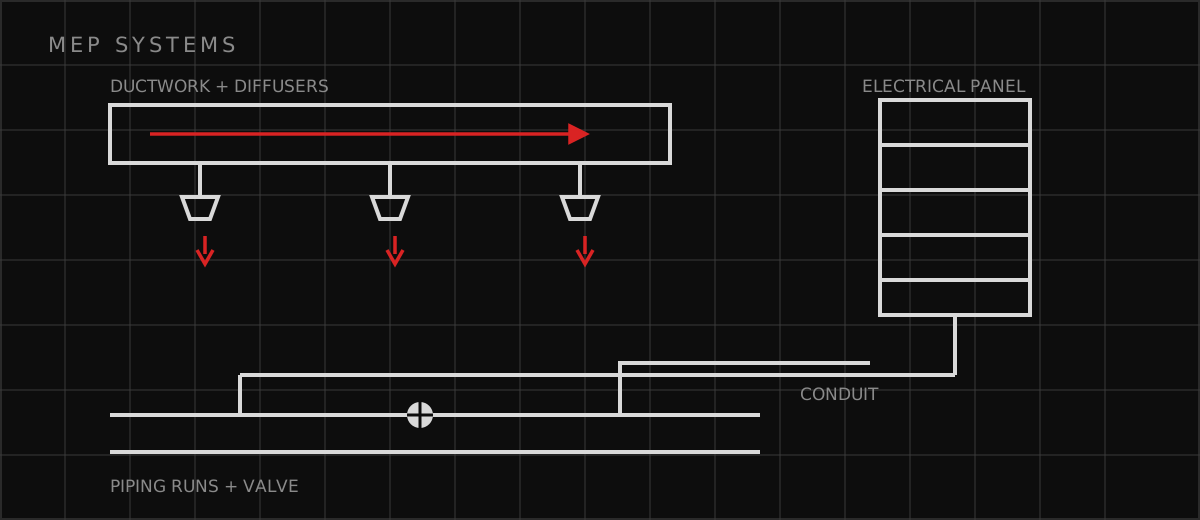
Permit stuck waiting on a seal? Apex Grid's licensed engineers provide fast MEP review-and-seal for drawings in Colorado and across the state — reviewed under responsible charge and sealed for submittal to the applicable Colorado permitting authority. Typical turnaround is 3–5 business days once we have a complete package.
MEP engineering in Colorado has to account for altitude before anything else — at Denver's mile-high elevation and higher in the mountains, air density drops, so combustion equipment, cooling capacity, fan systems, and pressurization all require altitude corrections that flatland engineers routinely miss. The climate is cold and sunny with big diurnal swings, so we lean heavily on economizers and design robust heating with attention to the strong passive solar gain through south glazing. Denver's Energize Denver benchmarking ordinance and Boulder's reach codes push electrification and heat-pump adoption, so we increasingly design heat-pump and hybrid systems and coordinate with Xcel Energy's commercial efficiency programs. Because Colorado has no statewide code, we confirm each jurisdiction's adopted mechanical and energy editions up front and document compliance to the exact edition the permitting city enforces.
Code adoptions change on multi-year cycles and many states allow local amendments. The researched source verification date is 2026-07-28; we verify the governing edition with your permitting jurisdiction at project kickoff.
Front Range permitting varies by home-rule municipality: Denver and Boulder maintain rigorous, sustainability-focused review, while suburban and plains jurisdictions can move faster. Expansive-soils documentation and geotechnical reports are standard, and Denver's Energize Denver program adds performance-tracking obligations for larger existing buildings.
Colorado licenses PEs by endorsement for qualified out-of-state applicants and accepts electronic seals for digital submittals.
Colorado's construction market spans the Denver metro's data-center, life-science, and warehouse growth, aerospace and defense in Colorado Springs, and steady expansion in Fort Collins and the northern Front Range. Aggressive municipal decarbonization and electrification policies are reshaping commercial MEP and energy design.
Key markets: Denver, Colorado Springs, Aurora, Fort Collins, Boulder, Grand Junction.
Our highest-demand markets for mep engineering in Colorado.
For projects whose jurisdiction, discipline, and scope pass review, an available licensed PE and coordinated team can be identified. Send us your scope for a proposal; timing and fee depend on the project.
Request a ProposalReviewed and sealed by licensed PEs. “Solid engineering and clear communication from start to finish.” — Jason Mitchell, Principal Architect
Tell us what you need and where the project is — quotes back within 12–24 hours on qualifying scopes.