Building Code
South Carolina Building Codes (mandatory statewide minimum), based on the 2021 I-Codes
South Carolina · Licensed Professional Engineering
Coordinated mechanical, electrical, and plumbing design — engineered as one system, stamped by licensed professionals, and documented for fast permit approval.
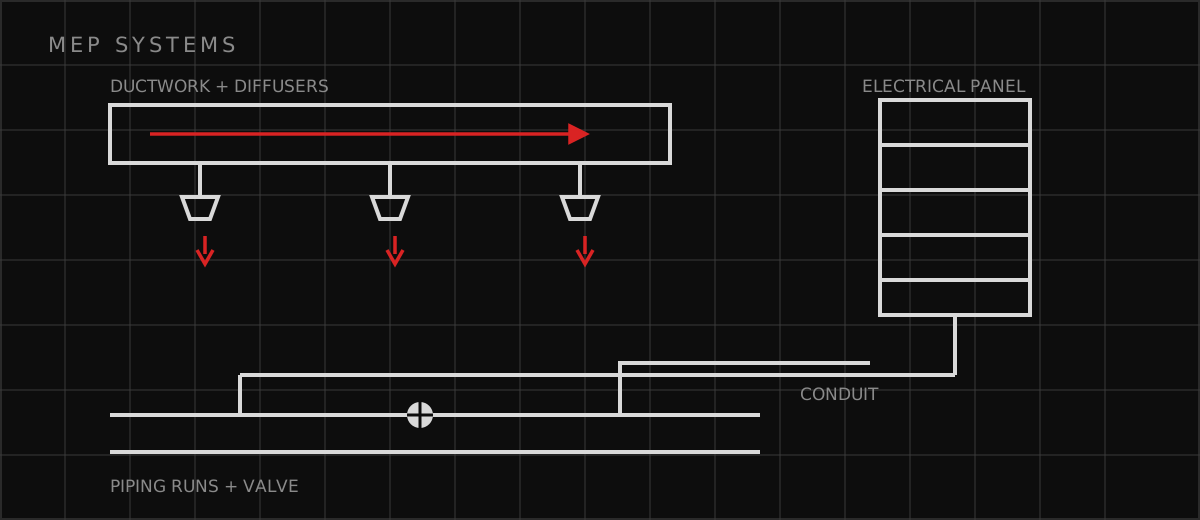
Permit stuck waiting on a seal? Apex Grid's licensed engineers provide fast MEP review-and-seal for drawings in South Carolina and across the state — reviewed under responsible charge and sealed for submittal to the applicable South Carolina permitting authority. Typical turnaround is 3–5 business days once we have a complete package.
MEP engineering in South Carolina is a hot-humid, cooling-and-latent-load discipline: across the 3A climate, dehumidification is the make-or-break design goal, and systems sized only for peak sensible cooling leave Lowcountry buildings damp and mold-prone through long, muggy seasons. We engineer for humidity control, generous outdoor-air treatment, and condensate management as first-order concerns. Because South Carolina's adopted energy code trails its building code, we confirm the effective energy edition before running COMcheck or ASHRAE 90.1, and we typically design above the older adopted energy floor to meet owner and lender expectations. The Upstate's advanced-manufacturing plants demand rugged process-adjacent HVAC, compressed air, and heavy electrical service, while Charleston's port-logistics and aerospace facilities push large ventilation and power loads. Utility rate structures (Dominion Energy SC, Duke) inform how we stage electrical service and manage demand.
Code adoptions change on multi-year cycles and many states allow local amendments. The researched source verification date is 2026-07-28; we verify the governing edition with your permitting jurisdiction at project kickoff.
With a mandatory statewide minimum code, technical baselines are consistent, but adopted editions and review pace vary between the booming Charleston and Greenville-Spartanburg (Upstate) markets and smaller jurisdictions. Coastal counties add OCRM/DHEC coastal-zone review and stormwater permitting, and the Lowcountry's flood and surge exposure makes floodplain compliance a routine permitting gate.
South Carolina licenses engineers by comity and recognizes NCEES records; the board permits digital signatures and electronic seals meeting its authentication requirements for electronic submittals.
The Upstate is a major advanced-manufacturing corridor — automotive (BMW), aerospace, and tire production anchor the I-85 belt — while Charleston combines port logistics, aerospace (Boeing), and rapid residential growth. Myrtle Beach and the coast run tourism and retirement construction; the whole state ranks among the faster-growing in the Southeast.
Key markets: Charleston, Columbia, Greenville, Mount Pleasant, Rock Hill, Myrtle Beach.
Our highest-demand markets for mep engineering in South Carolina.
For projects whose jurisdiction, discipline, and scope pass review, an available licensed PE and coordinated team can be identified. Send us your scope for a proposal; timing and fee depend on the project.
Request a ProposalReviewed and sealed by licensed PEs. “Solid engineering and clear communication from start to finish.” — Jason Mitchell, Principal Architect
Tell us what you need and where the project is — quotes back within 12–24 hours on qualifying scopes.