Allentown · Lehigh County · Structural Engineering
Structural Engineering in Allentown, Pennsylvania
A Allentown structural engineering scope has to respond to making warehouse, mill, and downtown-reuse structures reliable over variable Lehigh Valley ground. Apex Grid helps owners organize the facts, documents, and agency questions without promising licensure, approval, coverage, or a review timeline.
Permit authority
The Bureau reviews UCC structural documents; Planning, historic review, and the conservation district may have separate jurisdiction
Code context
Existing-building, snow, wind, seismic, and geotechnical provisions should be cited by the responsible PE for the filing
Local conditions
limestone cavities, mine-related fill, 3–3.5-foot frost depth, and Lehigh floodplain elevations can control foundations and lateral details
Typical project types
I-78 distribution buildings, former silk-mill conversions, Hamilton Street mixed-use rehabs, and riverfront commercial additions
Karst before footing design
Allentown-area limestone can conceal voids and pinnable seams. A geotechnical program with borings and, where warranted, geophysics should precede a foundation decision; a standard spread-footing assumption is not a site investigation.
Mill conversions and vibration
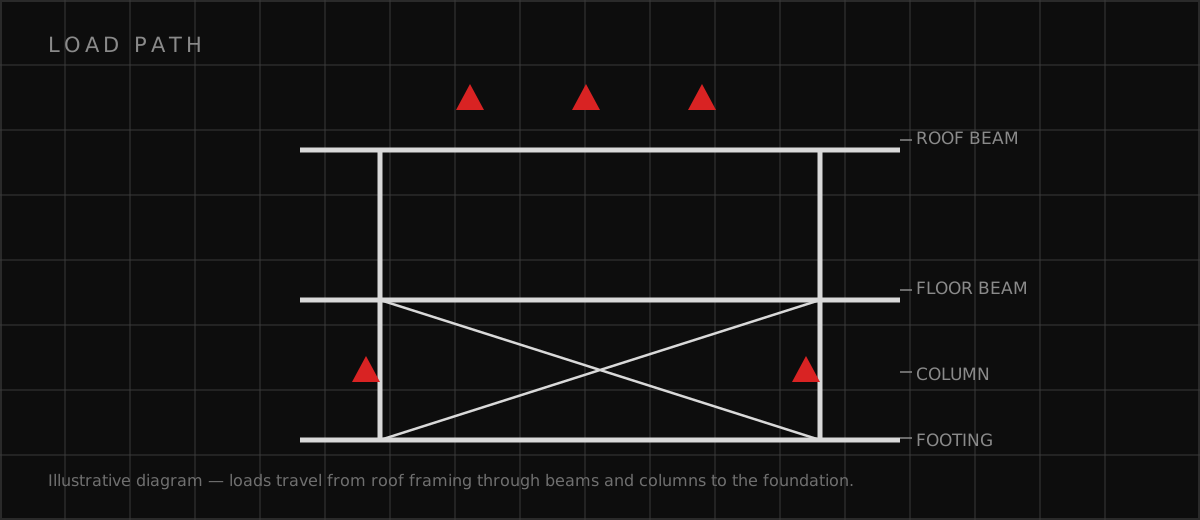
Historic mills combine heavy masonry, irregular timber or steel bays, and new residential or commercial live loads. Selective openings and a bay-by-bay load path review are more useful than relying on a reused 1950s plan.
Floodplain elevation coordination
A parcel beside the Lehigh River or Jordan Creek can require flood-elevation and enclosure decisions that affect finished floors, stairs, utilities, and structural durability. Those determinations remain with the AHJ and applicable floodplain rules.
Permit and engineering steps
- Confirm the Allentown UCC permit route, zoning and land-development status, floodplain mapping, and any historic or conservation-district review.
- Obtain a boundary/topographic survey, geotechnical report, existing-building records, and targeted openings for old mill or warehouse construction.
- Set snow, wind, seismic, frost, flood, vibration, and special-inspection criteria with the owner and responsible Pennsylvania PE.
- Submit sealed drawings and calculations to the Bureau and respond to written municipal or third-party review comments; no review timeline is promised.
Structural Engineering in Allentown, Pennsylvania FAQs
Why is karst a design issue in Allentown?
Are old Allentown mills easy to convert?
Does an Allentown floodplain map set the building elevation?
Official sources
These official sources support the local permit, code, utility, climate, and environmental context. The current AHJ and adopted requirements control.
Discuss your Allentown scope
Send the address, existing records, proposed use, authority correspondence, and requested deliverable. Responsible professional review and availability are confirmed before work begins.
Request a Project Review