Building Code
Ohio Building Code (OBC) — 2024 edition based on the 2021 IBC
Ohio · Licensed Professional Engineering
Coordinated mechanical, electrical, and plumbing design — engineered as one system, stamped by licensed professionals, and documented for fast permit approval.
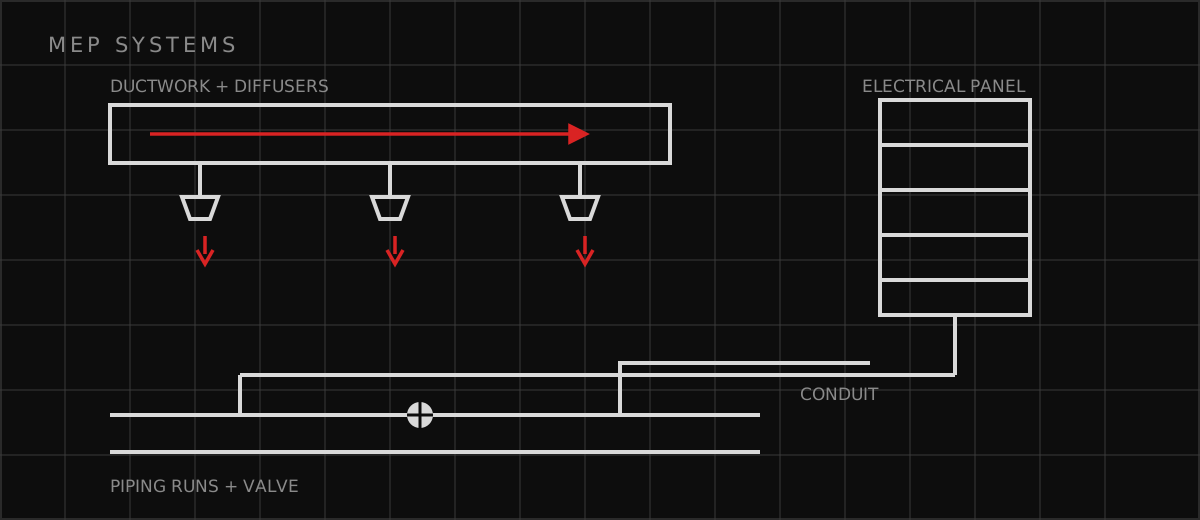
Permit stuck waiting on a seal? Apex Grid's licensed engineers provide fast MEP review-and-seal for drawings in Ohio and across the state — reviewed under responsible charge and sealed for submittal to the applicable Ohio permitting authority. Typical turnaround is 3–5 business days once we have a complete package.
Ohio's climate zone 5A puts winter heating and shoulder-season humidity control at the center of every mechanical design we deliver. Heating-degree-days are high, so we weigh condensing boilers, VRF, and cold-climate heat pumps against demand-charge structures from utilities like AEP Ohio and Duke Energy, and we design dehumidification that keeps humid Ohio summers from becoming a mold and comfort problem. Because energy requirements live inside the statewide Ohio Building Code, our compliance documentation is consistent across jurisdictions — a real advantage over home-rule states. On the electrical side, the data-center and semiconductor buildout east of Columbus has raised the bar on service capacity, redundancy, and coordination with the utility, and we size distribution and standby systems with that growth trajectory in mind. Plumbing and gas design follow the OBC-referenced standards, with freeze protection detailed for exposed piping given Ohio's 30-plus-inch frost depths.
Code adoptions change on multi-year cycles and many states allow local amendments. The researched source verification date is 2026-07-28; we verify the governing edition with your permitting jurisdiction at project kickoff.
Ohio's certified local building departments enforce the OBC, but a state-level Industrial Compliance division reviews certain projects and plan approvals. Larger cities like Columbus and Cincinnati run structured commercial plan review; the statewide code baseline keeps requirements consistent even as review timelines vary by department.
Ohio offers licensure by comity for engineers with an NCEES record; digital signatures and electronic seals are accepted for plan submittals when they meet board rules.
Central Ohio is one of the Midwest's hottest development corridors, anchored by large semiconductor and data-center investment east of Columbus, along with warehouse and advanced-manufacturing growth. Healthcare, higher-education, and logistics construction remain steady across the Cleveland, Cincinnati, and Dayton metros.
Key markets: Columbus, Cleveland, Cincinnati, Dayton, Toledo, Akron.
Our highest-demand markets for mep engineering in Ohio.
For projects whose jurisdiction, discipline, and scope pass review, an available licensed PE and coordinated team can be identified. Send us your scope for a proposal; timing and fee depend on the project.
Request a ProposalReviewed and sealed by licensed PEs. “Solid engineering and clear communication from start to finish.” — Jason Mitchell, Principal Architect
Tell us what you need and where the project is — quotes back within 12–24 hours on qualifying scopes.