Building Code
North Dakota State Building Code, based on the 2018 IBC
North Dakota · Licensed Professional Engineering
Coordinated mechanical, electrical, and plumbing design — engineered as one system, stamped by licensed professionals, and documented for fast permit approval.
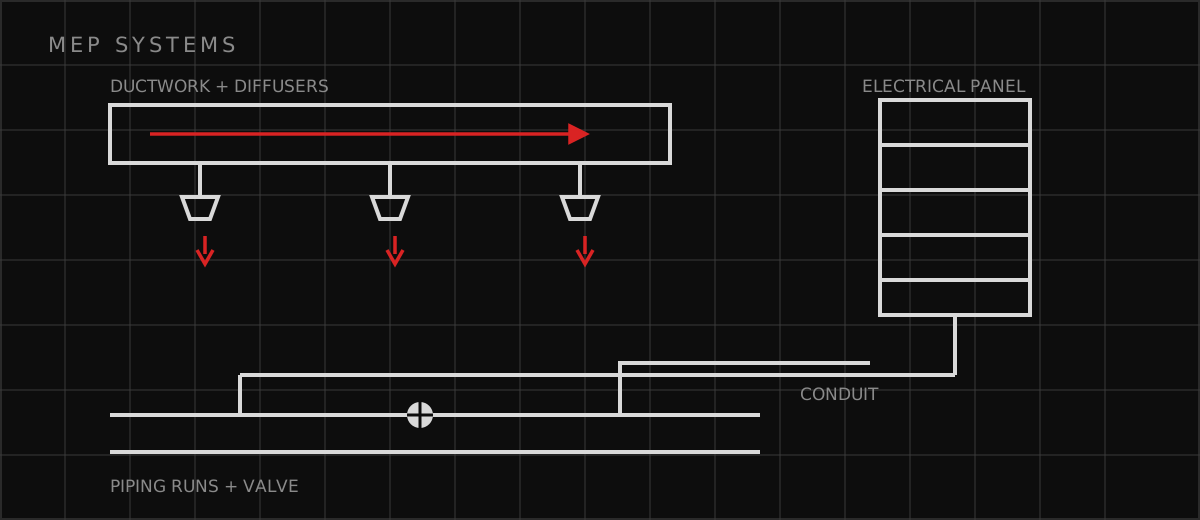
Permit stuck waiting on a seal? Apex Grid's licensed engineers provide fast MEP review-and-seal for drawings in North Dakota and across the state — reviewed under responsible charge and sealed for submittal to the applicable North Dakota permitting authority. Typical turnaround is 3–5 business days once we have a complete package.
MEP design in North Dakota is governed by extreme cold — design temperatures well below zero and one of the harshest heating climates in the lower 48 — so every mechanical decision starts with heating capacity, freeze protection, and preventing frozen coils, pipes, and condensate lines. We route and insulate to keep water out of exterior walls and unconditioned spaces, size heating plants for prolonged deep-cold events rather than average winters, and design ventilation with energy recovery because tempering frigid outdoor air is otherwise punishing. Where the State Building Code's 2018 IECC energy provisions are locally enforced we document compliance accordingly; where enforcement is light, lender and utility requirements often set the bar. The Bakken's industrial and workforce facilities demand rugged, serviceable systems, and open-prairie utility service and cold-weather generator/backup design factor into electrical planning for critical buildings.
Code adoptions change on multi-year cycles and many states allow local amendments. The researched source verification date is 2026-07-28; we verify the governing edition with your permitting jurisdiction at project kickoff.
Permitting is concentrated in the cities — Fargo, Bismarck, Grand Forks, Minot, and the Bakken-driven Williston area run active departments — while many rural jurisdictions administer limited or no local building code. Red River Valley flooding is a defining permitting and design constraint around Fargo and Grand Forks, and site access and utilities can dictate feasibility in the sparsely served west.
North Dakota grants comity licensure to NCEES-record engineers and accepts digital signatures and electronic seals meeting the board's authentication rules for electronic submittals.
North Dakota's economy runs on energy and agriculture: the Bakken oil play sustains industrial, workforce, and infrastructure construction in the northwest, while Fargo anchors healthcare, tech, and agribusiness growth. Cold-climate warehousing, agricultural processing, and energy-sector facilities are recurring building types.
Key markets: Fargo, Bismarck, Grand Forks, Minot, West Fargo, Williston.
Our highest-demand markets for mep engineering in North Dakota.
For projects whose jurisdiction, discipline, and scope pass review, an available licensed PE and coordinated team can be identified. Send us your scope for a proposal; timing and fee depend on the project.
Request a ProposalReviewed and sealed by licensed PEs. “Solid engineering and clear communication from start to finish.” — Jason Mitchell, Principal Architect
Tell us what you need and where the project is — quotes back within 12–24 hours on qualifying scopes.