Building Code
Locally adopted International Building Code (statewide minimum in coastal counties; editions vary elsewhere)
Mississippi · Licensed Professional Engineering
Coordinated mechanical, electrical, and plumbing design — engineered as one system, stamped by licensed professionals, and documented for fast permit approval.
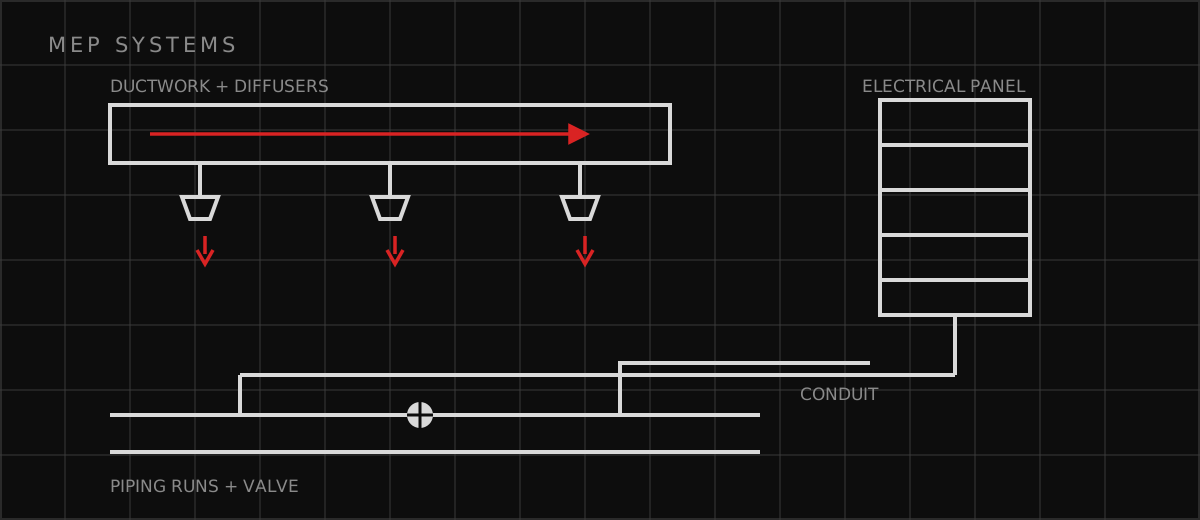
Permit stuck waiting on a seal? Apex Grid's licensed engineers provide fast MEP review-and-seal for drawings in Mississippi and across the state — reviewed under responsible charge and sealed for submittal to the applicable Mississippi permitting authority. Typical turnaround is 3–5 business days once we have a complete package.
MEP design across Mississippi is governed by humidity — the entire state sits in hot-humid climate zones 2A and 3A, so latent cooling load and moisture control drive mechanical decisions from the coast to the north. We prioritize dehumidification, positive building pressurization, and vapor-aware envelope coordination because condensation and mold are chronic risks in this climate. On the Gulf Coast, storm resilience adds another layer: standby power, elevated electrical rooms above base flood elevation, and equipment placement that survives surge and hurricane wind are routine on coastal work. Because commercial energy adoption varies by jurisdiction, we confirm the enforced IECC edition before finalizing HVAC, lighting, and plumbing documentation, defaulting to the recent IECC/ASHRAE 90.1 provisions used for state and public buildings. The through-line for Mississippi MEP is that humidity, not peak temperature, is usually the hardest thing to design around.
Code adoptions change on multi-year cycles and many states allow local amendments. The researched source verification date is 2026-07-28; we verify the governing edition with your permitting jurisdiction at project kickoff.
Permitting is bifurcated: the six coastal counties enforce robust wind and flood provisions with formal plan review born of Katrina recovery, while many inland jurisdictions administer lighter or variable code programs. Coastal projects layer in FEMA elevation certificates and windstorm detailing; the governing code and energy edition should be confirmed jurisdiction by jurisdiction.
Mississippi grants licensure by comity for qualified out-of-state PEs and requires a Certificate of Authority for firms. Electronic seals are accepted per board rules.
Mississippi's construction market spans Gulf Coast tourism, gaming, and port/industrial work; healthcare and higher education around Jackson; and fast-growing logistics and residential development in DeSoto County within the Memphis metro. Advanced manufacturing and Gulf shipbuilding provide steady industrial demand.
Key markets: Jackson, Gulfport, Biloxi, Hattiesburg, Southaven, Tupelo.
Our highest-demand markets for mep engineering in Mississippi.
For projects whose jurisdiction, discipline, and scope pass review, an available licensed PE and coordinated team can be identified. Send us your scope for a proposal; timing and fee depend on the project.
Request a ProposalReviewed and sealed by licensed PEs. “Solid engineering and clear communication from start to finish.” — Jason Mitchell, Principal Architect
Tell us what you need and where the project is — quotes back within 12–24 hours on qualifying scopes.