Building Code
Maine Uniform Building and Energy Code (MUBEC) — statewide framework, based on the 2015 I-Codes
Maine · Licensed Professional Engineering
Coordinated mechanical, electrical, and plumbing design — engineered as one system, stamped by licensed professionals, and documented for fast permit approval.
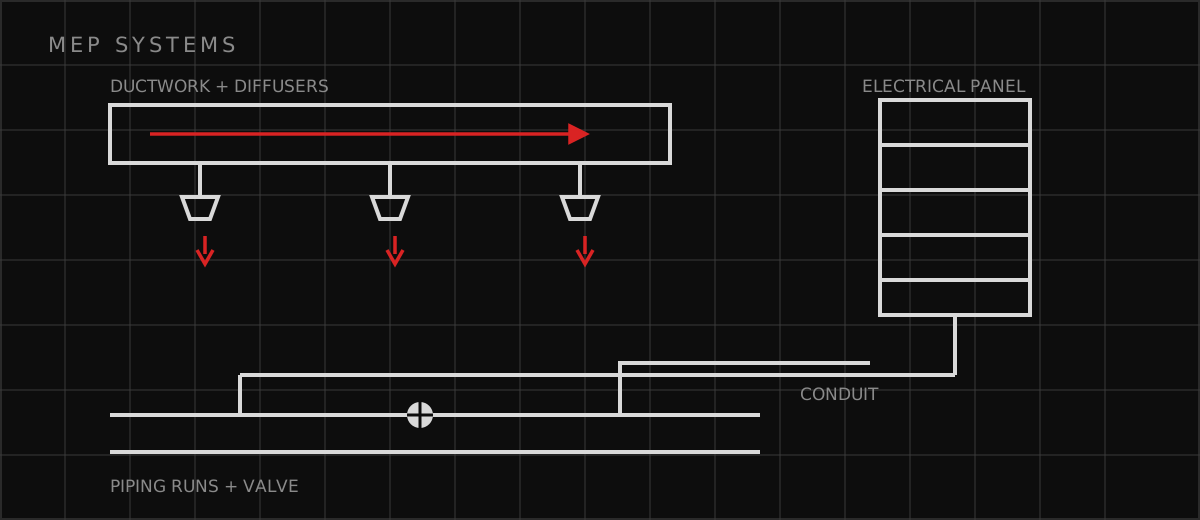
Permit stuck waiting on a seal? Apex Grid's licensed engineers provide fast MEP review-and-seal for drawings in Maine and across the state — reviewed under responsible charge and sealed for submittal to the applicable Maine permitting authority. Typical turnaround is 3–5 business days once we have a complete package.
MEP engineering in Maine is heating-dominated across a Zone 6A climate (near 7 in Aroostook County), so heating capacity, freeze protection, and envelope performance drive the mechanical design while cooling is a shorter-season concern. Maine has been a national leader in cold-climate heat pumps, and Efficiency Maine incentives make electrified heating a mainstream compliant strategy — we design heat-pump and heat-recovery systems that hold capacity at Maine design temperatures, with backup and defrost strategies that account for severe cold. Freeze protection on outdoor-air paths, hydronic loops, and sprinkler lines is essential. Along the coast, salt-air corrosion protection for rooftop and shoreline equipment is a real specification issue. Central Maine Power and Versant territories and rural service constraints shape electrical design, and for Portland's healthcare and life-science buildings we deliver the demanding ventilation and redundancy those occupancies require. Because enforcement varies by town, we confirm the AHJ's review process up front.
Code adoptions change on multi-year cycles and many states allow local amendments. The researched source verification date is 2026-07-28; we verify the governing edition with your permitting jurisdiction at project kickoff.
Because MUBEC enforcement is tied to municipal population and local adoption, review authority ranges from full code offices in Portland and Bangor to little or no local inspection in small towns. Shoreland zoning is a statewide Maine feature that heavily constrains development near water bodies, and Maine DEP administers stormwater and Site Location of Development ('Site Law') permits for larger projects, along with Natural Resources Protection Act reviews for wetlands and waterways.
Maine grants licensure by comity and accepts NCEES records; digital seals are accepted for electronic submittals. Commercial construction documents must be sealed by a Maine-licensed PE.
Maine's construction market centers on Portland-area healthcare, life sciences, and multifamily growth; Bangor and Augusta institutional and government work; a strong tourism, hospitality, and marine/boatbuilding sector along the coast; and forest-products and food-processing industry statewide. Aging building stock, an emphasis on heat-pump electrification, and coastal-resilience concerns shape much of the engineering demand.
Key markets: Portland, Lewiston, Bangor, Augusta, Biddeford, Brunswick.
Our highest-demand markets for mep engineering in Maine.
For projects whose jurisdiction, discipline, and scope pass review, an available licensed PE and coordinated team can be identified. Send us your scope for a proposal; timing and fee depend on the project.
Request a ProposalReviewed and sealed by licensed PEs. “Solid engineering and clear communication from start to finish.” — Jason Mitchell, Principal Architect
Tell us what you need and where the project is — quotes back within 12–24 hours on qualifying scopes.