Building Code
Louisiana State Uniform Construction Code (LSUCC), based on the 2021 IBC
Louisiana · Licensed Professional Engineering
Structural systems designed to the loads your state actually imposes — gravity, seismic, wind, and snow — with drawings built to get approved the first time.
Permit stuck waiting on a seal? Apex Grid's licensed engineers provide fast Structural review-and-seal for drawings in Louisiana and across the state — reviewed under responsible charge and sealed for submittal to the applicable Louisiana permitting authority. Typical turnaround is 3–5 business days once we have a complete package.
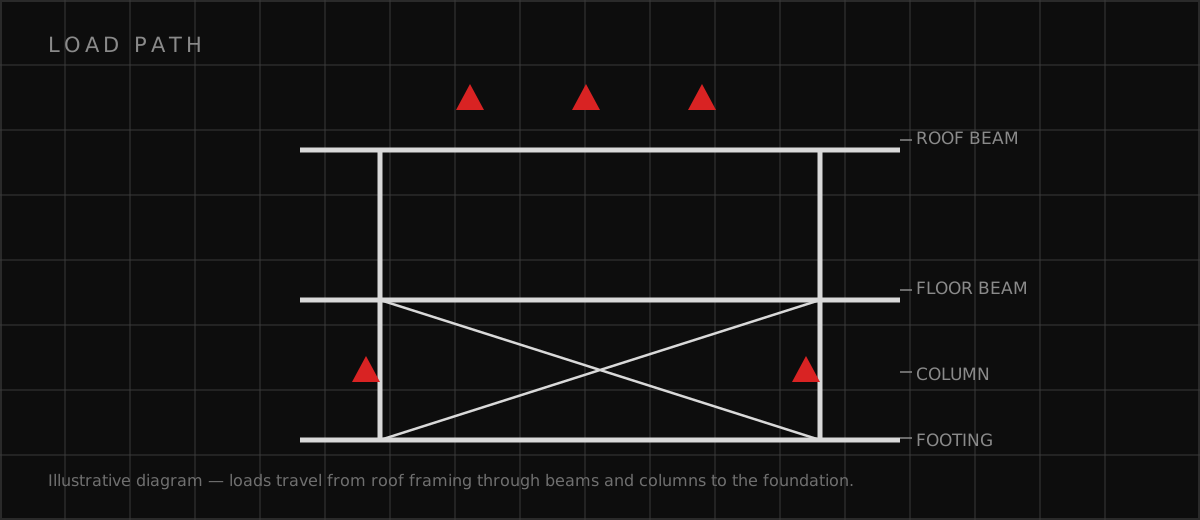
Structural engineering in Louisiana is a wind-and-water problem in which seismic barely registers. Most of the state sits in Seismic Design Category A, so lateral design is governed by hurricane wind — coastal and southern parishes design to 130–150+ mph with rigorous windborne-debris protection, continuous load paths, and roof-uplift detailing that reflect hard lessons from Katrina, Rita, Laura, and Ida. Below grade, the challenge is the ground itself: soft, compressible delta soils, high water tables, and ongoing coastal subsidence mean shallow foundations rarely work for anything substantial. We routinely design driven piles or auger-cast piles, coordinated with a geotechnical report that anticipates settlement and buoyancy. Flood elevation drives the whole structural datum, so lowest-floor and equipment elevations are set to base flood elevation plus freeboard. The design mindset is survivability: the frame must resist a hurricane while sitting on soils that want to move.
Code adoptions change on multi-year cycles and many states allow local amendments. The researched source verification date is 2026-07-28; we verify the governing edition with your permitting jurisdiction at project kickoff.
The statewide LSUCC gives Louisiana a more predictable code baseline than home-rule states, but parish and municipal offices administer plan review, and coastal projects layer in floodplain management, elevation certificates, and — in New Orleans — historic-district and drainage constraints. Hurricane-recovery experience has made local reviewers demanding on wind and flood detailing.
Louisiana grants licensure by comity for qualified out-of-state PEs and requires a Certificate of Authorization for firms. Digital seals are accepted on electronic submittals per board rules.
Louisiana's construction market is shaped by Gulf Coast industry — LNG export terminals, petrochemical plants along the river corridor, and port infrastructure — plus healthcare, higher education, and ongoing hurricane-resilience rebuilding. Insurance and elevation requirements heavily influence coastal commercial feasibility.
Key markets: New Orleans, Baton Rouge, Shreveport, Lafayette, Lake Charles, Metairie.
Our highest-demand markets for structural engineering in Louisiana.
For projects whose jurisdiction, discipline, and scope pass review, an available licensed PE and coordinated team can be identified. Send us your scope for a proposal; timing and fee depend on the project.
Request a ProposalReviewed and sealed by licensed PEs. “Solid engineering and clear communication from start to finish.” — Jason Mitchell, Principal Architect
Tell us what you need and where the project is — quotes back within 12–24 hours on qualifying scopes.