Building Code
Florida Building Code, 8th Edition (2023)
Florida · Licensed Professional Engineering
Structural systems designed to the loads your state actually imposes — gravity, seismic, wind, and snow — with drawings built to get approved the first time.
Permit stuck waiting on a seal? Apex Grid's licensed engineers provide fast Structural review-and-seal for drawings in Florida and across the state — reviewed under responsible charge and sealed for submittal to the applicable Florida permitting authority. Typical turnaround is 3–5 business days once we have a complete package.
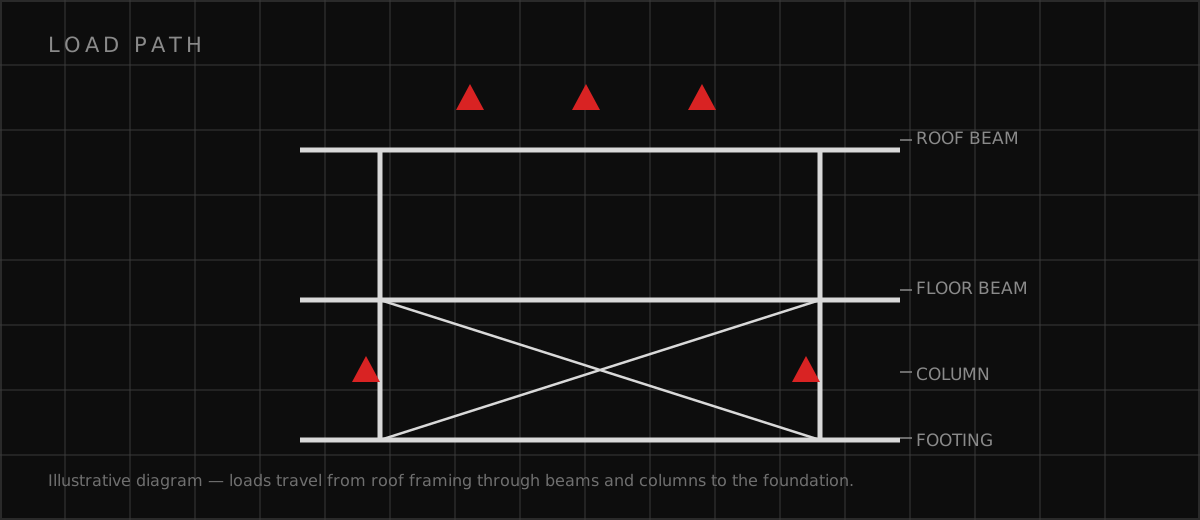
Florida structural design is defined almost entirely by wind — seismic is negligible statewide (SDC A) and snow is zero, so the hurricane is the governing event. Ultimate design wind speeds run from roughly 140 mph inland to 170+ mph in the High-Velocity Hurricane Zone covering Miami-Dade and Broward, where the Florida Building Code imposes the nation's most stringent requirements: mandatory windborne-debris protection, continuous load paths, and product approval (NOA or Florida Product Approval) for building components. We detail roof uplift, cladding attachment, and connection continuity to survive design-level storms, and we set the structural datum by FEMA base flood elevation plus freeboard because surge and flood are inseparable from wind here. High water tables and central-Florida karst/sinkhole conditions further constrain foundations, frequently driving deep foundations and geotechnical coordination. In Florida, the whole structural philosophy is survivability against a hurricane while sitting on wet, sometimes unstable ground.
Code adoptions change on multi-year cycles and many states allow local amendments. The researched source verification date is 2026-07-28; we verify the governing edition with your permitting jurisdiction at project kickoff.
Florida's statewide code makes the edition predictable, but permitting rigor is high — especially in the High-Velocity Hurricane Zone (Miami-Dade and Broward), where products require Notice of Acceptance (NOA) or Florida Product Approval and reviewers scrutinize wind and flood detailing. Coastal and low-lying jurisdictions layer in FEMA elevation certificates, and threshold buildings trigger special-inspector requirements.
Florida grants licensure by endorsement for qualified out-of-state PEs and requires a Certificate of Authorization for firms. Digital signatures and seals are accepted on electronic submittals per board rules.
Florida is one of the nation's most active construction markets, driven by relentless in-migration, tourism and hospitality, healthcare for a large retiree population, logistics and port expansion, and a booming residential and mixed-use pipeline across Miami, Orlando, Tampa, and Jacksonville. Hurricane resilience and insurance pressures shape nearly every commercial decision.
Key markets: Miami, Orlando, Tampa, Jacksonville, Fort Lauderdale, West Palm Beach.
Our highest-demand markets for structural engineering in Florida.
For projects whose jurisdiction, discipline, and scope pass review, an available licensed PE and coordinated team can be identified. Send us your scope for a proposal; timing and fee depend on the project.
Request a ProposalReviewed and sealed by licensed PEs. “Solid engineering and clear communication from start to finish.” — Jason Mitchell, Principal Architect
Tell us what you need and where the project is — quotes back within 12–24 hours on qualifying scopes.