New Orleans hurricane-aware load paths and existing-building assessment
Structural Engineering for New Orleans Projects
New Orleans projects must respond to new orleans’ low subsiding ground, high water table, intense rainfall, hurricane wind and surge exposure, soft deltaic soils, salt air, and historic masonry make elevation, corrosion, drainage, and existing-condition checks central. This structural engineering scope connects those facts to the responsible AHJ, utility owners, and a documented correction workflow.
Permit authority
City of New Orleans Safety and Permits is the primary local permit contact. Safety and Permits may be joined by the City Planning Commission, historic-district, resilience, floodplain, fire, right-of-way, and Sewerage and Water Board reviews; Jefferson and St. Bernard parish parcels follow other AHJs. The responsible Louisiana PE confirms discipline responsibility and the documents accepted for this project.
Code context
The Louisiana State Uniform Construction Code and local AHJ confirm the applicable adopted IBC/IRC edition, amendments, wind and flood criteria, existing-building provisions, special inspections, and resilience requirements. The calculations should identify the actual criteria.
Local conditions
New Orleans’ low subsiding ground, high water table, intense rainfall, hurricane wind and surge exposure, soft deltaic soils, salt air, and historic masonry make elevation, corrosion, drainage, and existing-condition checks central.
Typical project types
Raised residential additions and ADUs, historic masonry renovations, hurricane repairs, industrial buildings, rooftop equipment, schools, and commercial shells.
New Orleans: Existing buildings after weather and time
New openings, roof repairs, elevated additions, and ADUs often meet undocumented framing, corrosion, prior storm damage, or settlement. Measured conditions and permit records should separate verified construction from assumptions. Safety and Permits may be joined by the City Planning Commission, historic-district, resilience, floodplain, fire, right-of-way, and Sewerage and Water Board reviews; Jefferson and St. Bernard parish parcels follow other AHJs.
New Orleans: Coastal and delta foundations
Soft deltaic or alluvial soils, high groundwater, subsidence, fill, scour, and flood-elevation constraints change footing, pile, connection, and retaining questions. Survey, geotechnical input, and flood data should be reconciled. The relevant utility is Sewerage and Water Board of New Orleans; coastal context is provided by Louisiana Coastal Protection and Restoration Authority.
New Orleans: Continuous wind and flood load paths
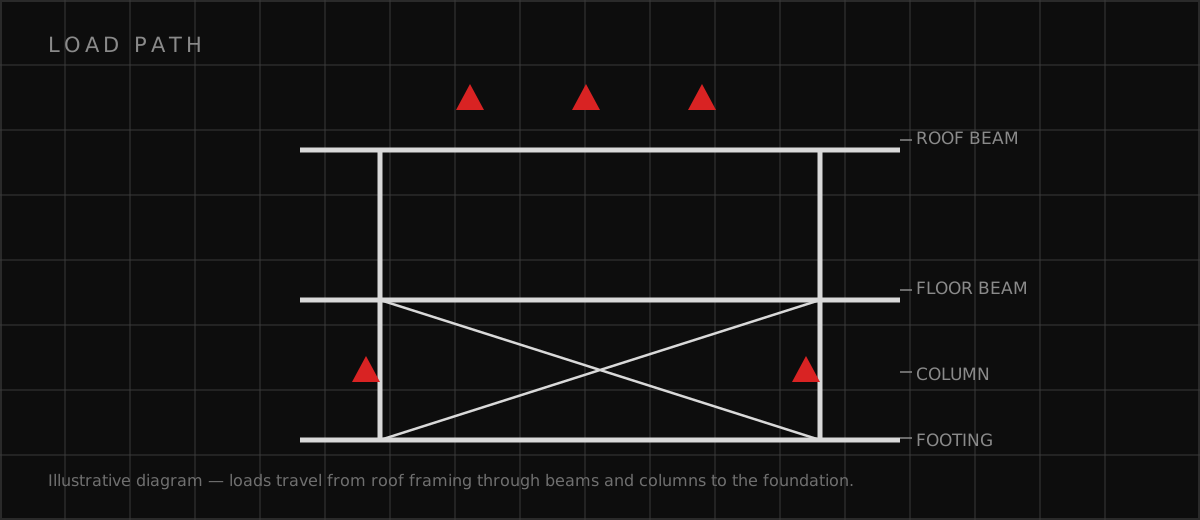
Plans and calculations should show roof-to-foundation connections, uplift, lateral resistance, elevated construction, openings, temporary support, and special inspections. Plan-check corrections should be coordinated with civil and MEP changes. Comments should be returned through City of New Orleans Safety and Permits, with DEQ, flood, coastal, and utility decisions preserved separately.
Permit and engineering steps
- Confirm the Louisiana parcel with the named AHJ, planning or historic status, flood map, elevation information, and storm or repair records before fixing the structural scope. For this New Orleans parcel, coordinate the handoff with City of New Orleans Safety and Permits.
- Record framing, foundation, corrosion, soil, elevation, equipment, and demolition evidence for the responsible engineer, identifying conditions that require field verification. For this New Orleans parcel, coordinate the handoff with City of New Orleans Safety and Permits.
- Coordinate structural sheets with civil drainage, finished elevations, flood openings, MEP penetrations, fire access, wind-resistant envelope details, and special inspections. For this New Orleans parcel, coordinate the handoff with City of New Orleans Safety and Permits.
- Answer each plan-check comment by sheet and calculation through the AHJ, issuing a controlled revision when field discovery or a storm-repair change alters the load path. For this New Orleans parcel, coordinate the handoff with City of New Orleans Safety and Permits.
Structural Engineering for New Orleans Projects FAQs
New Orleans: When does a Louisiana ADU need structural engineering?
New Orleans: Why are Lake Charles and Shreveport structural assumptions different?
New Orleans: How should storm-repair plan-check comments be answered?
Official sources
These official sources support the local permit, code, utility, climate, and environmental context. The current AHJ and adopted requirements control.
Discuss your New Orleans scope
Send the address, existing records, proposed use, authority correspondence, and requested deliverable. Responsible professional review and availability are confirmed before work begins.
Request a Project Review