Building Code
Kentucky Building Code (based on the International Building Code) enforced statewide as a mandatory minimum
Kentucky · Licensed Professional Engineering
Coordinated mechanical, electrical, and plumbing design — engineered as one system, stamped by licensed professionals, and documented for fast permit approval.
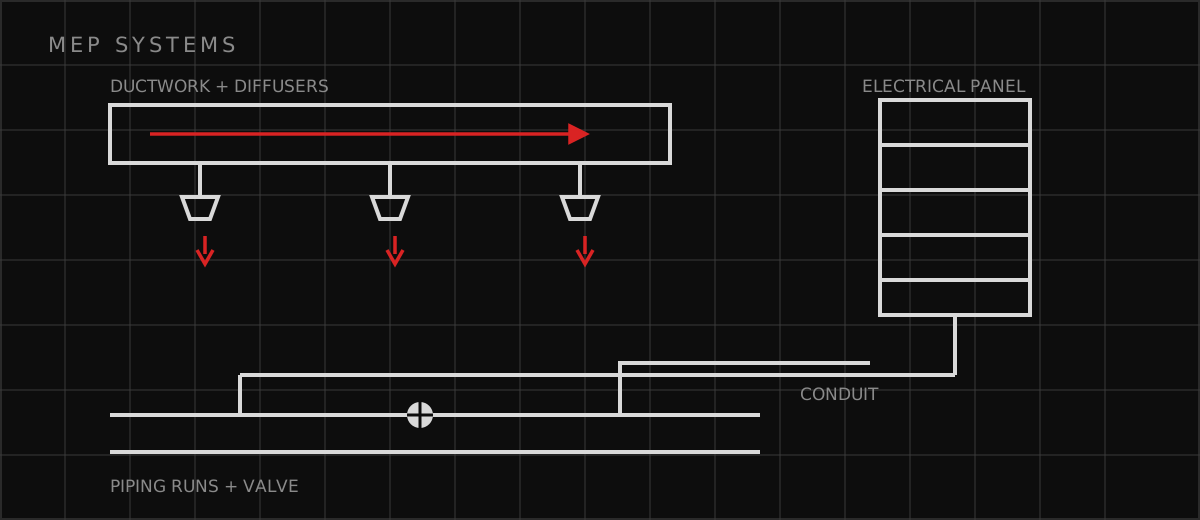
Permit stuck waiting on a seal? Apex Grid's licensed engineers provide fast MEP review-and-seal for drawings in Kentucky and across the state — reviewed under responsible charge and sealed for submittal to the applicable Kentucky permitting authority. Typical turnaround is 3–5 business days once we have a complete package.
MEP engineering in Kentucky serves a solidly four-season, zone 4A climate where heating and cooling loads are both substantial — designs that shortchange either season fail here. We size mechanical systems for humid summers and cold, freeze-prone winters alike, detailing freeze protection, combustion or heat-pump heating, and controls that transition cleanly between modes. Louisville's logistics engine and the statewide automotive/EV-battery wave mean much of our work is large industrial and distribution space, where efficient large-volume HVAC, right-sized electrical service, and process-power coordination dominate the design. Because Kentucky enforces a uniform statewide code, our HVAC, lighting, and plumbing documentation targets the IECC edition incorporated into the Kentucky Building Code with ASHRAE 90.1 as an alternate path — and that statewide consistency simplifies compliance planning across projects in different cities. Balanced seasonal performance and industrial-scale efficiency define Kentucky MEP work.
Code adoptions change on multi-year cycles and many states allow local amendments. The researched source verification date is 2026-07-28; we verify the governing edition with your permitting jurisdiction at project kickoff.
Kentucky's mandatory statewide code makes the governing edition predictable, and the state administers plan review for many project types alongside local building departments in Louisville, Lexington, and the northern-Kentucky cities within the Cincinnati metro. Karst and floodplain considerations frequently shape site review in central and river-corridor jurisdictions.
Kentucky offers licensure by comity for NCEES-record engineers and requires a Certificate of Authorization for firms. Electronic seals are accepted per board rules.
Kentucky's construction market is anchored by logistics (the UPS Worldport hub in Louisville), automotive and EV-battery manufacturing, bourbon-industry expansion, and healthcare. Northern Kentucky benefits from Cincinnati-metro growth, and Bowling Green's automotive sector adds steady industrial demand.
Key markets: Louisville, Lexington, Bowling Green, Owensboro, Covington, Florence.
Our highest-demand markets for mep engineering in Kentucky.
For projects whose jurisdiction, discipline, and scope pass review, an available licensed PE and coordinated team can be identified. Send us your scope for a proposal; timing and fee depend on the project.
Request a ProposalReviewed and sealed by licensed PEs. “Solid engineering and clear communication from start to finish.” — Jason Mitchell, Principal Architect
Tell us what you need and where the project is — quotes back within 12–24 hours on qualifying scopes.