Building Code
No statewide commercial building code — local adoption of the IBC
Kansas · Licensed Professional Engineering
Structural systems designed to the loads your state actually imposes — gravity, seismic, wind, and snow — with drawings built to get approved the first time.
Permit stuck waiting on a seal? Apex Grid's licensed engineers provide fast Structural review-and-seal for drawings in Kansas and across the state — reviewed under responsible charge and sealed for submittal to the applicable Kansas permitting authority. Typical turnaround is 3–5 business days once we have a complete package.
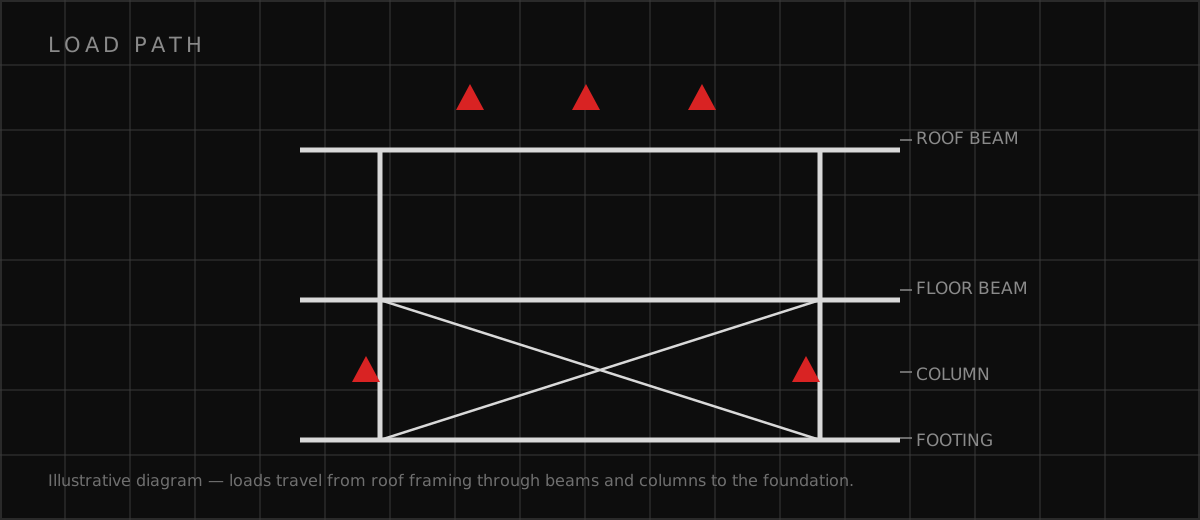
Wind is the defining structural driver in Kansas — the state sits in the heart of Tornado Alley, and while code design cannot economically resist a direct tornado strike, the frequency of severe straight-line winds and high design wind speeds (often 105–120 mph) makes uplift resistance, continuous load paths, and robust connections central to how we detail every roof and lateral system. Seismic demand is very low (SDC A–B) and seldom controls, though induced seismicity in south-central Kansas keeps the subject relevant for sensitive facilities. Snow loads on the ground are light — roughly 15–20 psf — and footings extend below the 30-to-36-inch frost line. The state's pervasive expansive clays put geotechnical coordination front and center, since soil-movement potential frequently dictates foundation type and slab detailing. With no code adopted at the state level, we pin the governing IBC edition to the AHJ and engineer to that basis.
Code adoptions change on multi-year cycles and many states allow local amendments. The researched source verification date is 2026-07-28; we verify the governing edition with your permitting jurisdiction at project kickoff.
Kansas permitting is local: Johnson County suburbs (Overland Park, Olathe), Wichita, and Topeka run structured commercial review with their own amendments and editions, while rural jurisdictions vary widely and some have minimal review. Confirming the governing code, edition, and energy requirements with the specific AHJ is the essential first step on any Kansas project.
Kansas grants licensure by comity/endorsement for NCEES-record engineers; electronic seals and digital signatures are accepted for plan submittals under board rules.
Kansas' construction market is anchored by aerospace and advanced manufacturing in Wichita (a global aviation hub), logistics and corporate development in the Johnson County/Kansas City suburbs, and agricultural processing and wind-energy infrastructure statewide. Data-center and distribution growth is expanding along the eastern corridors.
Key markets: Wichita, Overland Park, Kansas City (KS), Topeka, Olathe, Lawrence.
Our highest-demand markets for structural engineering in Kansas.
For projects whose jurisdiction, discipline, and scope pass review, an available licensed PE and coordinated team can be identified. Send us your scope for a proposal; timing and fee depend on the project.
Request a ProposalReviewed and sealed by licensed PEs. “Solid engineering and clear communication from start to finish.” — Jason Mitchell, Principal Architect
Tell us what you need and where the project is — quotes back within 12–24 hours on qualifying scopes.