Building Code
No single statewide commercial building code — local adoption of the IBC (Chicago runs its own code)
Illinois · Licensed Professional Engineering
Coordinated mechanical, electrical, and plumbing design — engineered as one system, stamped by licensed professionals, and documented for fast permit approval.
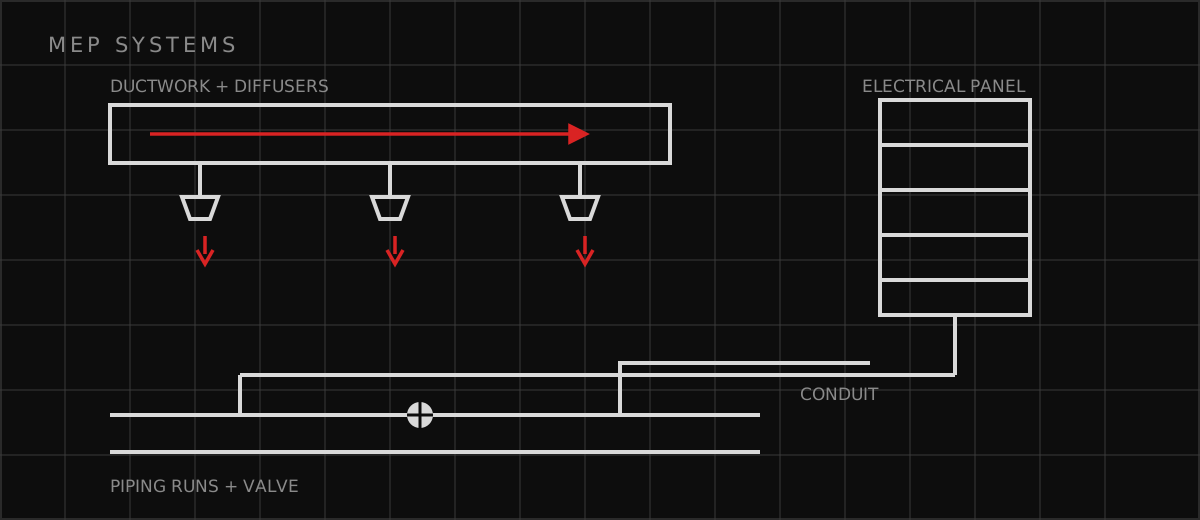
Permit stuck waiting on a seal? Apex Grid's licensed engineers provide fast MEP review-and-seal for drawings in Illinois and across the state — reviewed under responsible charge and sealed for submittal to the applicable Illinois permitting authority. Typical turnaround is 3–5 business days once we have a complete package.
Illinois MEP design is a study in contrasts: a cold, wind-exposed Chicago lakefront on one end and humid downstate summers on the other, all within climate zone 5A (4A in the far south). Heating loads dominate energy use, so we evaluate high-efficiency boilers, VRF, and cold-climate heat pumps and detail freeze protection for Chicago winters, while sizing dehumidification for muggy summers. A distinguishing feature of Illinois is the statewide energy code based on the 2021 IECC — one of the stricter Midwest baselines — so even where building-code adoption varies by town, our mechanical and lighting designs must meet a consistent, relatively aggressive energy standard. Electrically, the region's massive logistics and data-center buildout in the suburbs and the Joliet corridor drives large service sizing and utility coordination with ComEd and Ameren, and Chicago high-rise work brings its own emergency-power and life-safety demands under the Chicago Construction Codes.
Code adoptions change on multi-year cycles and many states allow local amendments. The researched source verification date is 2026-07-28; we verify the governing edition with your permitting jurisdiction at project kickoff.
Permitting in Illinois is highly localized. Chicago runs a rigorous, self-certification-eligible review under the Chicago Construction Codes, while suburban municipalities and downstate cities each set their own review processes and adopted editions. There is no statewide building permit, so early AHJ confirmation is essential — but the statewide energy code applies regardless of jurisdiction.
Illinois licenses engineers by endorsement for those with an NCEES record; electronic seals and digital signatures are accepted for plan submittals under IDFPR rules.
Chicagoland anchors one of the nation's largest logistics and industrial markets, with heavy warehouse and data-center development in the outer suburbs and Joliet/I-80 corridor. Downtown Chicago sustains high-rise, healthcare, and institutional work, while downstate activity centers on manufacturing, agriculture-adjacent processing, and higher education.
Key markets: Chicago, Aurora, Naperville, Joliet, Rockford, Springfield.
Our highest-demand markets for mep engineering in Illinois.
For projects whose jurisdiction, discipline, and scope pass review, an available licensed PE and coordinated team can be identified. Send us your scope for a proposal; timing and fee depend on the project.
Request a ProposalReviewed and sealed by licensed PEs. “Solid engineering and clear communication from start to finish.” — Jason Mitchell, Principal Architect
Tell us what you need and where the project is — quotes back within 12–24 hours on qualifying scopes.