Building Code
Idaho state-adopted International Building Code (2018 IBC with Idaho amendments)
Idaho · Licensed Professional Engineering
Coordinated mechanical, electrical, and plumbing design — engineered as one system, stamped by licensed professionals, and documented for fast permit approval.
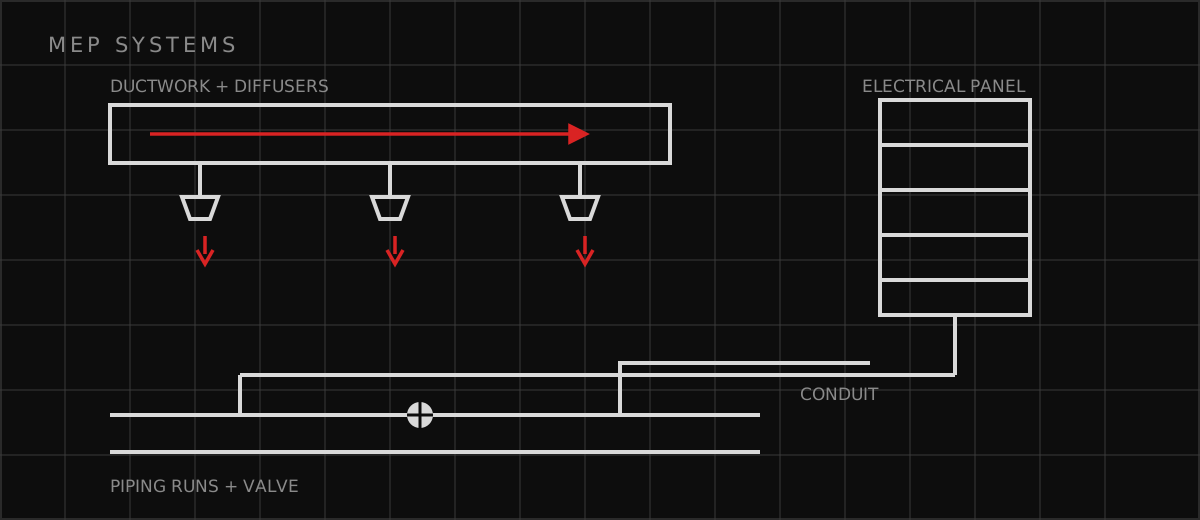
Permit stuck waiting on a seal? Apex Grid's licensed engineers provide fast MEP review-and-seal for drawings in Idaho and across the state — reviewed under responsible charge and sealed for submittal to the applicable Idaho permitting authority. Typical turnaround is 3–5 business days once we have a complete package.
Idaho MEP design contends with a true four-season, cold-winter/hot-dry-summer climate, so our mechanical systems deliver robust heating with freeze protection while managing significant summer cooling and the large diurnal swings that make economizer operation productive for much of the year. The low humidity across the Snake River Plain also makes evaporative and night-flush cooling viable on the right building types. At elevation in the central mountains and the Panhandle we apply altitude corrections to combustion and equipment capacity. The Treasure Valley's rapid growth — anchored by Micron's semiconductor expansion — drives large, reliable electrical services, and we coordinate with Idaho Power on capacity and commercial efficiency incentives. Mechanical and lighting compliance is documented to Idaho's statewide-adopted energy code, confirming the exact edition and state amendments the permitting jurisdiction enforces.
Code adoptions change on multi-year cycles and many states allow local amendments. The researched source verification date is 2026-07-28; we verify the governing edition with your permitting jurisdiction at project kickoff.
The fast-growing Treasure Valley (Boise, Meridian, Nampa) runs active plan review with strong growth pressure on drainage, traffic, and infrastructure; Ada County Highway District (ACHD) uniquely controls roads and much of the drainage in the Boise metro. Mountain and resort jurisdictions add snow-load and wildfire-interface scrutiny.
Idaho offers comity licensure for qualified out-of-state PEs and accepts electronic seals for digital plan submittals.
Idaho has been one of the fastest-growing states in the nation, led by the Treasure Valley's population boom, semiconductor expansion (Micron in Boise), warehouse and manufacturing growth, and resort development around Sun Valley and the Panhandle. This growth sustains strong demand for MEP, structural, and civil engineering.
Key markets: Boise, Nampa, Meridian, Idaho Falls, Coeur d'Alene, Pocatello.
Our highest-demand markets for mep engineering in Idaho.
For projects whose jurisdiction, discipline, and scope pass review, an available licensed PE and coordinated team can be identified. Send us your scope for a proposal; timing and fee depend on the project.
Request a ProposalReviewed and sealed by licensed PEs. “Solid engineering and clear communication from start to finish.” — Jason Mitchell, Principal Architect
Tell us what you need and where the project is — quotes back within 12–24 hours on qualifying scopes.