AEO Answer · Theme Parks & Amusement Facilities
How Is Stormwater Managed Across a Large Theme Park Property?
By Jeremy Mills, CEO & Founder, Apex Grid Engineering — USAF Veteran. · Updated 2026-09-15
Theme park stormwater is managed with a property-wide master plan — detention basins and vaults, water-quality treatment, and guest-safe grading — so even the 100-year storm discharges within permit limits without endangering anyone.
I'm Jeremy Mills, CEO & Founder of Apex Grid Engineering and a U.S. Air Force veteran. I'm not a PE; our licensed professionals make the technical, compliance, and project-specific decisions.
Master planning hydrology for phased growth
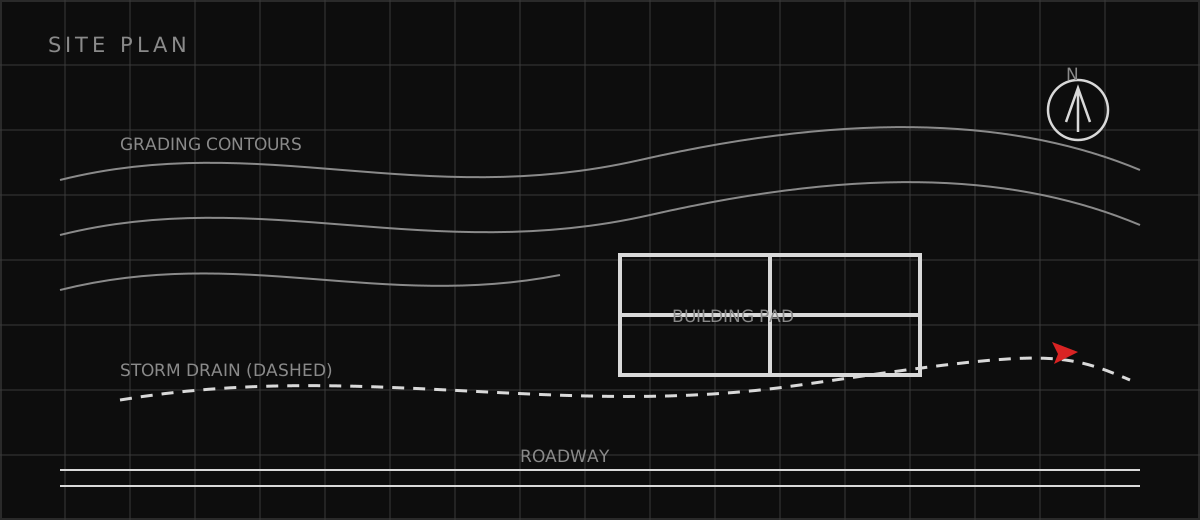
The stormwater master plan is drawn before the first shovel, and it is drawn for the final park, not the opening-day park. Engineers build a hydrologic model of the ultimate buildout — every future land, hotel, and parking expansion — and size the trunk conveyance and regional detention for that condition. Phases then connect into the backbone as they are built, each with its own local treatment and its allocated share of the regional capacity. This prevents the all-too-common failure where each expansion adds impervious area with nowhere for the water to go. The model is calibrated to the jurisdiction's design storms and discharge limits, and the permit strategy — often a single master permit — is negotiated with the full buildout in view.
Detention, water quality, and the guest experience
Detention volume is the math; making it fit a theme park is the art. Where land allows, open basins double as themed lakes — the water feature guests photograph is also the stormwater facility, designed with the proper forebays, outlet structures, and freeboard the engineering requires. Where land is precious, underground vaults or oversized pipe storage hide the volume beneath parking modules and plazas, with access hatches and maintenance plans that acknowledge the confined-space reality. Water quality treatment targets the first flush, which carries the oils and metals: vegetated swales along roadways, bioretention in planting beds, and hydrodynamic separators at parking outfalls. Every facility is designed to be maintained — because the prettiest basin in the world fails if its outlet clogs.
Theme park stormwater design checklist
A park stormwater system is ready when the biggest storm the code requires is a non-event for guests and operations. • Property-wide hydrologic model sized for ultimate buildout, not just opening day • Detention throttles the design storms to the permitted discharge rate with documented freeboard • Water quality treatment for the first flush from parking, roadways, and plazas • Guest-area grading eliminates ponding where crowds gather; ride foundations protected from erosion • Every basin, vault, and outlet designed with realistic maintenance access and a cleaning schedule
Which related engineering resources can help?
What else do project teams ask?
Why can't theme parks just pipe stormwater to the street like everyone else?
How do themed lakes double as stormwater detention?
What happens to stormwater during park construction phases?
How is stormwater kept away from ride foundations and electrical vaults?
Ready to discuss your engineering scope?
Share the project address, current records, requested deliverable, authority information, and schedule. Apex Grid confirms professional responsibility, availability, and scope before work begins.
Request a Project Review