AEO Answer · Expo Centers & Event Venues
How Is Fairground Stormwater Managed During Big Storm Events?
By Jeremy Mills, CEO & Founder, Apex Grid Engineering — USAF Veteran. · Updated 2026-09-15
Fairground stormwater is engineered for the acres: collection (inlets, swales, roof drainage) sized for the design storm including compacted event parking; detention basins or underground storage controlling the peak discharge; and water quality treatment for parking-lot oils and livestock nutrients — the thunderstorm drains invisibly.
I'm Jeremy Mills, CEO & Founder of Apex Grid Engineering and a U.S. Air Force veteran. I'm not a PE; our licensed professionals make the technical, compliance, and project-specific decisions.
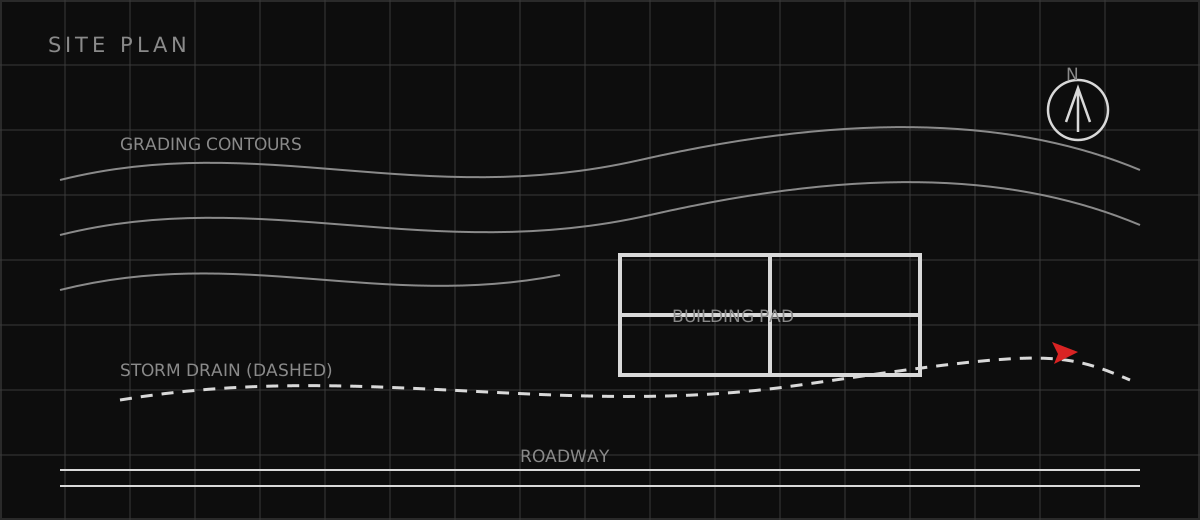
Collection across the acres
The stormwater design starts with the site's drainage map: I delineate every drainage area with its surface and its runoff, then design the collection — the inlets, the swales, and the piping — for the design storm's peak at every point. The parking lots' inlets are spaced and sized for the spread the safety requires; the fields' swales carry the sheet flow; the buildings' roof drains connect to the system. I design for the event compaction: the overflow fields' runoff coefficient reflects the fair week's use. Erosion control protects the construction and the disturbed areas. The collection is modeled: the hydraulics proving every inlet and pipe at the design storm, documented for the permit.
Detention, water quality, and the event
The detention is sized by the routing: the basins or the underground storage controlling the peak to the allowed release, with the outlet structures and the maintenance access designed. Water quality treatment serves the sources: the hydrodynamic separators or the bioswales for the parking lots' oils and sediments, the vegetated treatment for the livestock areas' nutrients. I design the system's event resilience: the debris handling, the spill response provisions, and the operations plan the grounds crew follows during the fair. The permits — the grading, the stormwater quality — are secured with the calculations documented. I review the system's first big storm with the operations team: the performance verified, the adjustments made. The fairground's stormwater is proven the way it's used: under the event's sky.
Checklist before the rainy season
Stormwater readiness is verified before the storms. I confirm the collection hydraulics, the detention routing, and the water quality treatment. The operations plan is staffed. Here is the checklist I hand fairground managers.
- Calculate runoff with honest imperviousness — compacted event parking counts as paved
- Design collection for the design storm's peak at every inlet, swale, and pipe
- Size detention routing the hydrograph to the allowed pre-development release
- Treat the water quality: parking oils and livestock nutrients each to their system
- Write the event operations plan — spill response, debris, inlet protection during the fair
Which related engineering resources can help?
What else do project teams ask?
How is runoff calculated for fairgrounds?
How is detention sized for the site?
How is livestock runoff treated?
How do events affect stormwater systems?
Ready to discuss your engineering scope?
Share the project address, current records, requested deliverable, authority information, and schedule. Apex Grid confirms professional responsibility, availability, and scope before work begins.
Request a Project Review