Pittsburgh · Allegheny County · PE-Stamped Drawings
PE-Stamped Drawings in Pittsburgh, Pennsylvania
A Pittsburgh pe-stamped drawings scope has to respond to delivering disciplined sealed documents for Pittsburgh's PLI, utility, and steep-site review interfaces. Apex Grid helps owners organize the facts, documents, and agency questions without promising licensure, approval, coverage, or a review timeline.
Permit authority
PLI sets construction-submittal requirements and the Pennsylvania board governs professional seals; Public Works, ALCOSAN, zoning, and historic reviewers may require related documents
Code context
The sealed package should cite current Pittsburgh amendments and applicable discipline standards, with explicit assumptions for existing buildings, slopes, utilities, and special inspections
Local conditions
hillside excavation, occupied institutional space, old steel, narrow streets, and mine or brownfield uncertainty make scope boundaries critical
Typical project types
tenant renovations, retaining and foundation work, rooftop equipment, laboratory upgrades, and adaptive reuse
Sealed scope in a multi-agency city
A Pittsburgh package should distinguish PLI building sheets from site, sewer, right-of-way, and utility documents. A well-indexed set gives each reviewer the design information needed without implying one seal covers every decision.
Hillside construction notes
Temporary excavation, shoring, dewatering, haul routes, and neighbor monitoring may be central to a hillside project. Drawings should identify the responsible design and observation limits rather than hiding them in generic notes.
Reviewable existing-building sheets
Field-verification points, material testing, and special inspections should be placed beside the affected details. This gives the contractor a usable path when an old wall or steel connection differs from the record.
Permit and engineering steps
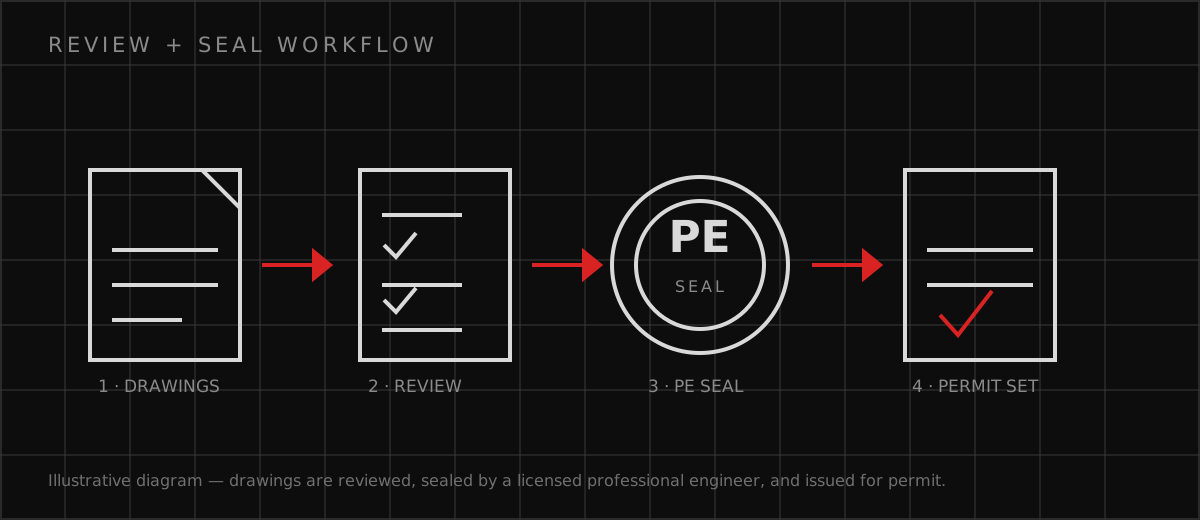
- Define the project scope, PLI permit type, zoning and site interfaces, existing-condition record, and sheets requiring a Pennsylvania PE seal.
- Resolve calculations, code criteria, details, construction observation language, special inspections, and coordination exclusions.
- Have the responsible PE review and authenticate the applicable documents under Pennsylvania board and PLI requirements.
- Submit the controlled set to PLI and other agencies, then maintain revision tracking through written review comments and field changes.
PE-Stamped Drawings in Pittsburgh, Pennsylvania FAQs
Does one Pittsburgh PE seal cover an ALCOSAN submission?
Should shoring appear on a permanent structural set?
Can a stamped drawing promise PLI approval?
Official sources
These official sources support the local permit, code, utility, climate, and environmental context. The current AHJ and adopted requirements control.
Discuss your Pittsburgh scope
Send the address, existing records, proposed use, authority correspondence, and requested deliverable. Responsible professional review and availability are confirmed before work begins.
Request a Project Review