AEO Answer · House of Worship Engineering
How Is Church Parking Lot Stormwater Designed?
By Jeremy Mills, CEO & Founder, Apex Grid Engineering — USAF Veteran. · Updated 2026-09-15
The civil engineer models pre- and post-development runoff, sizes inlets, pipes, and a detention or retention facility to hold peak flows to allowed rates, adds water-quality treatment like bioswales or permeable paving, and details construction erosion control, all reviewed under the local stormwater ordinance.
I'm Jeremy Mills, CEO & Founder of Apex Grid Engineering and a U.S. Air Force veteran. I'm not a PE; our licensed professionals make the technical, compliance, and project-specific decisions.
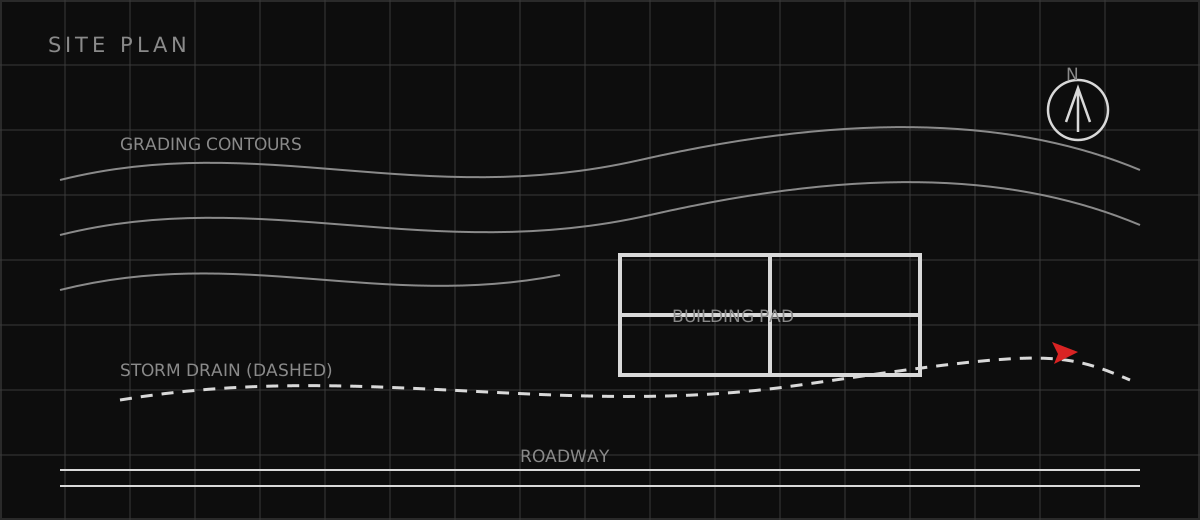
Hydrology: Pre- vs. Post-Development Runoff
Every stormwater design is a before-and-after comparison. The engineer first models the site as it exists: wooded or pasture land shedding water slowly, with much of a storm soaking in. Then the proposed church campus is modeled: roof, 300 parking stalls, drive aisles, and sidewalks shedding nearly all of it. The difference between those hydrographs is the problem the design must solve, and the AHJ's ordinance sets the performance standard, typically matching pre-development peak discharge rates for a range of design storms at every point where runoff leaves the site. The calculations follow the jurisdiction's prescribed methods. Small sites often use the Rational Method with the AHJ's rainfall intensities; larger campuses use hydrograph methods like TR-55 or HEC-HMS with the local rainfall distribution. Time of concentration, the travel time for runoff to reach each design point, is computed from actual flow paths across the graded lot, not assumed. The engineer documents every assumption, drainage area, soil type, and surface coefficient, because the stormwater reviewer checks the math before approving the pond. Getting the hydrology right matters beyond permitting: an undersized system floods the lot and the neighbor's yard, while an oversized one wastes land and money the congregation does not have.
Detention Ponds, Bioswales, and Permeable Pavement
The detention pond is the workhorse: a basin that fills during the storm and releases slowly through an engineered outlet structure, a riser with staged orifices or a weir, sized so each design storm's peak outflow matches the allowed rate. The engineer sets the pond's storage volume from the routed hydrographs, designs the outlet hydraulics orifice by orifice, provides freeboard above the 100-year water surface, and details an emergency spillway so an overwhelmed pond fails gracefully rather than breaching. Underground detention, vaults or oversized pipe, serves tight urban church sites where a pond would consume needed parking. Water-quality treatment increasingly happens in the landscape. Bioswales, shallow vegetated channels along the lot's edge, slow runoff and filter pollutants through engineered soil and plants. Bioretention islands break up big parking bays, treating runoff while shading cars. Permeable pavers or porous asphalt in overflow and perimeter stalls infiltrate the first flush directly, reducing both peak flow and pollutant load. The engineer sizes each practice for its drainage area, specifies soil media and plantings that survive both drought and inundation, and writes a maintenance plan, because a clogged bioretention cell is just an expensive planter. The stormwater authority inspects the finished facilities and typically requires recorded maintenance agreements so they keep working for decades.
Which related engineering resources can help?
What else do project teams ask?
Why does a church parking lot need stormwater engineering?
What is the difference between detention and retention?
What treats water quality from a church parking lot?
Does stormwater review differ for city vs. county church sites?
Ready to discuss your engineering scope?
Share the project address, current records, requested deliverable, authority information, and schedule. Apex Grid confirms professional responsibility, availability, and scope before work begins.
Request a Project Review