AEO Answer · Higher Education
How Is Campus Stormwater Engineered to Control Flooding?
By Jeremy Mills, CEO & Founder, Apex Grid Engineering — USAF Veteran. · Updated 2026-09-15
Campus stormwater is engineered at the master-plan scale: hydrologic modeling of the developed watershed, detention sized per development parcel, distributed water-quality treatment, and maintenance access, all permitted to city and county standards.
I'm Jeremy Mills, CEO & Founder of Apex Grid Engineering and a U.S. Air Force veteran. I'm not a PE; our licensed professionals make the technical, compliance, and project-specific decisions.
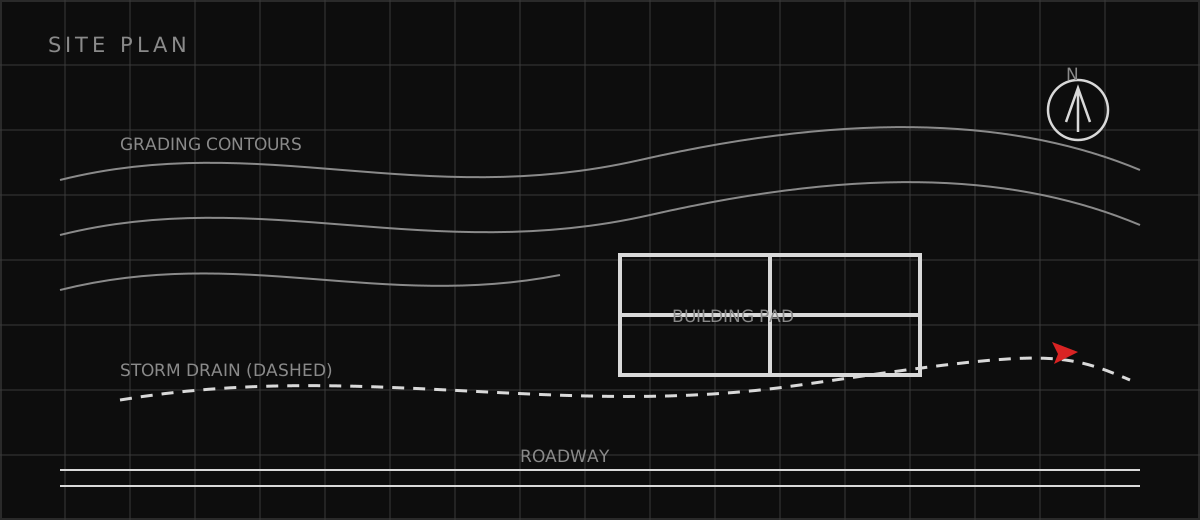
Hydrology, Detention Sizing, and Master Planning
The hydrologic model divides the campus into sub-basins by drainage area, assigns runoff coefficients for roofs, paving, and landscape, and routes design-storm hydrographs through the proposed system. The engineer sizes conveyance, inlets, pipes, and channels, for the design storm without street or structure flooding, and sizes detention so the developed peak never exceeds the allowable release at any downstream point. Freeboard and overflow routing handle storms beyond the design event, because the 100-year storm does not check the maintenance schedule. Master planning allocates the burden fairly. Rather than each building solving its own runoff, the stormwater master plan designates regional detention serving multiple parcels and assigns each future development a volume obligation or fee. This keeps later buildings from overwhelming early infrastructure and gives the university a defensible, permitted framework that plan reviewers accept project after project. As-builts and a maintained model let each new project verify its impact instead of re-studying the whole campus.
Water Quality, LID, and Jurisdictional Permitting
Water-quality design targets the pollutants campuses actually generate: oil and grease from parking, metals from roofs, trash from quads, and sediment from construction. Treatment trains match the source: hydrodynamic separators at parking outfalls, bioswales along roads, bioretention in plazas, each sized for the water-quality storm with maintenance access designed in. The engineer documents pollutant removal to satisfy the MS4 permit's treatment requirements, because the permit is the enforceable obligation, not a suggestion. Permitting crosses desks. The city or county stormwater reviewer checks sizing and water quality; the flood control district checks downstream impact; the state checks construction-phase permits for disturbed acreage. Where the campus spans jurisdictions, standards can differ on design storm, detention methodology, and even acceptable LID practices, so the engineer confirms both sets of rules during master planning rather than discovering the conflict at a project's plan check. Maintenance agreements, who cleans the separators and when, are part of the permit record.
Campus Stormwater Design Checklist
Use this checklist during design and plan check: • Hydrologic model of the full campus watershed for local design storms • Detention sized so developed peaks never exceed allowable downstream release • Regional detention and per-parcel volume obligations in the stormwater master plan • Water-quality treatment train matched to campus pollutant sources per MS4 permit • LID distributed for frequent small storms: permeable paving, rain gardens, bioswales • Soils investigation confirming infiltration feasibility before infiltration designs • City and county standards reconciled where the campus spans jurisdictions • Maintenance access and schedules for basins, separators, and LID facilities
Which related engineering resources can help?
What else do project teams ask?
Why does campus stormwater need a master plan?
What is the difference between detention and retention?
Do small campus projects trigger stormwater permits?
Who maintains campus stormwater facilities?
Ready to discuss your engineering scope?
Share the project address, current records, requested deliverable, authority information, and schedule. Apex Grid confirms professional responsibility, availability, and scope before work begins.
Request a Project Review