CLEVELAND RESPONSIBLE-PE COORDINATION
PE-Stamped Drawings for Cleveland Projects
Cleveland’s adaptive-reuse projects benefit from a drawing set that explains existing conditions instead of hiding uncertainty behind a seal. A responsible Ohio PE must independently evaluate the discipline work, competence, seal need and AHJ requirements; Apex supports coordination but does not promise licensure, stamping or permit approval.
Permit authority
Cleveland Department of Building and Housing is the building AHJ in the city, with zoning, landmark, fire, public-works and utility interfaces as applicable. A PE seal addresses professional responsibility for the sealed work and does not authorize demolition, public-right-of-way work, utility connection or construction before all required approvals.
Code context
The responsible professional applies Ohio licensure rules and the current Ohio Building Code, including existing-building, structural, mechanical or energy provisions relevant to the scope. Cleveland’s application forms, electronic seal expectations, special occupancy reviews and deferred-submittal procedures must be confirmed before submission.
Local conditions
Older Cleveland masonry, industrial frames, lake-effect roof loads, urban fill and river or shoreline flood questions can all affect the professional basis of design. Drawings should identify field verification, record gaps, geotechnical assumptions and limits of responsibility so reviewers and contractors can distinguish known facts from design assumptions.
Typical project types
Historic storefront alterations, industrial conversions, apartment renovations, healthcare fit-outs, restaurant work and public or nonprofit facility improvements.
Cleveland sheets should separate observed and inherited conditions
Identify which beams, walls, utilities and foundations were observed and which came from records. That lets the responsible PE set investigation limits and gives the Department of Building and Housing and contractor a controlled process when demolition reveals something different.
Coordinate landmarks and life safety early
Visible reinforcement, replacement windows, rooftop units and new openings can affect a historic or neighborhood building’s review. Separate preservation decisions from code and structural responsibility, and present alternatives early enough for Cleveland reviewers and the owner to make informed choices.
Seal scope must match the project
A PE should not seal another discipline’s work merely because sheets are bound together. Identify structural, mechanical, electrical, civil and fire-protection responsibilities, verify Ohio eligibility and maintain a clear revision trail for Cleveland’s review comments.
Permit and engineering steps
- Confirm Cleveland jurisdiction, occupancy, landmark or zoning status, disciplines, Department of Building and Housing permit route and Ohio licensure requirements.
- Assemble field records, surveys, existing drawings, calculations, specifications and owner decisions for independent responsible-PE review.
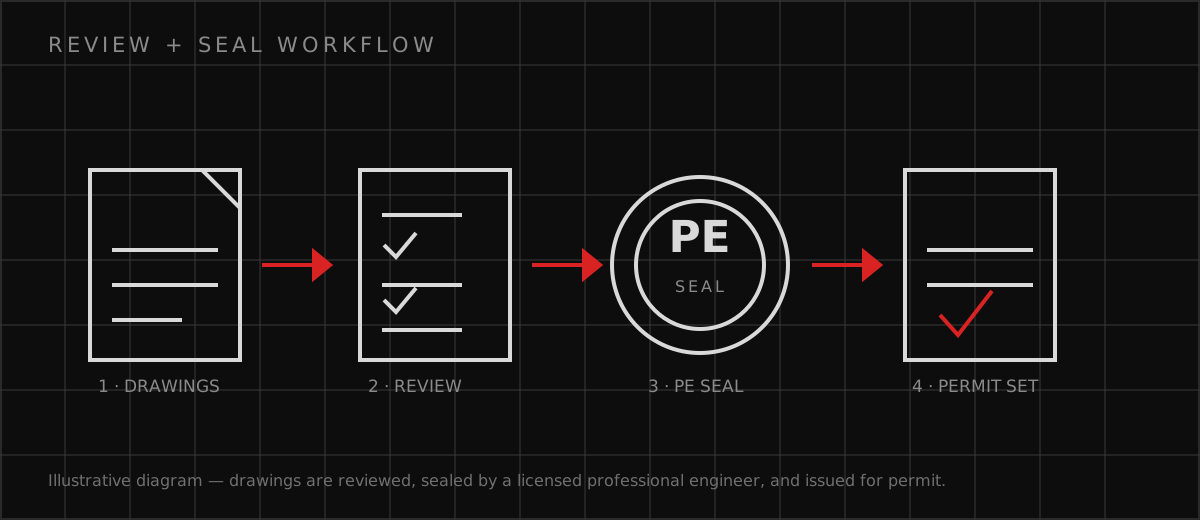
- Have the responsible Ohio PE review and seal only the competent, defined scope, with electronic-signature and sheet-format requirements verified.
- Submit to Cleveland, respond to comments under revision control and wait for all applicable permits before construction or demolition.
PE-Stamped Drawings for Cleveland Projects FAQs
Does a Cleveland PE seal solve existing-condition uncertainty?
Can a Cleveland landmark project use standard details?
Will a sealed package be approved by Cleveland?
Official sources
These official sources support the local permit, code, utility, climate, and environmental context. The current AHJ and adopted requirements control.
Discuss your Cleveland scope
Send the address, existing records, proposed use, authority correspondence, and requested deliverable. Responsible professional review and availability are confirmed before work begins.
Request a Project Review