CINCINNATI RESPONSIBLE-PE COORDINATION
PE-Stamped Drawings for Cincinnati Projects
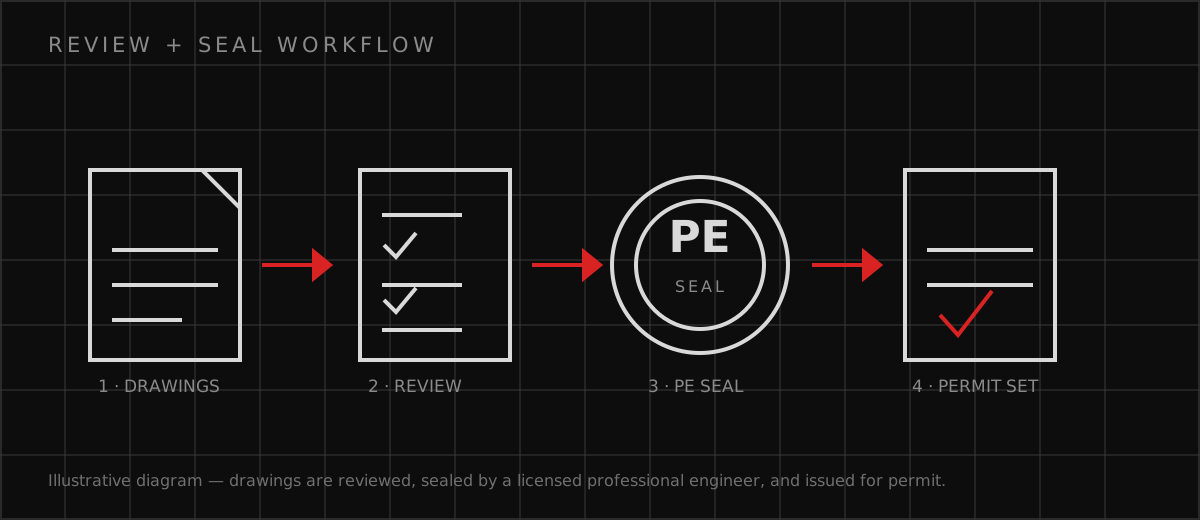
A Cincinnati seal should represent informed responsibility for a difficult site or existing building, not a superficial sign-off. Apex coordinates evidence and disciplines so an Ohio-licensed responsible PE can determine the required seal, review the work within competence and prepare an AHJ-ready package without promising acceptance.
Permit authority
Cincinnati Buildings & Inspections is the building AHJ within city limits, with historic, zoning, fire, public-works and flood interfaces as applicable. A PE seal does not replace those approvals, and a project outside Cincinnati may need a different municipal process even when Hamilton County is nearby.
Code context
The responsible PE applies Ohio licensure requirements and the current Ohio Building Code to the defined discipline scope. Cincinnati electronic submission, historic-conservation, retaining, flood and deferred-submittal expectations must be checked for each project; discipline ownership is documented rather than inferred from a title block.
Local conditions
Hillside excavation, river flooding, masonry buildings, urban fill, ravine drainage and freeze-thaw can create concealed risks. A responsible PE needs current survey, geotechnical and field information, with assumptions and construction-stage responsibilities clearly stated in the drawings and calculations.
Typical project types
Historic district renovations, hillside additions, riverfront commercial work, hospital alterations, brewery fit-outs and small urban infill buildings.
Cincinnati seals should explain the difficult parts
For a hillside package, identify retaining and temporary-stability assumptions; for historic work, identify masonry and opening limits; for riverfront work, identify elevation and enclosure criteria. Buildings & Inspections reviewers benefit from a focused basis of design rather than an unexplained seal.
Historic review and engineering are parallel
A responsible PE can evaluate load paths and safety, but the owner and preservation authority decide whether visible changes are acceptable. Keep the technical and conservation records coordinated while recognizing that one approval does not substitute for the other.
Construction responsibility must remain clear
Drawings should identify observation, testing, delegated design and concealed-condition procedures appropriate to the scope. A Cincinnati permit set cannot promise that field conditions, contractor means or agency comments will match the initial assumptions.
Permit and engineering steps
- Confirm Cincinnati Buildings & Inspections jurisdiction, discipline scope, historic or flood interfaces, submission route and Ohio PE requirements.
- Collect survey, geotechnical, existing-building, calculation and owner information sufficient for independent responsible-PE review.
- Have the responsible Ohio PE determine, review and apply the seal to the defined competent scope, including electronic-signature compliance.
- Submit to Cincinnati and related agencies, answer comments with controlled revisions and await permits before construction.
PE-Stamped Drawings for Cincinnati Projects FAQs
Does a Cincinnati PE seal cover retaining walls automatically?
Can a sealed plan bypass historic review?
Can Apex promise a Cincinnati permit date?
Official sources
These official sources support the local permit, code, utility, climate, and environmental context. The current AHJ and adopted requirements control.
Discuss your Cincinnati scope
Send the address, existing records, proposed use, authority correspondence, and requested deliverable. Responsible professional review and availability are confirmed before work begins.
Request a Project Review