Responsible review before a regulated submittal
PE-Stamped Drawings in Charlotte, NC
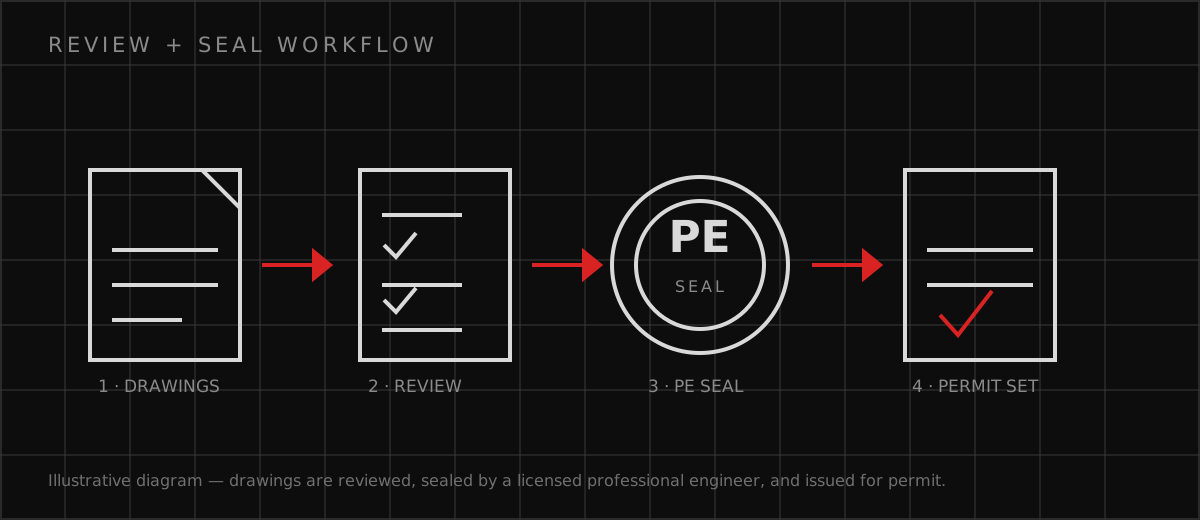
A seal is the conclusion of responsible professional practice, not a rubber stamp. Charlotte project teams need a coordinated record of scope, field information, calculations, code path, and AHJ comments before the appropriate North Carolina PE can decide what to sign.
Permit authority
Charlotte Development Services receives building permit documents within the city, while Mecklenburg County or another municipality may be the AHJ outside city limits. The permit desk, fire authority, Charlotte Water, stormwater reviewers, and utility providers may each require distinct documents; the responsible PE confirms which sheets fall within professional responsibility.
Code context
Sealed work must comply with the North Carolina Building Code, applicable energy and accessibility provisions, local development requirements, and current North Carolina Board of Examiners rules. Edition, alteration, special-inspection, floodplain, and deferred-submittal decisions are confirmed for the project rather than promised from a generic service description.
Local conditions
Charlotte’s mix of high-rise construction, suburban redevelopment, Piedmont soils, creek floodplains, and aging commercial shells makes a one-size drawing package risky. Utility coordination, survey quality, and scope boundaries often matter as much as the title block.
Typical project types
Commercial tenant improvements, rooftop equipment supports, multifamily renovations, industrial expansions, small additions, site utility packages, and owner-driven corrective work are common reasons Charlotte teams seek PE drawing coordination.
Charlotte’s city/county boundary belongs on the cover sheet
Charlotte Development Services and Mecklenburg County Code Enforcement do not share one permit record. The cover sheet should name the actual AHJ, identify Charlotte Water or stormwater documents, and give the NC PE enough verified information for independent judgment.
Charlotte jurisdiction and sheet boundaries
City, county, and neighboring municipal boundaries can change intake, zoning, stormwater, and utility requirements. A cover sheet should identify the actual AHJ and clearly distinguish structural, MEP, civil, delegated, and deferred work so no discipline is implied to be covered accidentally.
Corrections and construction changes
Plan-review comments, substitutions, and field discoveries should return to the responsible design professional. Maintaining a revision log and comparing approved drawings with shop or field changes helps protect the integrity of the sealed record through construction.
Permit and engineering steps
- Read the address against Charlotte Development Services, Mecklenburg County Code Enforcement, or a neighboring municipality, then define which structural, civil, or MEP sheets the NC PE is responsible for.
- Build the record from survey, field openings, geotechnical data, Charlotte Water or Duke correspondence, and the owner’s architectural background rather than a contractor sketch alone.
- Resolve Charlotte-Mecklenburg sheet boundaries, calculations, and special-inspection notes; the responsible PE reviews, seals, and dates only work within that professional responsibility.
- Use the AHJ comment log for revisions and return Charlotte-Mecklenburg, utility, or field changes to the responsible professional before issuing a clarification.
PE-Stamped Drawings in Charlotte, NC FAQs
What must a Charlotte PE record distinguish?
Can a contractor’s sketch be sealed as submitted?
Does a North Carolina PE cover every project in Charlotte?
Official sources
These official sources support the local permit, code, utility, climate, and environmental context. The current AHJ and adopted requirements control.
Discuss your Charlotte scope
Send the address, existing records, proposed use, authority correspondence, and requested deliverable. Responsible professional review and availability are confirmed before work begins.
Request a Project Review