GRAND RAPIDS | PE-STAMPED DRAWINGS
PE-stamped drawings for Grand Rapids projects
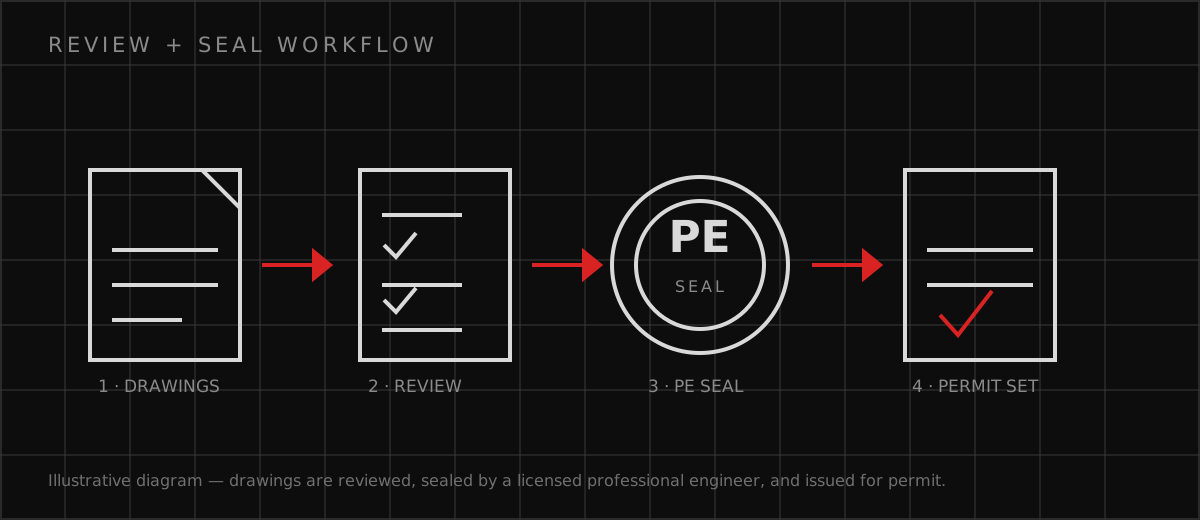
A Grand Rapids permit package should show who is responsible for each technical decision and what information was actually reviewed. We organize calculations, existing-condition evidence, coordination records, and revisions so a responsible PE can determine whether a seal is appropriate for the defined work—not simply add a signature to an inherited set.
Permit authority
Grand Rapids Community Development determines local submittal needs, while utilities, fire, county drain, EGLE, and road authorities can impose separate documentation requirements. A seal requirement depends on discipline, project type, size, and AHJ rules. The responsible PE confirms Michigan licensure and project responsibility; no licensure, coverage, approval, or timeline is promised. Confirm Community Development's seal format and sheet index, then separately satisfy county drain, Consumers Energy, fire, EGLE, and road-agency submissions.
Code context
Sealed documents should identify the current Michigan construction and energy-code basis, relevant existing-building provisions, and limits of delegated design. A professional seal does not transfer architectural, contractor, manufacturer, or owner responsibilities. Electronic seal and signature practices must follow current Michigan professional requirements and the receiving agency's format. The sealed issue should identify the Michigan code and Grand Rapids standards actually verified, including any existing-building or stormwater basis.
Local conditions
Grand Rapids projects often combine old timber or masonry, river-related site constraints, winter snow, and active manufacturing operations. These conditions make photographs and field verification especially important. Utility comments, county drainage comments, and city building comments should be tracked against the same controlled issue set. Riverfront comments, manufacturing phasing, snow loads, and utility capacity changes can arrive after a shell permit, so Grand Rapids revision control is substantive.
Typical project types
Commercial tenant-improvement packages; factory alteration sets; apartment conversions; stormwater and utility plans; rooftop equipment supports; phased downtown redevelopment. Typical work includes a Monroe Avenue tenant set, a factory mezzanine, or a county-coordinated riverfront utility package.
Define the responsible-charge boundary
List the drawings, calculations, site observations, manufacturer inputs, and delegated components within the PE's review. A clear responsibility matrix helps the Grand Rapids reviewer distinguish professional design from contractor means and methods.
Use a local document trail
Keep utility emails, survey revisions, geotechnical recommendations, county comments, and city responses with the calculation set. If a river elevation, service capacity, or existing beam changes, the PE can then evaluate the consequence instead of relying on an unexplained redline.
Issue revisions deliberately
Phased downtown projects frequently add tenant work after a shell permit. Clouded revisions, updated calculations, and a comment-response log help prevent an old sealed sheet from being read as approval for a new scope.
Keep the county comment in the city record
A single Grand Rapids response log should show when drain, utility, and city comments changed a sealed calculation or sheet, preventing conflicting issue sets.
Permit and engineering steps
- Issue a coordinated sealed revision only after Community Development and affected county or utility comments are reconciled.
- Identify the Grand Rapids AHJ, scope, disciplines, source documents, and limits of responsible professional involvement.
- Coordinate drawings and calculations with the architect, surveyor, geotechnical consultant, utility, and contractor inputs that affect the design.
- Have the responsible PE complete the technical review and apply the seal only to the documents and scope accepted under the engagement.
PE-stamped drawings for Grand Rapids projects FAQs
Can a PE stamp a Grand Rapids plan after only a desk review?
Do county drainage comments belong on a city permit set?
Does a PE stamp mean Grand Rapids will approve the plans?
Can a Grand Rapids seal replace a drain-authority approval?
Official sources
These official sources support the local permit, code, utility, climate, and environmental context. The current AHJ and adopted requirements control.
Discuss your Grand Rapids scope
Send the address, existing records, proposed use, authority correspondence, and requested deliverable. Responsible professional review and availability are confirmed before work begins.
Request a Project Review