DETROIT | PE-STAMPED DRAWINGS
PE-stamped drawings for Detroit projects
A professional seal is a statement of responsible review, not a rubber stamp added at the end of a Detroit permit set. We help teams organize calculations, drawings, assumptions, and revisions so the responsible Michigan-licensed PE can evaluate the actual work and seal only the discipline and scope accepted under the project arrangement.
Permit authority
Detroit BSEED determines what the building-permit package must contain, while utilities, fire reviewers, EGLE, and other agencies may request separate documents. Whether a seal is required depends on project type, size, discipline, and code or agency rules. The responsible PE and BSEED confirm current requirements for the address; no approval, licensure, or coverage is promised. BSEED's sheet-index and electronic-seal expectations should be checked alongside separate DTE, DWSD, fire, and environmental submissions before the PE signs.
Code context
The package should identify the Michigan construction-code basis and any applicable existing-building, energy, accessibility, fire, zoning, or local provisions. A PE seal does not replace architectural responsibility, contractor means and methods, delegated design, or BSEED review. Electronic seal practices and professional-responsibility requirements must be handled under current Michigan licensing rules. The sealed set should name the verified Michigan code basis and distinguish BSEED engineering sheets from architectural, vendor, and contractor documents.
Local conditions
Detroit's older properties create a high risk of missing field information, especially at party walls, basements, buried utilities, and altered roofs. Winter loads, masonry distress, flood exposure, and DTE/DWSD connection constraints may change a drawing after site verification. A controlled revision record is essential when multiple agencies comment at different times. Detroit phased shell permits, shared party walls, legacy service records, and flood-sensitive basements make revision control part of responsible-charge review.
Typical project types
Permit-ready tenant improvements; structural repair packages; MEP replacement sets; civil utility and grading plans; rooftop equipment supports; industrial alteration and adaptive reuse. This service commonly supports a Detroit rooftop dunnage package, a neighborhood retail alteration, or a phased warehouse conversion.
Define what is actually being sealed
A Detroit permit set should distinguish engineering sheets from architectural sheets, manufacturer delegated design, contractor shop drawings, and calculations retained for record. That boundary protects the owner and prevents a seal from implying review of work the PE did not control.
Resolve site facts before final signature
Photographs, survey data, utility responses, probes, and existing-condition markups should be part of the review record. If a discovered beam, service, or flood condition changes the design, the package needs a substantive revision rather than a notation that leaves the conflict unresolved.
Make agency coordination traceable
BSEED, DWSD, DTE, fire, and environmental comments should be logged against drawing revisions. This is especially valuable on phased Detroit work where an early shell permit and later tenant or equipment permit have different responsible teams.
Make the seal auditable
A Detroit issue log should link every sealed sheet to calculations, field photographs, BSEED comments, utility responses, and the person responsible for the next revision.
Permit and engineering steps
- Transmit the signed sheet index and comment-response log with the revised BSEED package; do not let a contractor substitute an unreviewed field sketch.
- Identify the Detroit AHJ, project scope, disciplines, existing-condition evidence, and the PE's responsible-charge limits.
- Develop coordinated calculations and drawings, resolve owner and architect comments, and identify delegated-design items that remain outside the seal.
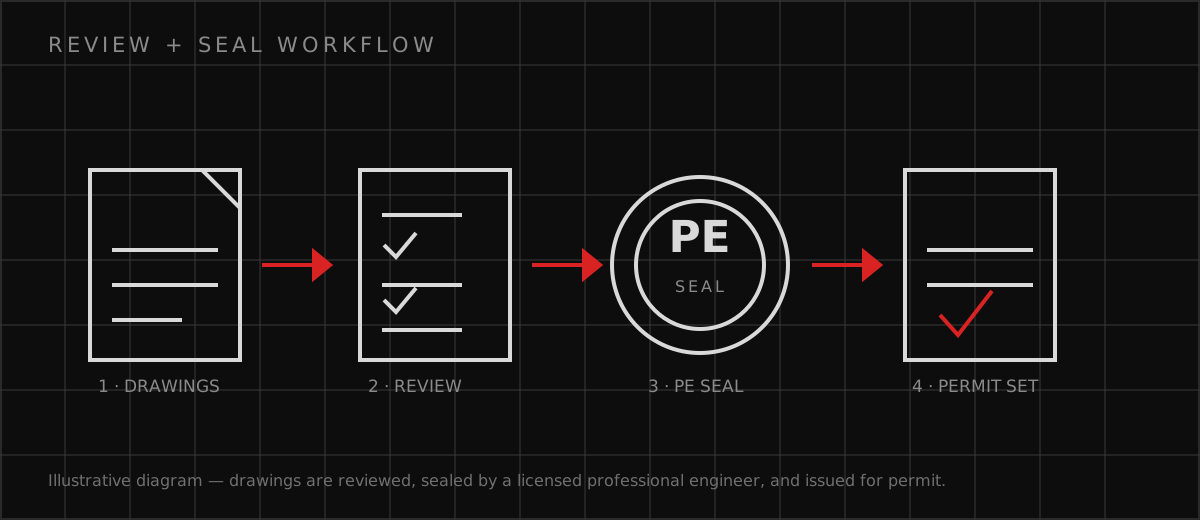
- Complete the responsible PE's project-specific technical review and apply the seal and signature in the format required for the submission.
PE-stamped drawings for Detroit projects FAQs
Can Apex add a seal to drawings prepared by someone else for Detroit?
Do Detroit utility approvals use the same seal rules as BSEED?
What happens if field conditions differ after stamped drawings are issued?
What does a Detroit PE seal not cover?
Official sources
These official sources support the local permit, code, utility, climate, and environmental context. The current AHJ and adopted requirements control.
Discuss your Detroit scope
Send the address, existing records, proposed use, authority correspondence, and requested deliverable. Responsible professional review and availability are confirmed before work begins.
Request a Project Review