Baltimore mep engineering and permit coordination
MEP Engineering for Baltimore Projects
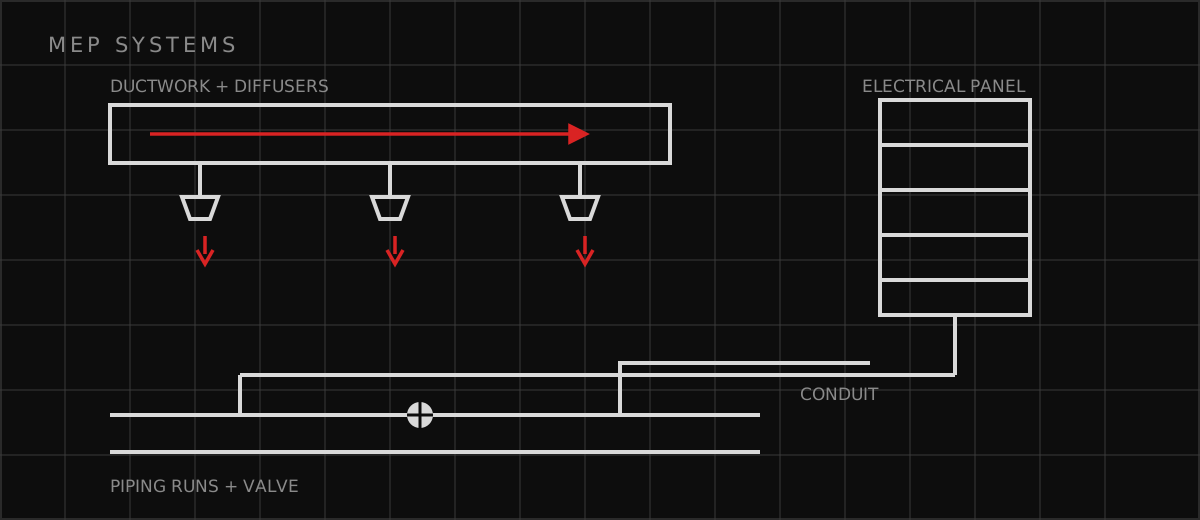
MEP Engineering in Baltimore addresses HVAC, electrical service, plumbing, ventilation, controls, utility capacity, and life-safety interfaces. Documents should fit Baltimore City Department of Housing and Community Development, Permits and Inspections, the applicable county or city process, Maryland requirements, and the actual parcel.
Permit authority
Baltimore City Department of Housing and Community Development, Permits and Inspections administers the named building review for this address. Zoning, fire, public works, stormwater, critical-area, historic, utility, and environmental agencies may have separate roles; the responsible Maryland PE determines seal scope.
Code context
Baltimore City zoning and building regulations, historic or waterfront review where applicable, and Maryland building-code adoptions. Confirm the current Maryland building, energy, mechanical, plumbing, fire, and local amendment provisions, plus project transition rules, before submission.
Local conditions
Chesapeake Bay and harbor surge, Patapsco flood exposure, urban fill, rowhouse party walls, steep neighborhoods, summer thunderstorms, and winter freeze-thaw. Current survey, geotechnical, flood, utility, and environmental records should support design inputs.
Typical project types
rowhouse rehabilitation, Harbor-area adaptive reuse, multifamily additions, ADUs where zoning permits, and restaurant or office tenant improvements
Baltimore MEP Engineering design basis
Occupancy, equipment, existing shafts, service traces, and utility data establish the MEP basis for a Maryland project. In Baltimore, Baltimore City Department of Housing and Community Development, Permits and Inspections records and field observations should be reconciled before documents are fixed. This is particularly important for rowhouse rehabilitation, Harbor-area adaptive reuse, multifamily additions, ADUs where zoning permits, and restaurant or office tenant improvements.
Baltimore conditions and agency interfaces
Humid summers, flood exposure, clay drainage, coastal salt, and winter conditions affect equipment, condensate, corrosion, ventilation, and controls. Coordinate current survey, geotechnical, flood, utility, and environmental information with Baltimore City zoning and building regulations, historic or waterfront review where applicable, and Maryland building-code adoptions. The receiving authority, not a neighboring project, controls the applicable path.
Baltimore plan-check correction workflow
A correction response should identify changed schedules, plans, calculations, and testing responsibilities instead of leaving an uncoordinated markup. Number the comment, identify the changed sheet or calculation, coordinate all disciplines, and resubmit a dated response through Baltimore City Department of Housing and Community Development, Permits and Inspections.
Permit and engineering steps
- Confirm the parcel, occupancy, applicable Maryland code edition and amendments, and local checklist with Baltimore City Department of Housing and Community Development, Permits and Inspections.
- Collect survey, field, utility, flood, soil, environmental, equipment, and owner information for rowhouse rehabilitation, Harbor-area adaptive reuse, multifamily additions, ADUs where zoning permits, and restaurant or office tenant improvements; coordinate with Baltimore City Department of Public Works, Baltimore Gas and Electric, and Baltimore City fire and utility divisions.
- Coordinate HVAC, electrical service, plumbing, ventilation, controls, utility capacity, and life-safety interfaces with architecture, fire/life safety, accessibility, stormwater, and construction phasing before submission.
- Number every Baltimore City Department of Housing and Community Development, Permits and Inspections correction, revise affected plans or calculations, and preserve the response, inspection, testing, and closeout record.
MEP Engineering for Baltimore Projects FAQs
What should a mep engineering kickoff verify in Baltimore?
How do Chesapeake Bay and harbor surge, Patapsco flood exposure, urban fill, rowhouse party walls, steep neighborhoods, summer thunderstorms, and winter freeze-thaw affect mep engineering?
How should Baltimore City Department of Housing and Community Development, Permits and Inspections plan-check comments be answered?
Official sources
These official sources support the local permit, code, utility, climate, and environmental context. The current AHJ and adopted requirements control.
Discuss your Baltimore scope
Send the address, existing records, proposed use, authority correspondence, and requested deliverable. Responsible professional review and availability are confirmed before work begins.
Request a Project Review