Capital-region engineering documents and review
PE-Stamped Drawings for Springfield Projects
Springfield's public and private projects can have different owners, procurement rules, and reviewing authorities. We organize technical evidence and discipline boundaries so the responsible Illinois PE can determine what is ready for sealing and the correct submission path.
Permit authority
City of Springfield OPED handles city permits, while CDB may govern state-owned work; Sangamon County, fire, floodplain, IDOT, utilities, and institutional owners may review separate components. The project team must verify responsible charge, Illinois authorization, seal format, and each agency's requirements. Use separate authority-specific covers and transmittals when a technical calculation serves both CDB and a municipal or roadway review.
Code context
Illinois adopts a statewide building-code baseline through the Capital Development Board; the applicable edition and locally adopted amendments must be checked with the AHJ at intake. Energy work follows the Illinois Commercial and Residential Building Standards Act and its Illinois commercial standard. Current Springfield city or CDB code, energy, accessibility, and permit conventions should be identified on the cover and in the design analysis. A PE seal does not stand in for CDB, IDOT, zoning, fire, floodplain, utility, or procurement approval.
Local conditions
Occupied government facilities, aging civic construction, flat drainage, severe storms, freeze-thaw, variable soils, and state-campus infrastructure demand unusually clear phasing and record coordination.
Typical project types
CDB renovations, state-office fit-outs, school and hospital work, downtown adaptive reuse, industrial improvements, and public-site utility packages.
Ownership determines the document route
Before sealing, identify whether Springfield work is city, county, state, institutional, or private and whether an IDOT or utility permit is separate. A familiar title block cannot establish jurisdiction or substitute for the owner's procurement and review requirements.
A public project needs auditable assumptions
Existing-condition photos, survey control, utility letters, energy calculations, accessibility coordination, and revision logs help an agency reviewer understand decisions. The record should identify items delegated to the contractor and items retained by the responsible PE.
Sealing is not the end of coordination
State comments, owner standards, bid alternates, substitutions, and construction administration can change the basis after initial filing. Establish a revision protocol so the responsible professional can evaluate changes rather than letting an old seal be treated as blanket coverage.
Springfield packages should separate CDB and city deliverables
A state-owned office and a private downtown alteration may share technical calculations but not cover sheets, file rules, or review contacts. Keep the CDB project checkpoint and OPED permit transmittal separate so the wrong reviewer is not asked to accept the wrong package.
Permit and engineering steps
- Build the Springfield transmittal split first: identify CDB or OPED ownership, funding, jurisdiction, agency list, occupancy, code editions, and discipline responsibility.
- Bind surveys, existing documents, geotechnical and utility records, owner standards, CDB or IDOT criteria, and manufacturer information to the correct Springfield transmittal.
- Coordinate calculations, drawings, specifications, schedules, energy records, and phasing notes across all disciplines.
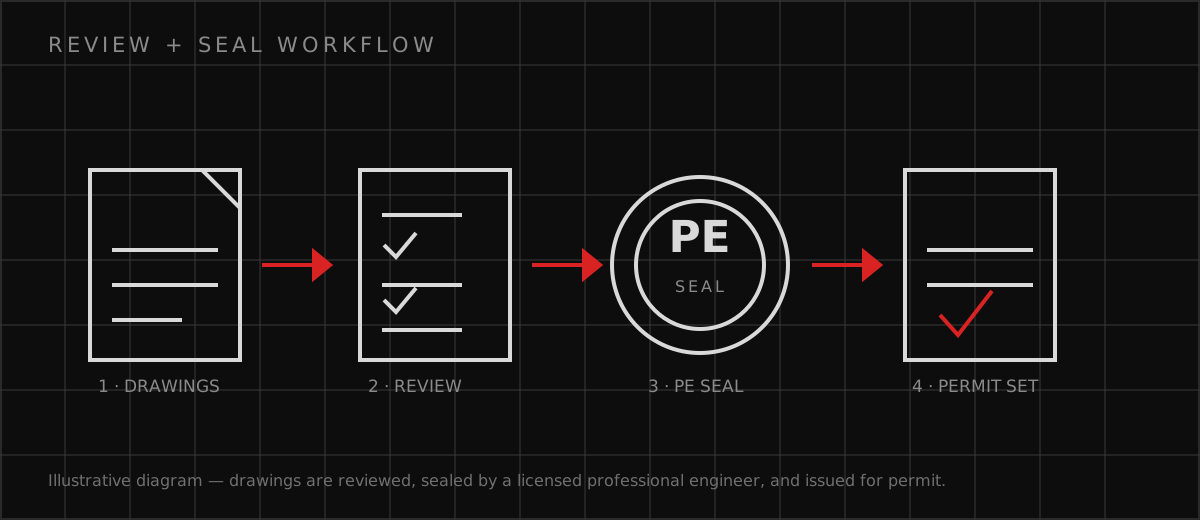
- Have the responsible Illinois PE conduct the substantive review and confirm seal, electronic signature, special inspection, and agency submission rules.
- Submit through the city, CDB, county, utility, or other applicable paths and maintain controlled responses and revisions.
- Separate the Springfield CDB, OPED, IDOT, and utility transmittals so each reviewer receives its own cover sheet, code path, review artifact, and revision record.
PE-Stamped Drawings for Springfield Projects FAQs
Does a Springfield PE stamp mean CDB has approved the set?
Can city and state Springfield projects share one title block?
What happens when a Springfield contractor finds a hidden condition?
How should a Springfield sealed set distinguish CDB from city work?
Official sources
These official sources support the local permit, code, utility, climate, and environmental context. The current AHJ and adopted requirements control.
Discuss your Springfield scope
Send the address, existing records, proposed use, authority correspondence, and requested deliverable. Responsible professional review and availability are confirmed before work begins.
Request a Project Review