Hartford permitting and structural coordination
Structural Engineering for Hartford Projects
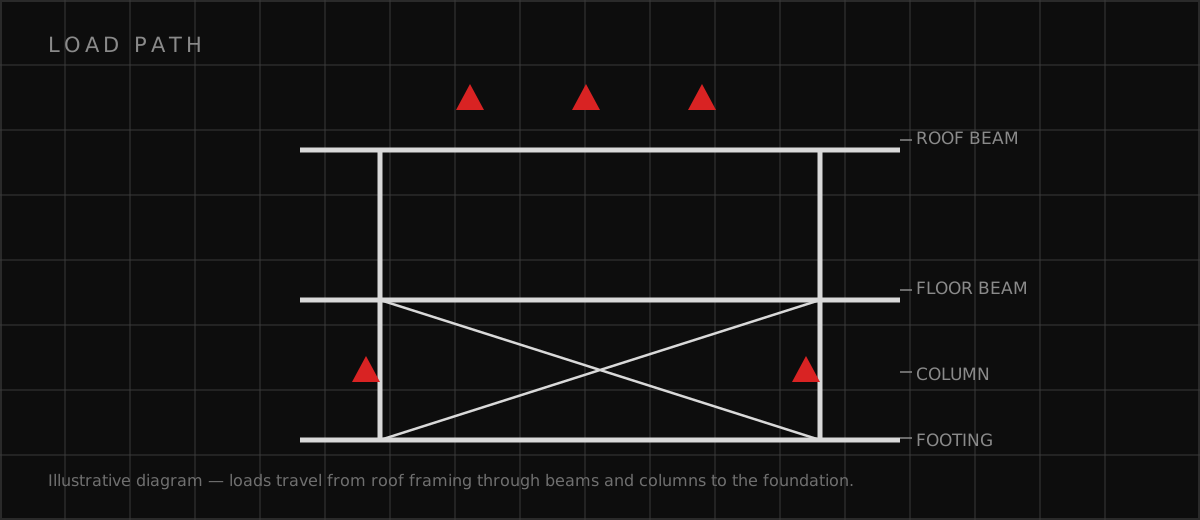
Structural Engineering in Hartford requires a site-specific scope, current code check, and a clear correction path with City of Hartford Development Services and Licenses & Inspections. existing framing, gravity and lateral load paths, foundations, and safe interfaces between new and retained construction.
Permit authority
City of Hartford Development Services and Licenses & Inspections is the named local building authority for work in Hartford; planning, fire, zoning, public works, health, floodplain, coastal, and utility reviewers may have separate roles. The applicable Connecticut PE confirms professional responsibility and seal requirements.
Code context
Hartford zoning and historic-district review where applicable, floodplain requirements, and the Connecticut State Building Code. Confirm the current Connecticut State Building Code edition, state amendments, energy provisions, local ordinances, and project transition rules with the AHJ before documents are finalized.
Local conditions
Connecticut River and Park River floodplains, urban fill, aging brick and timber stock, freeze-thaw, snow drift, and riverine groundwater. These facts should be tested against current survey, geotechnical, flood, utility, and field information rather than assumed from a regional average.
Typical project types
downtown adaptive reuse, neighborhood multifamily, historic storefronts, ADU feasibility, and code-driven residential additions
Hartford Structural Engineering scope and records
Existing-condition verification is the first design control for Hartford. Field measurements, permit history, probes, and the architect’s demolition plan distinguish assumed framing from confirmed framing before a beam, opening, ADU, or residential addition is sized.
Hartford conditions in the design
The Connecticut River and Park River floodplains, urban fill, aging brick and timber stock, freeze-thaw, snow drift, and riverine groundwater make load paths and foundations site-specific. A downtown adaptive reuse, neighborhood multifamily, historic storefronts, ADU feasibility, and code-driven residential additions may require a survey, geotechnical opinion, flood-elevation check, corrosion review, or snow and wind assessment rather than a detail copied from an inland site.
Plan-check corrections for Hartford
After City of Hartford Development Services and Licenses & Inspections issues plan-check comments, the response should identify each sheet and calculation change, preserve superseded details, and route structural revisions through the responsible Connecticut PE before resubmittal.
Permit and engineering steps
- Confirm the parcel, occupancy, existing permits, zoning triggers, and current Connecticut code edition with City of Hartford Development Services and Licenses & Inspections.
- Document framing, soils, flood/wind/snow assumptions, utility penetrations, and construction access before selecting the structural system.
- Coordinate calculations, connection details, special-inspection notes, and architectural or MEP openings with the City of Hartford Development Services and Licenses & Inspections submission.
- Log every plan-check correction from City of Hartford Development Services and Licenses & Inspections, issue a coordinated revision, and retain field-observation or as-built decisions for closeout.
Structural Engineering for Hartford Projects FAQs
When does downtown adaptive reuse, neighborhood multifamily, historic storefronts, ADU feasibility, and code-driven residential additions need structural investigation in Hartford?
How should City of Hartford Development Services and Licenses & Inspections corrections be answered for a structural set?
Do coastal or snow conditions change a Hartford structural design?
Official sources
These official sources support the local permit, code, utility, climate, and environmental context. The current AHJ and adopted requirements control.
Discuss your Hartford scope
Send the address, existing records, proposed use, authority correspondence, and requested deliverable. Responsible professional review and availability are confirmed before work begins.
Request a Project Review