Denver structural engineering and permit coordination
Structural Engineering for Denver Projects
Denver projects need gravity, lateral, foundation, and existing-building decisions that reflect Front Range freeze-thaw, expansive and variable urban fill, intense summer cloudbursts, snow drift, and localized floodplain exposure. This page describes a site-specific path through City and County of Denver Community Planning and Development, including plan-check corrections and practical coverage for urban infill, basement underpinning, alley-loaded ADUs, mixed-use tenant improvements, and residential additions.
Permit authority
City and County of Denver Community Planning and Development is the principal local review authority for the described jurisdiction; county, special-district, fire, floodplain, public-works, and utility reviews may be separate. The responsible Colorado professional confirms the applicable permit and seal scope.
Code context
Colorado jurisdictions adopt and amend model building, residential, energy, fire, plumbing, mechanical, electrical, stormwater, and land-use requirements through their current local code publications. The project team must confirm the edition, transition provisions, and amendments used by City and County of Denver Community Planning and Development; Denver’s 2022 adopted building and fire code and its site, zoning, stormwater, and green-building review paths should be checked for the parcel..
Local conditions
Front Range freeze-thaw, expansive and variable urban fill, intense summer cloudbursts, snow drift, and localized floodplain exposure Denver Water, Xcel Energy, Denver wastewater and storm drainage, and Denver’s green-infrastructure and right-of-way requirements can affect the design.
Typical project types
urban infill, basement underpinning, alley-loaded ADUs, mixed-use tenant improvements, and residential additions The same coordinated process can cover an ADU, detached accessory structure, or residential addition when its foundation, utilities, energy scope, drainage, or occupancy affects the existing property.
Denver: Structural Engineering scope and existing conditions
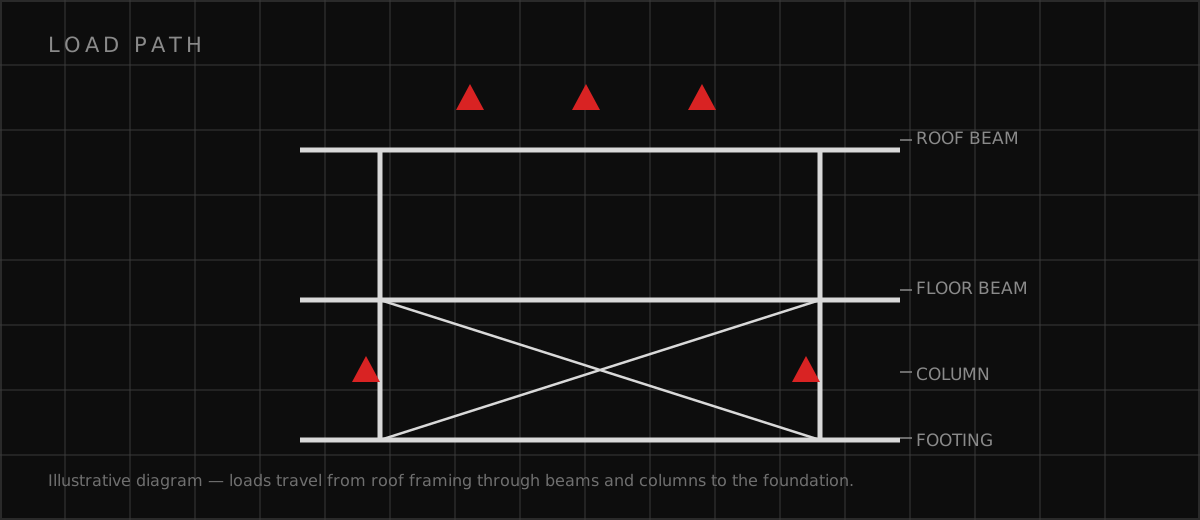
Denver infill commonly combines narrow lots, alley access, basement excavations, party-wall conditions, and redevelopment near the South Platte and Cherry Creek. A field-verified load path is especially important where a new opening, rooftop unit, solar array, or residential addition meets older framing. The calculation narrative should distinguish observed conditions from assumptions and identify the connection, diaphragm, and footing details that the reviewer can check.
Denver site, climate, and agency interfaces
Denver Water, Xcel Energy, Denver wastewater and storm drainage, and Denver’s green-infrastructure and right-of-way requirements can affect the design. Colorado’s elevation changes and freeze-thaw cycles make drainage at foundations part of structural risk management. A geotechnical recommendation, expansive-soil observation, frost depth, retaining-wall surcharge, and finished-floor elevation should be reconciled before the structural set is sealed.
Plan-check corrections for Denver projects
Denver’s 2022 adopted building and fire code and its site, zoning, stormwater, and green-building review paths should be checked for the parcel. Plan-check corrections should be answered in a numbered response matrix: cite the comment, show the revised sheet or calculation, and call out any field observation. ADU and residential-addition work benefits from the same process because a small footprint can still create differential settlement, snow drift, or diaphragm discontinuities.
Permit and engineering steps
- Start with City and County of Denver Community Planning and Development: Confirm the parcel jurisdiction, adopted building-code edition, occupancy, risk category, snow and wind criteria, and whether an ADU or addition changes the existing-building scope.
- Coordinate local facts before submittal: Document framing, foundations, soils, snow drift zones, and any wildland-urban-interface or floodplain constraints with the architect, surveyor, and geotechnical consultant.
- Submit the discipline package and preserve agency records: Coordinate the permit sheets, calculations, special-inspection notes, temporary shoring, and contractor deferred-design items before submitting the structural package.
- Return Denver plan-check corrections in a dated response matrix, cloud revised sheets, and confirm that every changed calculation, schedule, utility response, and field assumption is carried into the permit revision.
Structural Engineering for Denver Projects FAQs
Denver: When does a Colorado addition need a structural site visit?
Denver: How are Colorado snow and seismic assumptions selected?
Denver: How should structural plan-check corrections be returned?
Official sources
These official sources support the local permit, code, utility, climate, and environmental context. The current AHJ and adopted requirements control.
Discuss your Denver scope
Send the address, existing records, proposed use, authority correspondence, and requested deliverable. Responsible professional review and availability are confirmed before work begins.
Request a Project Review