AEO Answer · Desert Southwest Engineering
How Does Tucson Require Monsoon Stormwater Detention?
By Jeremy Mills, CEO & Founder, Apex Grid Engineering — USAF Veteran. · Updated 2026-09-15
Tucson requires development to detain runoff so peak flows match pre-development rates for the 2-, 10-, and 100-year storms, plus threshold and first-flush retention held on site for infiltration. Basin depth, slopes, and outlets follow the city's drainage standards, and rainwater harvesting is integrated with the landscape design under the city's harvesting ordinance.
I'm Jeremy Mills, CEO & Founder of Apex Grid Engineering and a U.S. Air Force veteran. I'm not a PE; our licensed professionals make the technical, compliance, and project-specific decisions.
Detention vs. Retention: What Tucson Requires
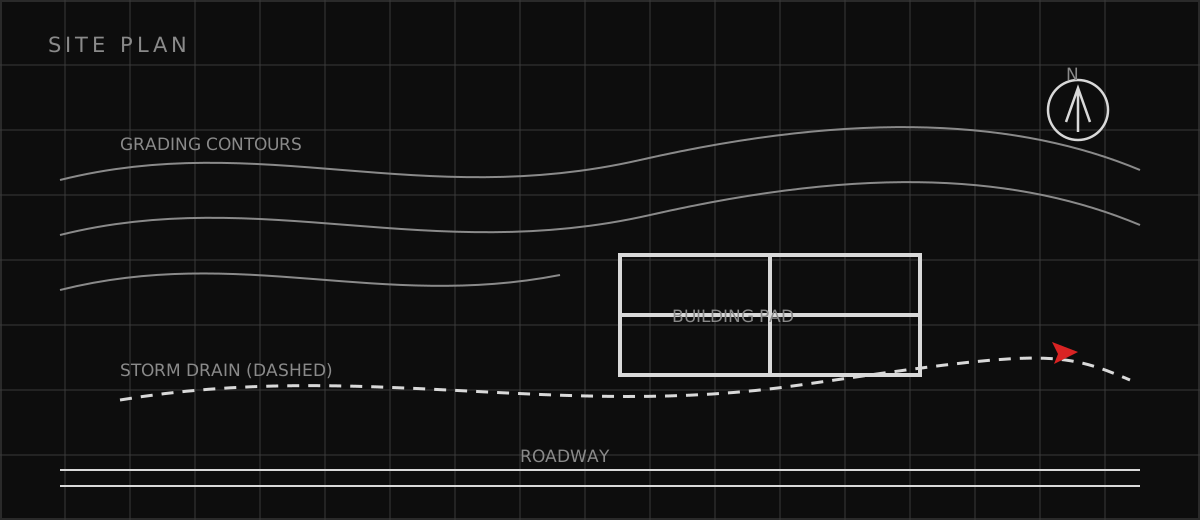
Detention and retention do different jobs, and Tucson requires both on qualifying projects. Detention temporarily stores the big-storm runoff and releases it through a controlled outlet at the pre-developed peak rate, so the wash downstream sees no new flood peak. The basin empties between storms and is dry most of the year. Retention permanently holds a volume on site, the increase in runoff from smaller storms plus the first flush, letting it infiltrate or be reused for irrigation rather than ever leaving the property. The sizing follows the manuals, not rules of thumb. The engineer runs the prescribed hydrologic methods for pre- and post-development conditions, computes the required detention volume for each design storm and the threshold retention volume for the smaller events, then lays out basins that fit the site while meeting depth, slope, and safety criteria. Where space is tight, underground chambers or distributed shallow landscape basins carry the volume. The drainage report shows every calculation the reviewer will check, because the numbers, not the concept, are what get approved.
Monsoon Hydrology and Rainwater Harvesting
Monsoon storms punish undersized drainage. High-intensity cloudbursts over urbanized ground produce sharp, violent peaks, and the design storms in the Tucson manuals reflect that desert reality rather than gentle regional rainfall. The engineer also accounts for sediment and debris, which reduce basin and culvert capacity over time, and designs inlets and outlets to resist clogging. Off-site flows that cross the property must be carried through safely; a project cannot dam its neighbor's wash, and the design proves it with the same models the reviewers use. Rainwater harvesting turns the requirement into a resource. Tucson's commercial harvesting ordinance requires new commercial development to supply a large share of its landscape water budget from harvested rain, which the retention basins and graded landscape borders provide. The civil and landscape designers shape shallow, level basins in planting areas that pond briefly after storms and drain within the allowed time, feeding desert-adapted plantings. Done right, the stormwater system cuts the irrigation bill, meets the ordinance, and satisfies the retention requirement in one grading plan.
Which related engineering resources can help?
What else do project teams ask?
What is the difference between detention and retention?
Which storms must a Tucson detention basin handle?
What is first-flush retention?
Does Tucson require rainwater harvesting on commercial projects?
Who maintains a private detention basin in Tucson?
Ready to discuss your engineering scope?
Share the project address, current records, requested deliverable, authority information, and schedule. Apex Grid confirms professional responsibility, availability, and scope before work begins.
Request a Project Review