AEO Answer · Truck Stops & Travel Centers
How Do Truck Stops Manage Stormwater on Large Paved Sites?
By Jeremy Mills, CEO & Founder, Apex Grid Engineering — USAF Veteran. · Updated 2026-09-15
Truck stop stormwater is managed with detention sized to the site's design storms, treatment BMPs that strip fuel and sediment from runoff, and spill isolation that keeps fuel releases out of the storm system — designed together under NPDES permits.
I'm Jeremy Mills, CEO & Founder of Apex Grid Engineering and a U.S. Air Force veteran. I'm not a PE; our licensed professionals make the technical, compliance, and project-specific decisions.
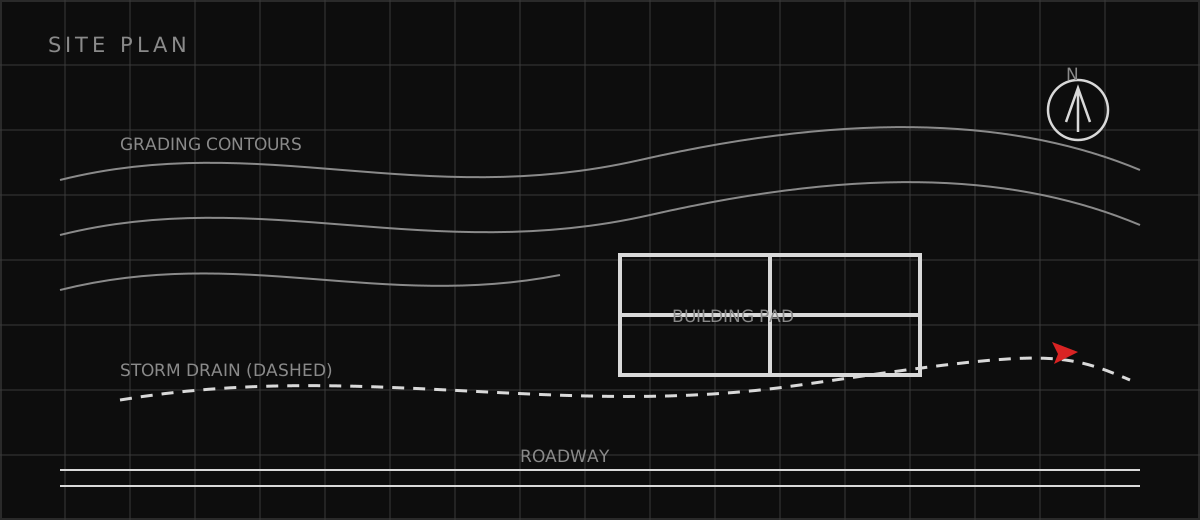
Detention design for acres of pavement
The hydrology model is the foundation: I delineate every sub-basin on the site, assign runoff coefficients to the pavement, canopy, and landscape areas, and route the design storms through the proposed grading. Detention volume and outlet structures are sized so post-development peak flows never exceed what the jurisdiction allows — often matching pre-development rates. I prefer outlet structures with maintainable orifices and trash racks over clever proprietary devices where the owner will do the maintenance, and I detail emergency overflows so a storm beyond the design event floods a parking aisle, not the building.
Treatment BMPs and fuel spill isolation
Treatment follows the pollutant sources. High-traffic truck pavement and fuel islands drain through oil/water separators or approved hydrodynamic devices; landscape and perimeter areas can use bioretention or vegetated swales where space allows. The fuel island drainage is isolated with its own contained collection and shutoff valving, so a spill can be held at the pad while clean areas drain normally. I keep roof runoff — the cleanest water on the site — separate from pavement drainage wherever grading allows, because treating water that was never dirty wastes capacity.
Stormwater management checklist
A truck stop stormwater design is ready when hydrology, treatment, and spill response form one system. On a fuel site, the storm system is judged by what never reaches the outfall. • Hydrology model for the jurisdiction's design storms with pre/post peak comparison • Detention sized to allowable release rates, with maintainable outlets and emergency overflow • Treatment BMPs matched to pollutant sources: separators at fuel areas, bioretention at perimeters • Fuel island drainage isolated with shutoff valving for spill containment • Clean roof runoff separated from pavement drainage where grading allows • NPDES construction and post-construction permit requirements confirmed before grading
Which related engineering resources can help?
What else do project teams ask?
Why do truck stops need such large detention systems?
What treatment do fuel island runoff areas require?
How does spill containment connect to stormwater design?
Underground or surface detention for a truck stop?
Ready to discuss your engineering scope?
Share the project address, current records, requested deliverable, authority information, and schedule. Apex Grid confirms professional responsibility, availability, and scope before work begins.
Request a Project Review