AEO Answer · Car Rental Facilities
What Stormwater Treatment BMPs Do Rental Car Lots Need?
By Jeremy Mills, CEO & Founder, Apex Grid Engineering — USAF Veteran. · Updated 2026-09-15
Rental lots need a treatment train for their pollutant profile: trash and sediment capture at inlets, oil/water separation for hydrocarbons, and bioretention or media filtration for dissolved metals — sized to the municipality's water-quality design storm.
I'm Jeremy Mills, CEO & Founder of Apex Grid Engineering and a U.S. Air Force veteran. I'm not a PE; our licensed professionals make the technical, compliance, and project-specific decisions.
Building the treatment train
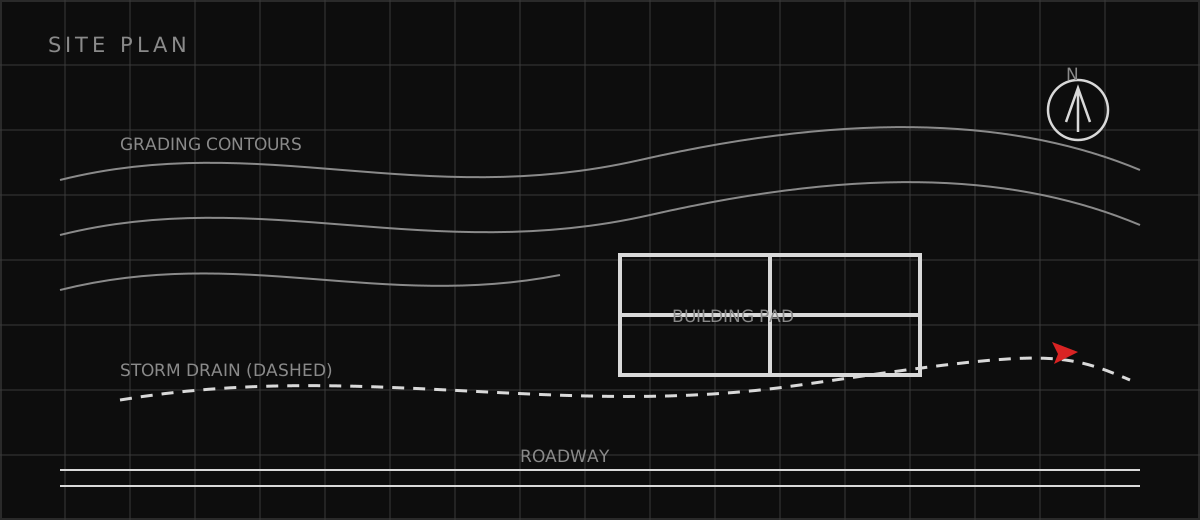
I arrange the BMPs in series from coarse to fine. Catch-basin inserts or a hydrodynamic separator take the trash and coarse sediment first; the oil/water separator then removes hydrocarbons from the pre-screened flow; and bioretention, a bioswale, or a media filter polishes dissolved metals and fine particles last. Each stage is sized for the water-quality volume from its tributary area, and high flows bypass around the treatment devices so a big storm does not scour out what the small storms deposited. The plan shows the train as a system — device, tributary area, bypass, and outfall — because the reviewer checks the logic, not just the catalog cuts.
Placing BMPs where the dirt is
Treatment works best closest to the source. I place inlet-level treatment on the drainage from the fuel island, the service and wash drives, and the main circulation lanes — the areas with the heaviest vehicle activity and the dirtiest runoff. The big storage fields, where cars sit parked and drip less, can often drain to a shared downstream device. This source-targeted placement keeps the BMP count and cost in line with the actual pollutant load instead of blanketing the whole site. The grading plan and the BMP plan are drawn together so every treated area actually drains to its device.
Stormwater BMP design checklist
A rental lot stormwater BMP design is ready when it clears this checklist. Clean discharge is a permit condition, not a favor. • Pollutant profile identified: hydrocarbons, metals, sediment, and trash from vehicle areas • Treatment train ordered coarse to fine: trash capture, oil separation, then polishing • BMPs sized to the water-quality volume with high-flow bypass around treatment • Devices placed at the dirtiest drainage areas: fuel island, service drives, circulation lanes • Vacuum-truck access, inspection ports, and a written maintenance schedule for every BMP
Which related engineering resources can help?
What else do project teams ask?
What pollutants come off a rental car lot?
How is an oil/water separator sized for a parking lot?
Do bioretention cells work in a rental lot setting?
Who maintains stormwater BMPs at a rental facility?
Ready to discuss your engineering scope?
Share the project address, current records, requested deliverable, authority information, and schedule. Apex Grid confirms professional responsibility, availability, and scope before work begins.
Request a Project Review