AEO Answer · Racetracks & Motorsport Facilities
How Is Drainage Designed for Speedway Tracks and Infields?
By Jeremy Mills, CEO & Founder, Apex Grid Engineering — USAF Veteran. · Updated 2026-09-15
Speedway drainage is designed with consistent track grading that sheets water to intercepting drains, a separate infield basin so water never crosses the racing surface, piped systems sized for the design storm, and stormwater treatment where the jurisdiction requires it.
I'm Jeremy Mills, CEO & Founder of Apex Grid Engineering and a U.S. Air Force veteran. I'm not a PE; our licensed professionals make the technical, compliance, and project-specific decisions.
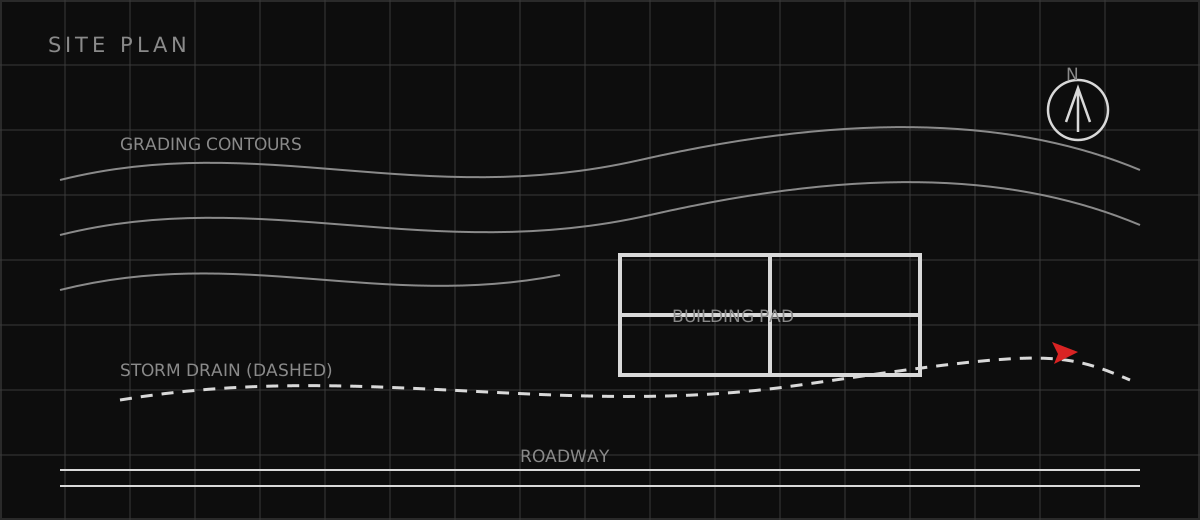
Grading the oval for sheet flow
The grading plan is the drainage plan for a speedway. The track surface is shaped with a consistent cross-slope — following the banking on superspeedways, a deliberate minimum slope on flat tracks — so water sheets toward the collection edge without lingering on the racing line. Grade breaks are placed at drain lines, not at random, and the tolerances are tight: a quarter-inch dip across a forty-foot lane is a ponding problem at night. The design calls out as-built verification because paving crews do not hold drainage tolerances by feel. Aprons, pit roads, and access roads tie into the same pattern so the whole facility sheds water as one system.
Infield drainage and tunnel protection
The infield collects water from the largest open area on the property, and it must dispose of it without using the track as a conveyance. Interior swales and area drains move water to the piped system, and the inside-edge interceptor line is the last defense before the track. Pedestrian and vehicle tunnels are the vulnerable points: their portals sit low, so each portal gets trench drains sized for the contributing area plus a pump station or gravity outlet with redundant capacity. A tunnel that floods cuts the infield in half and strands emergency equipment, so tunnel drainage is designed to the same storm as the track, not a lesser one.
Speedway drainage design checklist
A speedway drainage design is ready when it clears this checklist. Race night waits for no storm, so the system has to work the first time. • Track graded with consistent cross-slope to interceptor drains, verified by as-built survey • Infield graded as a separate basin with no flow path crossing the racing surface • Trench drains at the inside apron and every tunnel portal • Piped system and detention sized for the jurisdiction's design storm • Oil and sediment treatment at required collection points with a maintenance plan
Which related engineering resources can help?
What else do project teams ask?
Why do speedways pond water in the same spots every storm?
How do you keep infield water from crossing the track?
What storm size should speedway drainage be designed for?
Do racetracks need stormwater treatment for runoff?
Ready to discuss your engineering scope?
Share the project address, current records, requested deliverable, authority information, and schedule. Apex Grid confirms professional responsibility, availability, and scope before work begins.
Request a Project Review