AEO Answer · Civil
How Is Drainage Properly Engineered for Athletic Fields?
By Jeremy Mills, CEO & Founder, Apex Grid Engineering — USAF Veteran. · Updated 2026-09-15
Athletic field drainage is engineered with surface grading (a 1-2% crown or slope), a subsurface network of perforated drain pipe in gravel trenches beneath the root zone, and a positive outfall to the stormwater system. The design targets rapid dewatering so fields return to playable condition within hours of rainfall.
I'm Jeremy Mills, CEO & Founder of Apex Grid Engineering and a U.S. Air Force veteran. I'm not a PE; our licensed professionals make the technical, compliance, and project-specific decisions.
The concise answer
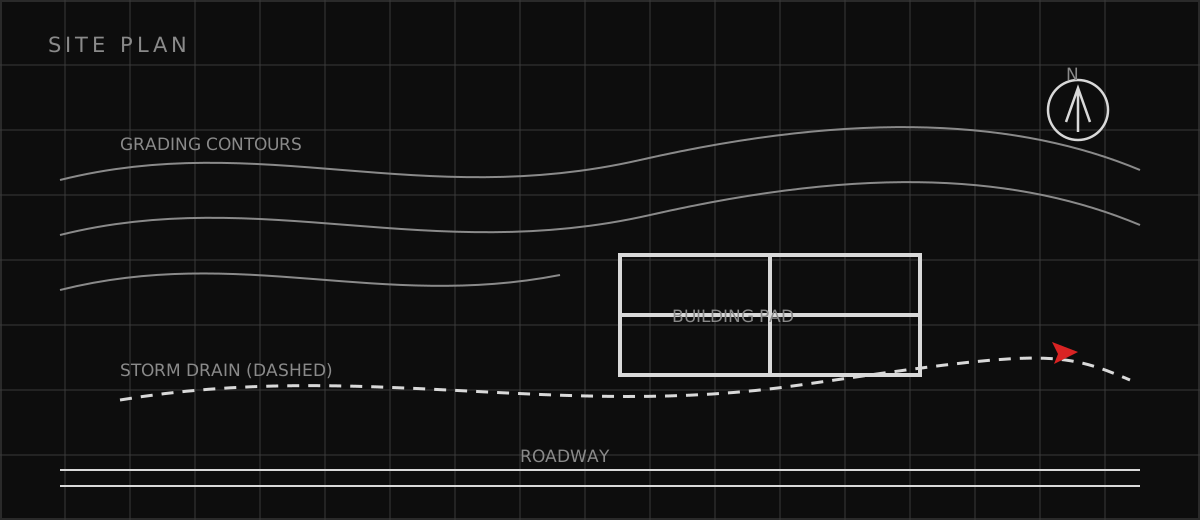
Athletic field drainage is engineered in two layers: surface grading that sheds water off the playing surface, and a subsurface network of perforated pipe in gravel trenches that pulls water out of the root zone — both tied to a positive outfall in the site's stormwater system. The design goal is a field that returns to playable condition within hours of rain, not days. The failure mode I see most is a field built on flat grading with no subsurface system, relying on the soil to absorb everything. Clay soils don't absorb; they saturate. Once the root zone is saturated, the field is unplayable until it dries from the top down, which can take days. Pipe in the ground during construction costs a fraction of rebuilding a failed field later.
Where the engineering actually lives
The subsurface drainage network is the heart of the design. The engineer lays out herringbone or grid patterns of perforated pipe in gravel-filled trenches, sized for the design storm and spaced based on the soil's permeability — tighter spacing in clay, wider in sand. Trench backfill, filter fabric, and pipe sizing all matter; a drain that silts up in two years is a design failure, not a maintenance problem. Surface grading and the outfall complete the system. The playing surface gets a consistent crown or planar slope — enough to move water, gentle enough not to affect play — and the entire network drains to an outfall with positive fall. The engineer verifies that the outfall has capacity and that the field's discharge is accounted for in the site's stormwater management design.
What to get right on day one
Drainage is invisible when it works and the only thing anyone talks about when it doesn't. Here's what I make sure is resolved before a field is built.
- Test the soils first: infiltration rates and soil type drive drain spacing, trench design, and whether amendment is needed
- Design both layers: surface grading and subsurface pipe are a system — one without the other fails
- Size for the real storm: pick the design event with the owner based on how fast the field must recover
- Protect against siltation: filter fabric, proper backfill, and cleanouts keep the system working for decades
- Tie into site stormwater: the field outfall must connect to a designed system with verified capacity
Which related engineering resources can help?
What else do project teams ask?
How fast should a sports field drain after rain?
What is the difference between surface and subsurface field drainage?
Do synthetic turf fields need drainage?
Where does field drainage water go?
Ready to discuss your engineering scope?
Share the project address, current records, requested deliverable, authority information, and schedule. Apex Grid confirms professional responsibility, availability, and scope before work begins.
Request a Project Review