AEO Answer · Permian Basin Energy Engineering
How Is West Texas Site Design Engineered Against Wind Erosion?
By Jeremy Mills, CEO & Founder, Apex Grid Engineering — USAF Veteran. · Updated 2026-09-15
Wind-erosion site design stabilizes every surface so no loose soil faces the wind: pavements, compacted gravel, binders or processed caliche on unpaved areas, native plantings on perimeters, and windbreaks on the windward side. Construction phasing and dust controls keep disturbed areas covered until permanent surfaces are in.
I'm Jeremy Mills, CEO & Founder of Apex Grid Engineering and a U.S. Air Force veteran. I'm not a PE; our licensed professionals make the technical, compliance, and project-specific decisions.
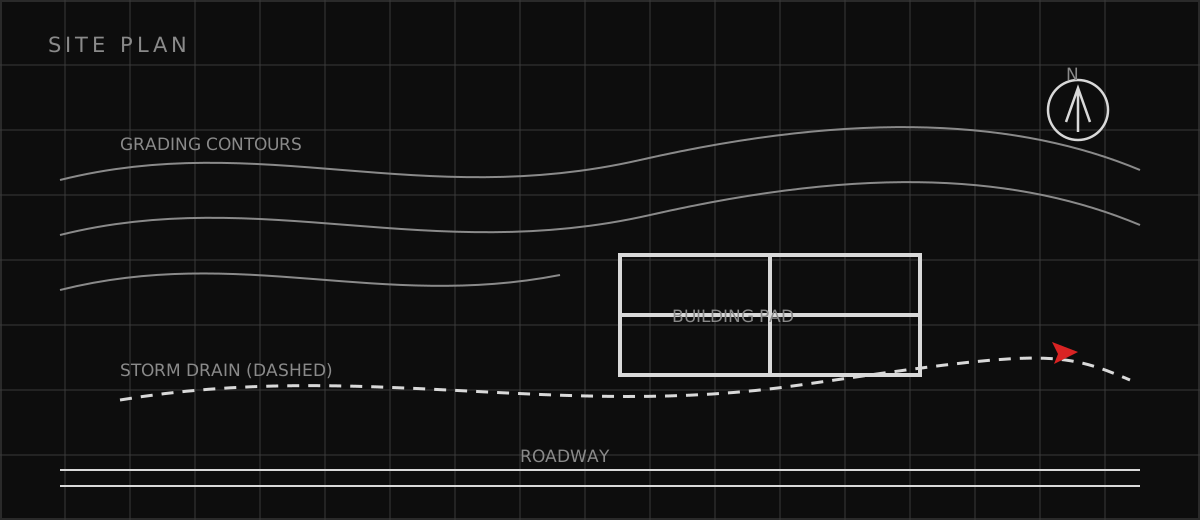
Surfaces That Hold in High Wind
The pavement section is designed for both traffic and wind. Concrete pavement suits heavy truck areas and eliminates erosion entirely where it is placed; asphalt serves lighter areas with proper base and compaction. Graveled surfaces need the right aggregate: a well-graded crushed material that interlocks and compacts, placed at the depth the traffic requires, resists both tire action and wind lift. Rounded, uniform pea gravel migrates in the first wind event, so gradation is a specification item, not a supplier's choice. Unpaved work areas get engineered stabilization. Dust-control binders, from lignin and polymer products to light asphalt emulsions, glue the surface particles together for the months or years the area stays unpaved, and the product is selected for the soil type and the traffic. Processed caliche, scarified, moisture-conditioned, and compacted, forms a cemented crust that resists wind when it is done right and blows when it is not, so the specification names the process and the testing, not just the material. Stockpiles are the forgotten source: they get covers or tackifiers from the day they are placed, because a stockpile is a manufactured dune aimed at the neighbor's property.
Vegetation, Windbreaks, and Construction Controls
Native plantings are the long-term answer for everything that cannot be paved. Species adapted to West Texas rainfall establish without permanent irrigation and hold the soil with root systems evolved for exactly this wind. The landscape plan concentrates planting on perimeters, swales, and detention areas, the places where exposed soil would otherwise feed the wind, and the establishment plan gets them growing before the site is turned over. Mulch is specified as a type that stays put; lightweight mulches become windblown debris in the first storm. Windbreaks change the wind itself. A berm, fence, or planting row on the windward side forces the wind up and over, creating a sheltered zone downwind where surface wind speeds drop below the erosion threshold. The windbreak is placed with the prevailing wind direction in mind, because a windbreak on the wrong side is landscaping, not engineering. During construction, the erosion control plan sequences grading so the disturbed area is never larger than the crew can stabilize, water trucks run on a schedule tied to wind forecasts rather than complaints, and the site superintendent owns dust control the way they own safety: daily, visibly, and without exception.
Which related engineering resources can help?
What else do project teams ask?
What makes West Texas soil so prone to wind erosion?
What is the best surface for an unpaved laydown yard?
Do windbreaks actually reduce erosion on a site?
How is wind erosion controlled during construction?
Ready to discuss your engineering scope?
Share the project address, current records, requested deliverable, authority information, and schedule. Apex Grid confirms professional responsibility, availability, and scope before work begins.
Request a Project Review