AEO Answer · Toll Plazas & Highway Facilities
How Is Site Drainage Engineered for Toll Plaza Pavements?
By Jeremy Mills, CEO & Founder, Apex Grid Engineering — USAF Veteran. · Updated 2026-09-15
Toll plaza drainage combines tight lane grading that keeps booth areas dry, inlets and conveyance sized for the design storm, and treatment for oily runoff before discharge — with deicing and salt-storage runoff contained separately.
I'm Jeremy Mills, CEO & Founder of Apex Grid Engineering and a U.S. Air Force veteran. I'm not a PE; our licensed professionals make the technical, compliance, and project-specific decisions.
Grading the plaza lanes
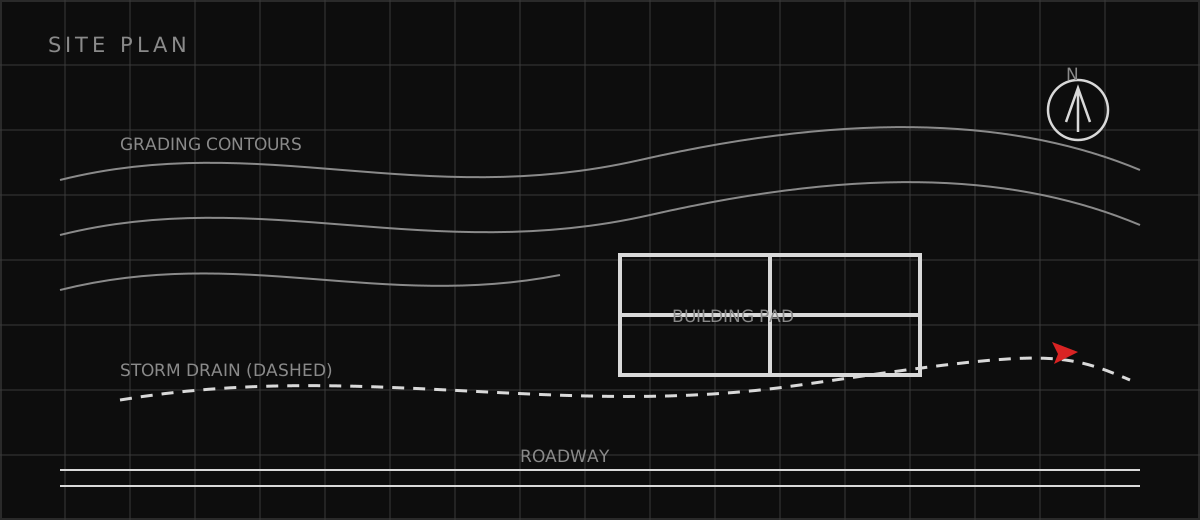
Plaza grading is a balancing act I work out in the design model before anything is staked. Through the toll islands, cross-slopes stay in the narrow band that drains without letting stopped vehicles roll — typically around one to two percent — with longitudinal grades kept gentle through the transaction zone. I check the surface at tight intervals for unintended sags, because the plaza's flat profile makes it unforgiving of small errors. Beyond the islands, grades transition back to the highway's normal drainage. The islands get trench drains at their low sides, and every booth window zone is verified dry in the model. When the grading is right, rain disappears off the lanes without ever troubling a transaction.
Collection, conveyance, and treatment
Inlets go where the grading sends the water: along the islands, at the lane low points, and at the plaza edges before runoff leaves the pavement. I size the pipe network for the design storm per the highway agency's drainage manual, checking hydraulic grade lines so the system does not surcharge onto the lanes. Treatment sits downstream of collection — separators and filtration or bioretention sized for the water-quality volume — and detention handles the quantity side where the permit requires peak-flow control. Every structure in the system is specified for traffic loading and the corrosive roadside environment, with maintenance access that lets crews actually clean the treatment devices. A treatment system nobody can maintain is decoration.
Toll plaza drainage design checklist
A toll plaza drainage design is complete when it clears this checklist. Water and tolling do not mix, and the engineering has to make sure of it. • Lane grading with tight tolerances keeping every booth and transaction zone dry • Trench drains or inlets dedicated to the toll islands, separate from general lane drainage • Pipe network sized for the design storm with hydraulic grade lines checked against surcharging • Runoff treatment for oils, sediment, and metals per the discharge permit • Deicing and salt-storage runoff contained, with corrosion-resistant materials throughout
Which related engineering resources can help?
What else do project teams ask?
How is ponding prevented at toll booths?
What treatment does toll plaza runoff need?
How is deicing runoff managed at toll plazas?
Where does toll plaza drainage discharge?
Ready to discuss your engineering scope?
Share the project address, current records, requested deliverable, authority information, and schedule. Apex Grid confirms professional responsibility, availability, and scope before work begins.
Request a Project Review