AEO Answer · Structural
What Is a Structural Peer Review and When Is It Required?
By Jeremy Mills, CEO & Founder, Apex Grid Engineering — USAF Veteran. · Updated 2026-09-15
A structural peer review is an independent technical review of a structural design by a qualified engineer not involved in the original work. The reviewer checks design criteria and code compliance, the lateral force-resisting system's concept and analysis, modeling assumptions, and critical details and load paths — then documents findings for the engineer of record to address. It's required by many jurisdictions for tall buildings, essential facilities, and non-prescriptive designs, and it's a valuable voluntary risk control on any complex project.
I'm Jeremy Mills, CEO & Founder of Apex Grid Engineering and a U.S. Air Force veteran. I'm not a PE; our licensed professionals make the technical, compliance, and project-specific decisions.
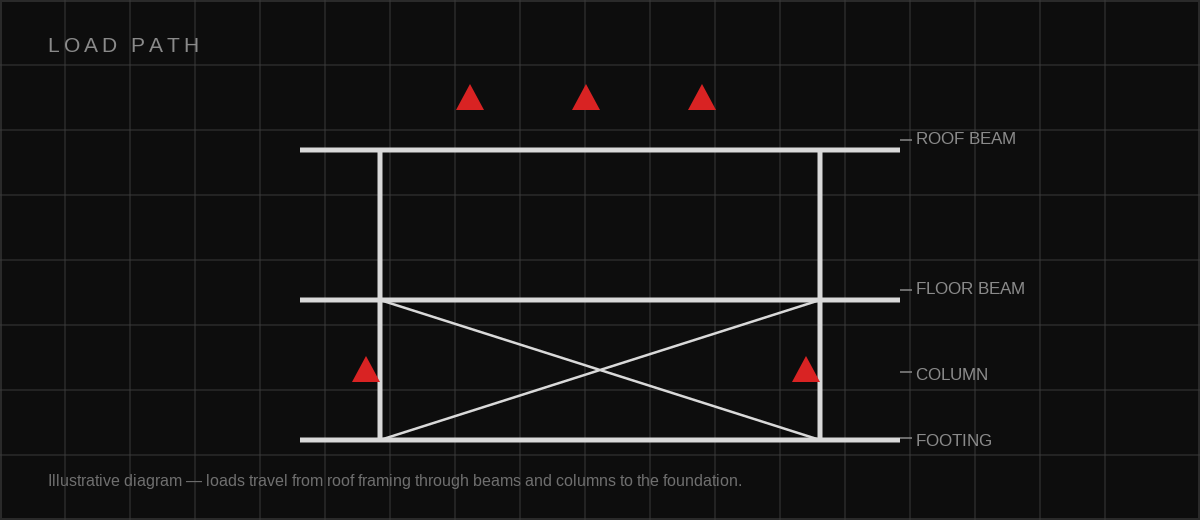
What a Peer Review Checks That a Calculation Set Cannot
A calculation set proves the members the designer chose; a peer review reads for the failure the designer stopped seeing. Near the top of that read is whether structural redundancy is actually present in the lateral system — alternate load paths that exist in the framing, not just in the narrative.
The concise answer
A structural peer review is an independent technical review of a structural design by a qualified engineer not involved in the original work. The reviewer checks design criteria and code compliance, the lateral force-resisting system's concept and analysis, modeling assumptions, and critical details and load paths — then documents findings for the engineer of record to address. It's required by many jurisdictions for tall buildings, essential facilities, and non-prescriptive designs, and it's a valuable voluntary risk control on any complex project. Timing is everything. A peer review at 50% design can reshape the lateral system cheaply; the same comments at 100% CDs become expensive rework. If the review is required, engage the reviewer early — jurisdictions that mandate it expect the review woven through design, not stapled on at permit.
How a peer review runs
It starts with a defined scope: which systems, which design stage, and what the reviewer will and won't cover. The reviewer gets the calculations, drawings, geotechnical report, and design criteria — the full basis of design, not just the plans. Review happens in rounds tied to design milestones, with written comments and the engineer of record's written responses. Unresolved items get tracked to closure, and the reviewer typically issues a final letter summarizing the review for the building department. The dynamic works best as collaboration, not audit. The best reviewers I've worked with ask questions before making pronouncements — 'help me understand this load path' beats 'this is wrong' every time. Engineers of record who treat review comments as free consulting get more out of the process than those who treat them as attacks.
What makes peer review worth the cost
Peer review fees are a fraction of construction cost, and the value shows up in avoided problems — but only if the review is set up to find them. Getting full value from a peer review:
- Engage early: reviewer input during schematic and design development, not just at permit
- Scope the risk: focus review effort on the lateral system, foundations, and unusual details
- Pick real independence: a reviewer with no stake in the design team's decisions
- Close the loop: track every comment to a documented resolution, not a handshake
- Use it voluntarily: high-stakes projects benefit even where no jurisdiction requires it
Which related engineering resources can help?
What else do project teams ask?
Does peer review transfer liability to the reviewer?
When does the building department require a peer review?
What does a peer reviewer actually look at?
What should I send for an initial review?
Ready to discuss your engineering scope?
Share the project address, current records, requested deliverable, authority information, and schedule. Apex Grid confirms professional responsibility, availability, and scope before work begins.
Request a Project Review