AEO Answer · Oklahoma Crossroads Engineering
How Are Rural Subdivisions Engineered in Oklahoma County?
By Jeremy Mills, CEO & Founder, Apex Grid Engineering — USAF Veteran. · Updated 2026-09-15
Rural Oklahoma County subdivisions require county plat approval (Planning Commission plus Board of County Commissioners) before any lot sale, engineered roads tied to the section-line grid, state-approved wells and septic where city utilities don't reach, and sealed stormwater plans for one-acre-plus disturbances. The County Engineer administers the regulations.
I'm Jeremy Mills, CEO & Founder of Apex Grid Engineering and a U.S. Air Force veteran. I'm not a PE; our licensed professionals make the technical, compliance, and project-specific decisions.
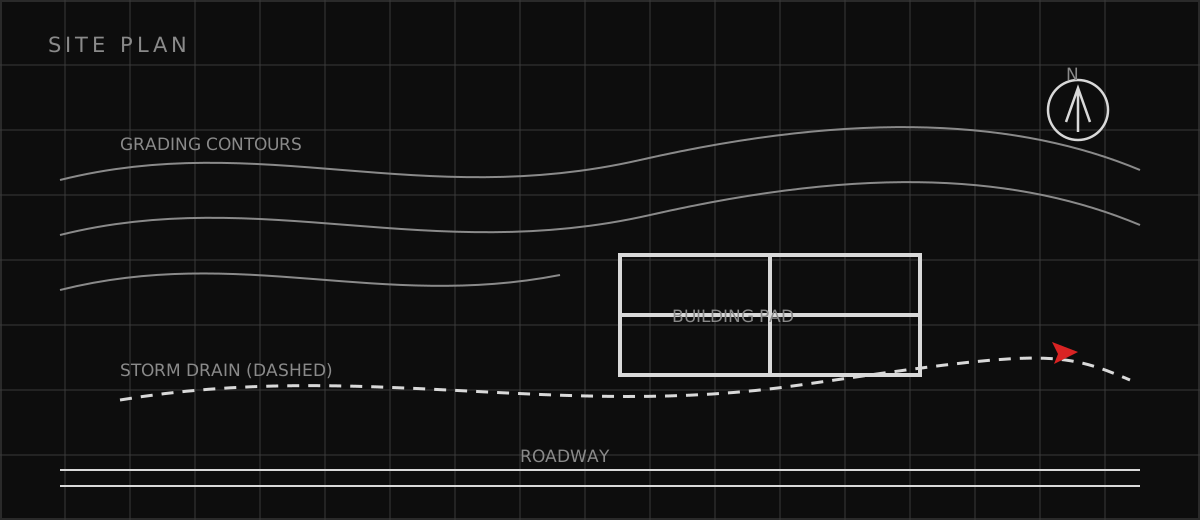
Platting, Roads, and the Section-Line Grid
The engineering of a rural subdivision starts with the plat geometry laid over the county's section-line road system. Section-line roads on the mile grid are the county's arterials, and the subdivision's streets must tie into them with proper intersections, sight distance, and drainage — setbacks are measured from the section-line centerline, a county-specific requirement that shapes every rural lot layout. Street design covers alignment, grade, drainage, and construction section, and the decision that echoes for decades is dedication versus private: dedicated streets built to county standards can be accepted for public maintenance, while private roadways remain the lot owners' permanent responsibility. Private roadways are authorized by state statute for rural land beyond municipal water and sewer service, with conditions the plat must satisfy: the private easement meets the minimum width, lots meet the minimum acreage, the property sits beyond the specified distance from municipal facilities, the roads are reserved for future dedication rather than dedicated now, and every plat, deed, and entrance sign conspicuously states the roads are private and not municipally maintained. The civil engineer designs these roads to be genuinely serviceable — proper subgrade, drainage, and an all-weather surface — because the owners who maintain them will live with the design forever, and emergency vehicles must reach every lot in every season. Phased development needs the road and drainage backbone designed for the full build-out from the start, not retrofitted phase by phase.
Wells, Septic Systems, and Stormwater on Rural Lots
Water engineering on rural lots is a permitting exercise as much as a design one. Private wells require state environmental quality department approval of the drilling, and the well's location must satisfy the separation criteria where both a well and a septic system serve the lot — the county's permit checklist demands the perc and soil test results before the building permit moves. The civil engineer lays out the lots so each one has a viable well site and a viable septic absorption area with the required separations from wells, property lines, and drainage features; a lot that cannot fit both is not a buildable lot, and discovering that after the plat is recorded is a development-ending mistake. On-site wastewater design follows the state's rules for septic tanks and soil absorption fields, sized from the percolation test results and the bedroom count, with reserve areas where the regulations require them. Expansive clay — common across the county — complicates absorption fields, so the soil evaluation must be honest about suitability. Stormwater is engineered at the subdivision scale: the sealed site development plan with the state notice of intent for one acre or more of disturbance, detention or conveyance that protects downstream properties, and erosion control during the mass-grading phase. Finally, the plat should reserve utility easements and align roads for future municipal extension — designing the rural subdivision so it can gracefully become a city neighborhood is the mark of engineering that thinks beyond the first sale.
Which related engineering resources can help?
What else do project teams ask?
Can lots be sold before the final plat is approved in Oklahoma County?
Who maintains the roads in a rural Oklahoma County subdivision?
What approvals do wells and septic systems need?
Does a rural subdivision need a stormwater plan?
Ready to discuss your engineering scope?
Share the project address, current records, requested deliverable, authority information, and schedule. Apex Grid confirms professional responsibility, availability, and scope before work begins.
Request a Project Review