AEO Answer · Ski Resorts & Mountain Recreation
How Is Stormwater Managed at Mountain Resort Sites in Big Storms?
By Jeremy Mills, CEO & Founder, Apex Grid Engineering — USAF Veteran. · Updated 2026-09-15
Mountain resort stormwater is engineered from the watershed analysis: armored conveyance carrying cloudburst peaks past facilities, detention metering releases to pre-development rates, erosion control and revegetation holding the disturbed slopes' soil, and water quality treatment for roads and lots — so cloudbursts pass safely and the pristine streams stay clear.
I'm Jeremy Mills, CEO & Founder of Apex Grid Engineering and a U.S. Air Force veteran. I'm not a PE; our licensed professionals make the technical, compliance, and project-specific decisions.
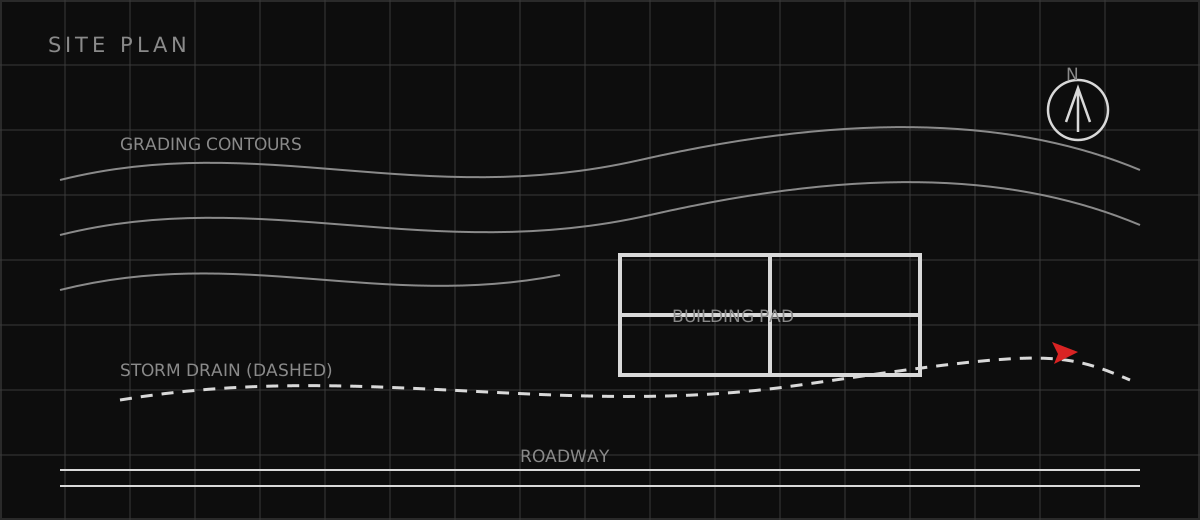
Hydrology of the mountain watershed
The hydrologic analysis defines the design. I delineate the watersheds above and through the resort, model the design storms with the mountain's rainfall intensities, and model the snowmelt season from the snowpack data. The graded ski terrain gets special attention: I assign the runoff characteristics honestly — a graded trail sheds water far faster than the forest it replaced — and I trace the flow paths the grading creates. The analysis produces the peak flows and volumes at every facility, crossing, and discharge point. Climate trends are considered: the storms are intensifying, and I build the appropriate resilience into the design. The hydrology report becomes the reference for every future project at the resort — each new building or trail checks its drainage against the watershed model.
Conveyance, detention, and erosion defense
The conveyance design carries the peaks safely: swales and channels sized for the design flows with the armoring — riprap, turf reinforcement, concrete — that the velocities demand, and culverts at every road and trail crossing sized for the storm plus the melt with headwalls that survive the mountain's freeze-thaw. Detention meters the release: ponds and underground systems with controlled outlets, designed for the winter and maintainable for decades. Erosion control is the continuous program: construction-phase sediment controls for every project, permanent stabilization of every disturbed slope with the revegetation the mountain's climate allows, and the drainage maintenance — water bars, swales, culvert cleaning — that the operations team performs on schedule. Water quality treatment serves the developed surfaces: the parking lots, roads, and village get the sedimentation and filtration the permit requires before their runoff reaches the streams.
Checklist before the storm season
Stormwater readiness is verified before the summer storms and the spring melt. I inspect every channel, culvert, and pond, confirm the erosion controls are in place, and verify the water quality systems are maintained. The watershed model is updated with any new development. Here is the checklist I hand resort civil teams.
- Model the watershed's storms and the spring melt — graded trails shed water violently
- Armor conveyance for the velocities and size crossings for storm plus melt peaks
- Detain releases to pre-development rates with winter-survivable pond and outlet design
- Stabilize every disturbed slope and maintain trail drainage as a scheduled program
- Meet the watershed's strict water quality permits with designed, monitored treatment
Which related engineering resources can help?
What else do project teams ask?
How is the spring snowmelt handled?
How are ski slopes protected from erosion?
What water quality rules apply in mountain watersheds?
How is stormwater detained at a resort?
Ready to discuss your engineering scope?
Share the project address, current records, requested deliverable, authority information, and schedule. Apex Grid confirms professional responsibility, availability, and scope before work begins.
Request a Project Review