AEO Answer · Gulf Industrial Engineering
How Is Stormwater Designed for Gulf Coast Industrial Sites?
By Jeremy Mills, CEO & Founder, Apex Grid Engineering — USAF Veteran. · Updated 2026-09-15
Stormwater for Gulf Coast industrial sites is designed by containing and treating runoff from process areas, sizing detention for hurricane-level rainfall, separating clean and contaminated drainage, and meeting state water-quality permits - with spill containment so a storm never washes chemicals offsite.
I'm Jeremy Mills, CEO & Founder of Apex Grid Engineering and a U.S. Air Force veteran. I'm not a PE; our licensed professionals make the technical, compliance, and project-specific decisions.
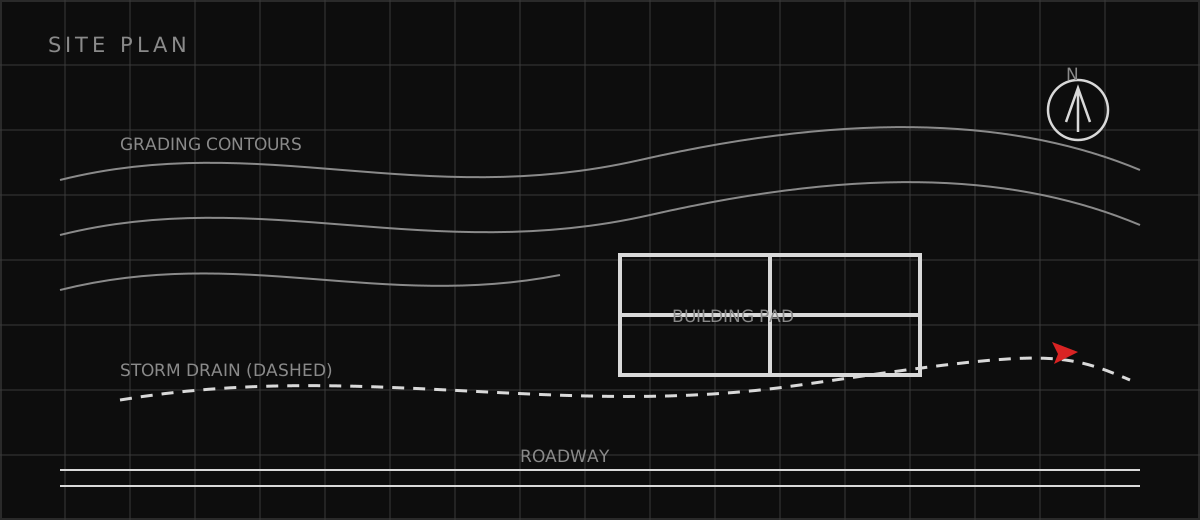
Separating Clean and Process Drainage
The drainage plan starts by classifying every acre of the site. Roofs, offices, and parking are clean areas whose runoff can go to detention and discharge with minimal treatment. Tank farms, process units, loading racks, and chemical storage are process areas whose runoff is potentially contaminated and must pass through oil-water separators, treatment, or containment before it leaves the site. The engineer draws a hard line between the two systems - separate piping, separate inlets, valved connections - so a spill in a process area cannot enter the clean system. Grading enforces the separation. Process areas are curbed and sloped inward to collection points, with enough freeboard that a cloudburst does not overtop the curbs before the separators can handle the flow. Truck loading areas get spill slabs with trench drains, and rail spurs get their own containment. The engineer also designs for the failure case: if a separator is overwhelmed, overflow routes to secondary containment or a shutoff valve holds the discharge until the storm passes - because an uncontrolled release during a hurricane is the scenario regulators penalize hardest.
Detention and Water Quality on a Flat Coast
Sizing detention starts with the AHJ's design storm - often the 25-year or 100-year event - using regional rainfall data that reflects Gulf Coast intensities. The engineer routes the hydrograph through the proposed ponds or vaults and verifies that peak outflow stays within the allowed release rate, then checks the system against the tailwater: when the receiving bayou or ship channel is high, the pond cannot drain, so the design provides storage for back-to-back storms or adds pumps. Underground vaults serve where land is too valuable for ponds, at higher cost. Water quality design runs in parallel with quantity. The industrial stormwater permit sets benchmarks for pollutants like oil, metals, and suspended solids, and the site's stormwater pollution prevention plan documents the best management practices - covered material storage, routine inspections, spill kits, employee training - that keep the discharge clean. The engineer designs treatment devices like separators and filtration for the water-quality storm, a smaller event than the flood-control storm, and the owner samples the discharge to prove compliance.
Which related engineering resources can help?
What else do project teams ask?
What is secondary containment and how is it sized?
Why can't process-area runoff go straight to the storm drain?
How does a high water table change detention design?
Which agencies regulate industrial stormwater in Texas and Louisiana?
Ready to discuss your engineering scope?
Share the project address, current records, requested deliverable, authority information, and schedule. Apex Grid confirms professional responsibility, availability, and scope before work begins.
Request a Project Review