AEO Answer · Convenience Stores & Gas Stations
How Is Stormwater Engineering Designed for Gas Station Sites?
By Jeremy Mills, CEO & Founder, Apex Grid Engineering — USAF Veteran. · Updated 2026-09-15
Gas station stormwater is engineered to contain fuel before it becomes runoff: the fueling pad graded to contained trench drains, oil-water separation and spill containment on the fueling-area drainage, and detention and treatment sized to the city or county stormwater manual.
I'm Jeremy Mills, CEO & Founder of Apex Grid Engineering and a U.S. Air Force veteran. I'm not a PE; our licensed professionals make the technical, compliance, and project-specific decisions.
Grading the Fueling Pad for Containment
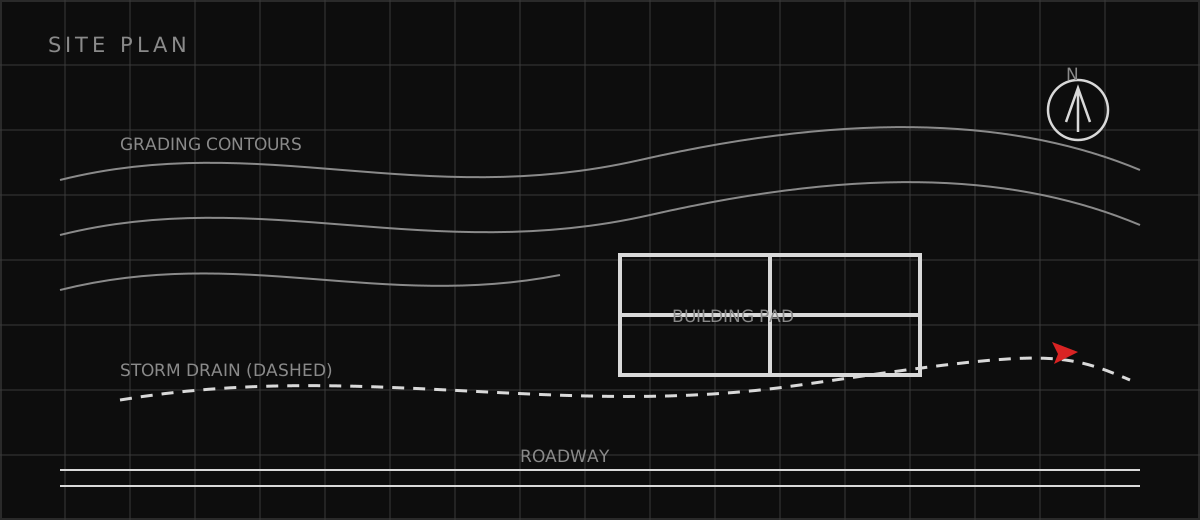
The fueling pad grading plan is drawn with containment as the goal: a nearly flat pad — typically one to two percent slope — falling toward trench drains set just outside the dispenser islands or along the pad edge, with the surrounding grades falling away so clean runoff never enters the contained area. The trench drains themselves are rated for the traffic loading and fitted with grates that a fuel hose or a shoe heel cannot catch. Elevation control matters beyond the pad. Tank fill areas get their own contained grading, the dumpster and trash enclosure drain to the sanitary system rather than the storm system where the local rules require it, and the car and truck circulation is graded so a spill anywhere on the fueling side flows toward containment, not toward the street. The engineer shows the contained tributary area on the drainage plan so the separator sizing is transparent to the reviewer.
Separators, Treatment, and Detention
The oil-water separator is sized to the contained fueling area and the water-quality design storm in the governing manual — not to the whole site, because the grading keeps clean water out. Coalescing-plate separators handle the emulsified oils a busy fueling pad produces; the engineer specifies the removal efficiency, the maintenance access, and the high-water and shutoff provisions, and details the outlet protection so the discharge meets the permit. Detention and water-quality treatment for the rest of the site follow the local manual: detention ponds or underground vaults for flow control, bioretention or media filters for treatment, each sized to the jurisdiction's design storms. In an incorporated city this often means the city's LID worksheet and maintenance agreement; in the county, the county's equivalent with its own forms. The engineer completes whichever submittal package the parcel's jurisdiction requires and records the maintenance obligations so the operator knows the devices must be serviced on schedule.
Gas Station Stormwater Design Checklist
Confirm these with the stormwater reviewer and fire marshal together: • Fueling pad graded to contained trench drains; clean runoff kept out of the contained area • Oil-water separator sized to the fueling tributary area and the local water-quality storm • Spill containment at tank fills, with spill buckets and graded containment detailed • Governing stormwater manual identified: city manual and LID rules vs county manual • Detention and treatment sized to the jurisdiction's design storms with maintenance agreements recorded • Separator maintenance access and pump-out provisions detailed on the plans • Fire marshal's fuel source-control requirements coordinated with the civil drainage design • Dumpster and wash areas routed per local rules — often to sanitary, not storm
Which related engineering resources can help?
What else do project teams ask?
Why can't fueling-area runoff go straight to the storm drain?
How big should the oil-water separator be?
Do city and county stormwater rules differ for gas stations?
What happens to a large spill in the drainage system?
Ready to discuss your engineering scope?
Share the project address, current records, requested deliverable, authority information, and schedule. Apex Grid confirms professional responsibility, availability, and scope before work begins.
Request a Project Review