AEO Answer · Beef Feedlots & Cattle Backgrounding
How Is Feedlot Drainage Designed for Stormwater Control?
By Jeremy Mills, CEO & Founder, Apex Grid Engineering — USAF Veteran. · Updated 2026-09-15
Feedlot drainage separates clean from contaminated water: upslope diversions sized for the design storm carry clean water around the site, while graded pens, channels, and culverts collect production-area runoff to the containment system — with floodplain permits reconciled.
I'm Jeremy Mills, CEO & Founder of Apex Grid Engineering and a U.S. Air Force veteran. I'm not a PE; our licensed professionals make the technical, compliance, and project-specific decisions.
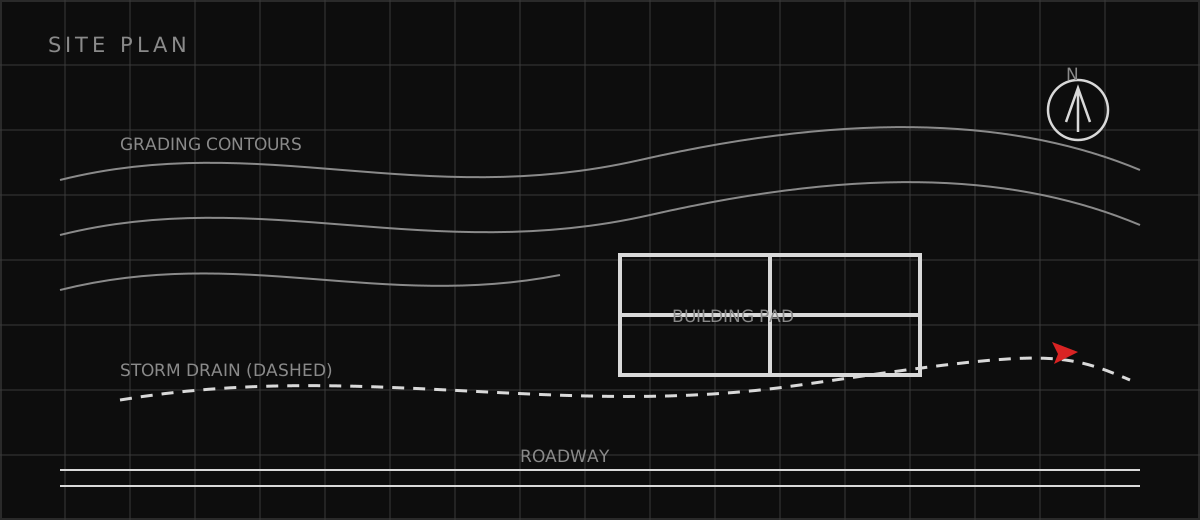
Clean-Water Diversion and Watershed Mapping
The engineer begins with the watershed, not the pens. A topographic survey defines the drainage area above and around the feedlot, and the design intercepts that water with diversion ditches or berms before it reaches any pen, alley, stockpile, or building. The engineer sizes each diversion for the design storm's peak flow, checks the outlet for erosion and downstream impact, and details maintenance access — a diversion choked with sediment or cattle damage fails exactly when it is needed. The diversion outlets deserve the same care as the ditches. Concentrated flow leaving a diversion can gully a hillside in one storm, so the engineer armors outlets with riprap or stilling structures and confirms the receiving drainage can take the flow without flooding a neighbor. Where diversions cross roads or alleys, the engineer sizes culverts for the full design flow plus debris allowance, because a plugged culvert turns the road into a dam and the diversion into a pond.
Production-Area Collection, Roads, and Floodplain
The collection network is the pens' plumbing. The engineer grades every pen, alley, and working area toward the settling basin as one continuous hydraulic system, sizing the channels and swales for the design storm with freeboard and checking velocities against erosion — too fast and the channel eats itself, too slow and it silts up. Culverts at road and alley crossings are sized for the design flow, and the engineer keeps the inverts low enough to drain while protecting them from equipment damage. Road drainage is designed with the roads. The engineer crowns driving surfaces, ditches both sides where the grade demands it, and provides culverts at every natural drainage crossing — the road plan and the drainage plan are one drawing. Roof and drip-line water from buildings is collected separately and routed to the clean system where the separation is real. Finally, the engineer checks the FEMA floodplain maps: if any part of the site is in the mapped floodplain, the county floodplain development permit governs grading, fill, and structure elevation, and the design complies before a blade of dirt moves.
Feedlot Drainage Design Checklist
Use this checklist before the drainage plan is permitted: • Contributing watershed mapped; clean water diverted around all production areas • Diversions sized for the design storm, with armored outlets and maintenance access • Pens, alleys, and working areas graded as one hydraulic network to the settling basin • Channels sized for design flow with freeboard; velocities checked against erosion • Culverts at every road and alley crossing sized for full flow plus debris allowance • Roads crowned with roadside ditches; no road acting as an unintended dam • Roof and drip-line water collected and routed to the clean system where truly separate • Erosion protection at every concentrated outlet: riprap, flumes, or turf reinforcement • County floodplain permit reconciled: no net floodway fill, structures per ordinance • County grading permit conditions met before earthwork starts
Which related engineering resources can help?
What else do project teams ask?
Why separate clean water from feedlot runoff?
What storm should feedlot drainage handle?
Do feedlot roads need special drainage?
What if the feedlot is in a floodplain?
Ready to discuss your engineering scope?
Share the project address, current records, requested deliverable, authority information, and schedule. Apex Grid confirms professional responsibility, availability, and scope before work begins.
Request a Project Review