AEO Answer · Vehicle Dealerships
How Is Stormwater Managed for Dealership Lots and Sites?
By Jeremy Mills, CEO & Founder, Apex Grid Engineering — USAF Veteran. · Updated 2026-09-15
Engineers design dealership stormwater systems with detention controlling peak flows to pre-development rates and treatment practices removing oils and metals — keeping shop process water on separators and out of the storm system.
I'm Jeremy Mills, CEO & Founder of Apex Grid Engineering and a U.S. Air Force veteran. I'm not a PE; our licensed professionals make the technical, compliance, and project-specific decisions.
Hydrology, Detention, and Outlet Control
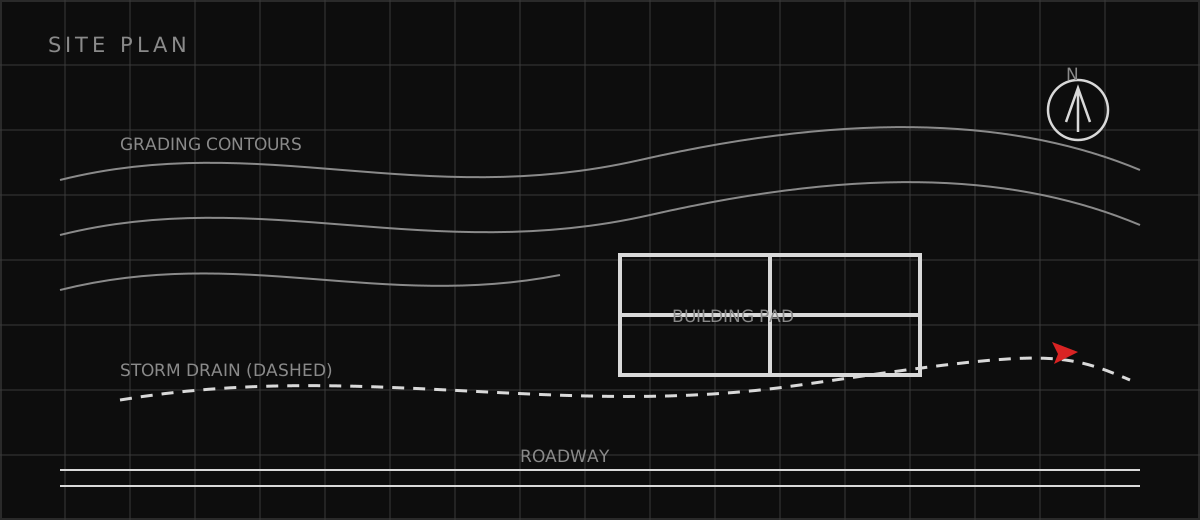
The hydrologic analysis quantifies the problem: every acre of display lot, roof, and drive converted to runoff coefficients, run through the local design storms to produce peak flows and volumes. The engineer then sizes detention — ponds, underground vaults, or a combination — to shave those peaks back to the pre-development rates the jurisdiction requires, often across several storm frequencies. The outlet structure is the precision instrument: staged orifices and weirs releasing the water quality volume slowly, then controlling larger storms to their target rates. The design proves performance with routed hydrographs, details maintenance access to every structure, and coordinates the grading so the lot drains positively to inlets without ponding in display rows — standing water on the sales lot is both a drainage failure and a merchandising one.
Water Quality Treatment and Source Controls
Treatment targets the vehicle-operation pollutants: petroleum hydrocarbons, zinc and copper from tire and brake wear, and sediment. The engineer selects practices against the site's soils and space — bioretention and swales where soils infiltrate, media filtration or proprietary treatment where they do not — and sizes them for the water quality design storm the permit defines. Source controls do the quiet heavy lifting: covered wash and fuel areas, spill kits and response plans at the fuel island, and the shop's oil-water separators ensuring process water never enters the storm system. The design documents the treatment train from pavement to discharge and provides the operation and maintenance manual the permit requires — treatment practices only treat when they are maintained.
Dealership Stormwater Design Checklist
A complete stormwater package controls both flow and pollutants: • Hydrologic analysis with local design storms and pre-development baselines • Detention sized to control peak rates across the required storm frequencies • Outlet structures with staged release for water quality and flood control • Lot grading draining positively to inlets with no ponding in display rows • Water quality treatment sized for vehicle-operation pollutants • Source controls: covered wash areas, spill response, separators on shop drains • Stormwater permit compliance with operation and maintenance documentation
Which related engineering resources can help?
What else do project teams ask?
Why do dealership lots need detention?
What pollutants come off a dealership lot?
Can wash water or shop drains connect to the storm system?
What maintenance does a dealership stormwater system need?
Ready to discuss your engineering scope?
Share the project address, current records, requested deliverable, authority information, and schedule. Apex Grid confirms professional responsibility, availability, and scope before work begins.
Request a Project Review