AEO Answer · Heartland Engineering
How Is Stormwater Managed for a Columbus Subdivision?
By Jeremy Mills, CEO & Founder, Apex Grid Engineering — USAF Veteran. · Updated 2026-09-15
Stormwater for a Columbus subdivision is managed with a site-wide system — detention or retention basins, bioswales, and storm sewers — designed so post-development runoff matches pre-development rates and volumes for design storms, with water-quality treatment for the first flush and plans approved through the city's stormwater review.
I'm Jeremy Mills, CEO & Founder of Apex Grid Engineering and a U.S. Air Force veteran. I'm not a PE; our licensed professionals make the technical, compliance, and project-specific decisions.
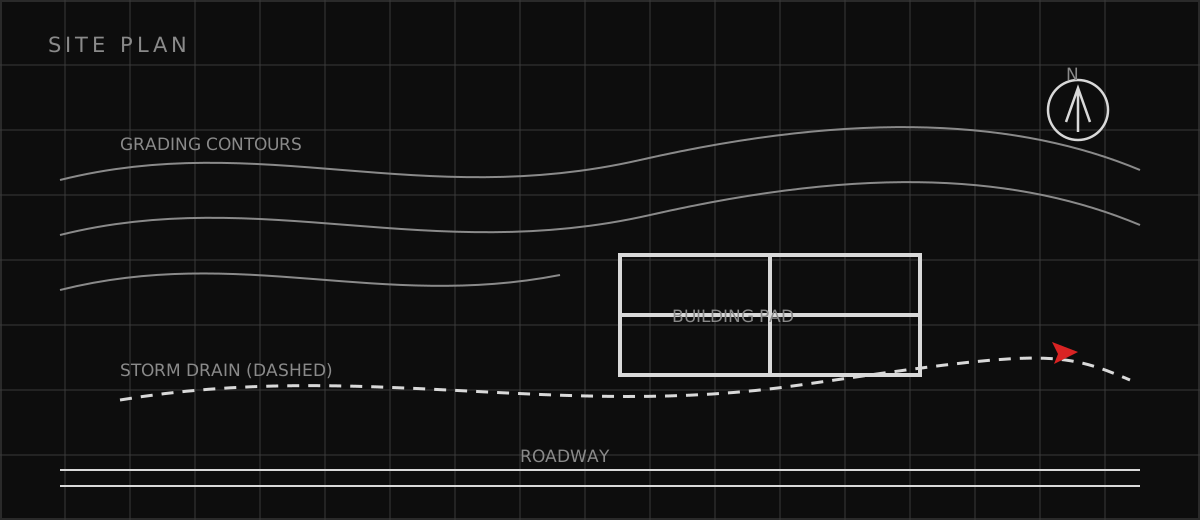
Watershed Modeling for the Full Site
The analysis treats the subdivision as one watershed. The engineer maps existing drainage patterns from topographic survey, then overlays the proposed grading, street network, and lot layout to define post-development subcatchments. Each subcatchment gets runoff parameters by surface type, and the time of concentration — how long water takes to travel from the farthest point to the outlet — is computed from the actual flow paths across lots, swales, and pipes. Pre-development conditions are modeled as the baseline the entire design must match. Design storms from the applicable manual are routed through both the pre- and post-development models to produce the hydrographs that size everything downstream. The engineer iterates: adjusting basin volumes, outlet configurations, and pipe sizes until peak outflows at every discharge point stay within the allowed release rates for each required storm. The calculations also verify that the 100-year water surface stays below finished-floor elevations with freeboard, and that emergency overland flow paths have the capacity and the grading to carry extreme events without flooding homes. This modeling package, stamped and submitted, is the engineering basis the reviewer approves.
Basins, Conveyance, and Water Quality
Each detention or retention basin is engineered for its tributary area with a multi-stage outlet: a low-flow orifice that drains the water-quality volume slowly, weirs or risers that control the larger design storms, and an emergency spillway for the extreme event. The engineer details sediment forebays at every inlet, maintenance access for excavation equipment, and safety features such as gentle side slopes and safety benches where basins sit near homes. Outlet protection — riprap or energy dissipators — prevents the concentrated discharge from eroding the downstream channel. The conveyance network gets the same rigor. Storm sewer pipes are sized for their tributary flows with the hydraulic grade line checked below rim elevations in the design storm, inlets are spaced and sized to capture street flow without excessive spread, and the engineer verifies that the system drains down between storms so standing water does not become a mosquito or maintenance problem. Water-quality treatment targets the first flush: extended detention that holds early runoff long enough for pollutants to settle, plus bioswales and vegetated channels that filter sheet flow from streets before it reaches the basins. An operations and maintenance plan, typically recorded against the subdivision, assigns long-term responsibility for all of it.
City, County, and Township Review Paths
The fastest way to lose weeks on a subdivision stormwater design is to model to the wrong manual. Inside Columbus city limits, the city's stormwater manual and development review process govern — submittal portal, reviewer expectations, fee schedule, and inspection program are all the city's. But much of central Ohio's subdivision growth happens in townships and suburbs where the county engineer or the local municipality sets the standards, and their design storms, release-rate policies, and water-quality requirements can differ from the city's. The engineer identifies the authority having jurisdiction at project kickoff and designs to that jurisdiction's manual from the first model run. Review timelines follow each jurisdiction's development calendar — planning commission meetings, engineering review cycles — and resubmittals address reviewer comments before approval. Construction brings its own jurisdiction-specific requirements: erosion and sediment control inspections during grading, basin and outlet inspections during construction, and finally the as-built survey with the engineer's certification that closes the permit. The technical engineering is equivalent everywhere; the administrative path is not.
Which related engineering resources can help?
What else do project teams ask?
Why does a subdivision need a watershed-level stormwater design?
What is the first flush and why does it matter?
Who maintains subdivision stormwater basins?
Does the review differ between Columbus and the surrounding townships?
Ready to discuss your engineering scope?
Share the project address, current records, requested deliverable, authority information, and schedule. Apex Grid confirms professional responsibility, availability, and scope before work begins.
Request a Project Review