AEO Answer · Campgrounds & RV Resorts
How Are Septic Systems Engineered for Busy Campgrounds?
By Jeremy Mills, CEO & Founder, Apex Grid Engineering — USAF Veteran. · Updated 2026-09-15
Campground septic systems are engineered for surge loading: conservative flow estimates, oversized tanks with effluent filters and grade-level access, pressure-dosed dispersal matched to tested soils, and protected reserve area — designed around soil capacity and the violent weekend peaks that define campground use.
I'm Jeremy Mills, CEO & Founder of Apex Grid Engineering and a U.S. Air Force veteran. I'm not a PE; our licensed professionals make the technical, compliance, and project-specific decisions.
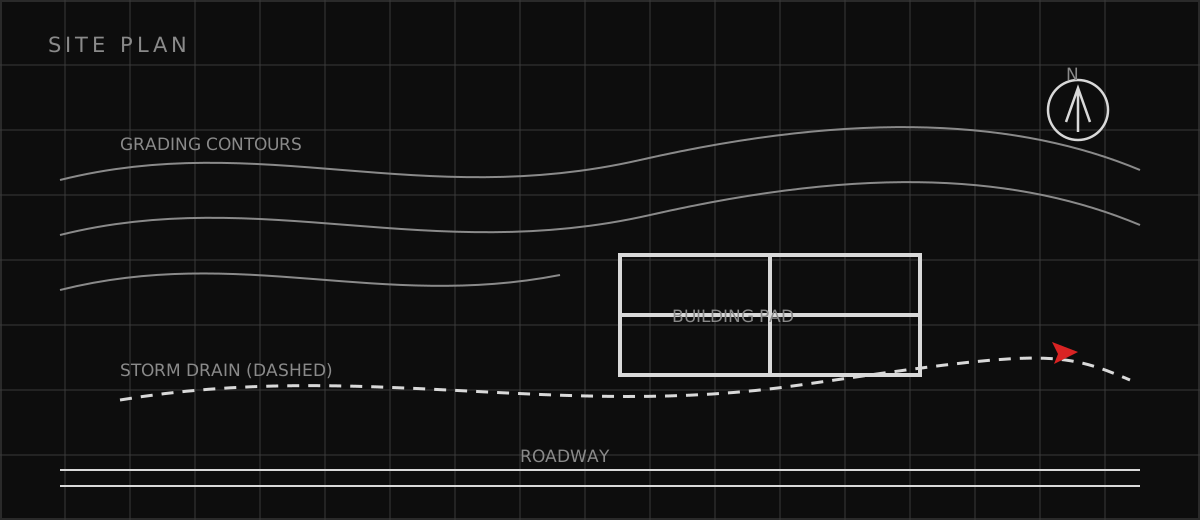
From soils report to system type
The soils report dictates the system the way a foundation report dictates the structure. Deep, permeable soils with low groundwater open the door to conventional or pressure-dosed trench fields — the simplest, most forgiving option. Shallow soils push toward mound systems that build the dispersal bed above grade; high groundwater or tight soils point to drip dispersal or advanced treatment ahead of the field. I match the technology to the site rather than forcing a preferred system onto unwilling ground, and I verify setbacks to wells, waterways, and property lines before the site plan locks, because a field that violates setbacks is a field that gets redesigned.
Tanks, dosing, and field layout
I size tanks for the campground's design flow with generous capacity, compartmentalized or in series for better solids separation, and every tank gets an effluent filter and risers to grade. The dosing system — pump chamber with duplex pumps or a dosing siphon — is sized to deliver the field's design dose on a timer that spaces doses through the day. Field layout spreads trenches or drip lines across the usable area with even distribution, keeps the field out of traffic and drainage paths, and reserves an equal area for future replacement. I specify observation ports in the field so anyone can check ponding levels without digging, which turns field health into a five-minute inspection.
Checklist for a septic system that lasts
Longevity is designed in, then maintained in. I verify tank watertightness before backfill, confirm dosing volumes and timer settings at startup, and walk the field after the first heavy-use weekend to check for surfacing. The owner gets the maintenance schedule, the pumper gets tank locations on a map, and the reserve area gets marked on the site plan so it never becomes a parking lot. Signage in bathhouses about what not to flush pays for itself many times over. Here is the checklist I hand campground owners.
- Test soils properly — profile, percolation, and seasonal groundwater — before choosing the system type
- Oversize tanks with effluent filters, risers to grade, and accessible distribution components
- Dose the field on a timer with rest periods instead of trickling continuously
- Protect a full reserve area on the site plan and keep traffic and drainage off the field
- Hand over a written pumping, filter-cleaning, and inspection schedule with field observation ports
Which related engineering resources can help?
What else do project teams ask?
Why can't a campground use a residential-style septic design?
What does pressure dosing do for a drain field?
How is the soil tested before designing the field?
What maintenance does a campground septic system need?
Ready to discuss your engineering scope?
Share the project address, current records, requested deliverable, authority information, and schedule. Apex Grid confirms professional responsibility, availability, and scope before work begins.
Request a Project Review