AEO Answer · Campgrounds & RV Resorts
How Is Drainage Designed for Campground Roads and Pads?
By Jeremy Mills, CEO & Founder, Apex Grid Engineering — USAF Veteran. · Updated 2026-09-15
Campground road drainage combines crowned road sections shedding to ditches, hydraulically sized culverts at every crossing, site grading that keeps pads above surrounding grade, and maintenance-friendly details — designed around the site's natural drainage so roads stay passable through real storms.
I'm Jeremy Mills, CEO & Founder of Apex Grid Engineering and a U.S. Air Force veteran. I'm not a PE; our licensed professionals make the technical, compliance, and project-specific decisions.
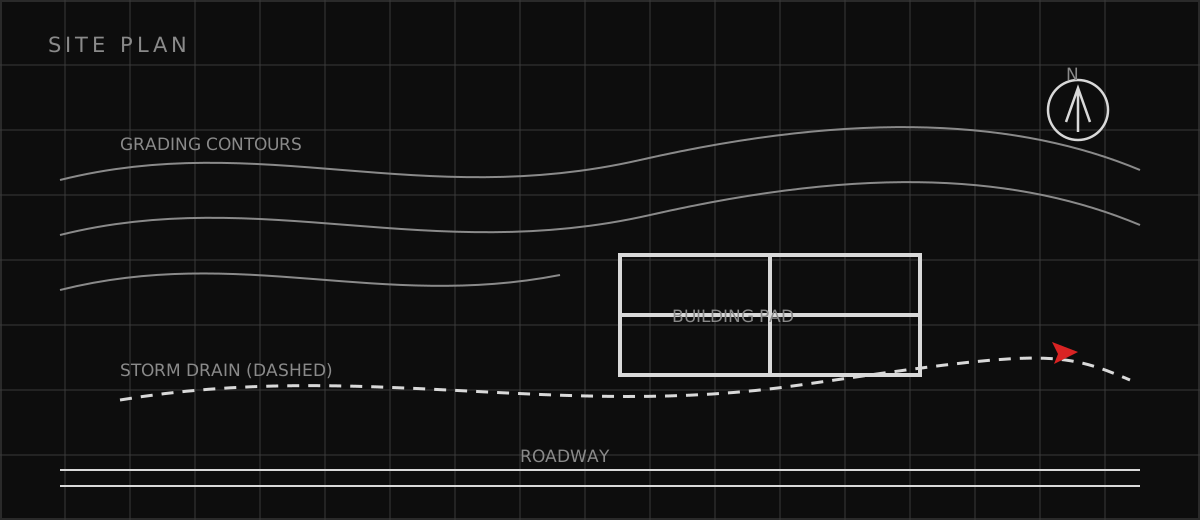
Reading the site's water
I map how water moves across the property before placing a single road: the natural swales, the low spots, the springs, the places that pond after rain. Roads follow ridges and high ground where possible, crossing drainage paths at right angles with proper culverts rather than running along them. I identify the outlets — where the site's water legally and physically leaves — and design the whole system toward them. This reading also flags the areas to avoid: building sites or roads in the natural drainage path is asking for perpetual trouble, and no amount of engineering makes it cheap.
Road sections, ditches, and crossings
The typical section I design is a crowned driving surface — gravel or paved — with shallow roadside ditches sized for the design storm and gentle enough side slopes for maintenance. At every drainage crossing, a calculated culvert with headwalls or end sections, inlet protection against debris, and outlet protection against erosion. Where roads run on slopes, I add cross-drains or water bars to intercept water running down the road before it gains destructive speed. Turnarounds and intersections get extra attention because that's where grading errors pond water and where heavy rigs do their worst damage to soft surfaces.
Checklist for roads that survive storms
I verify drainage by walking the system in a real rain — there is no substitute for watching water move. Culvert inlets get checked for debris blockage potential, ditch capacity gets confirmed against the design storm, and every pad gets a grade check against its surroundings. The maintenance crew gets the seasonal checklist and a map of every culvert and ditch. I also confirm that utility trench backfill is compacted so trenches don't become the park's new drainage channels. Here is the checklist I hand campground developers.
- Map natural drainage first and keep roads on high ground, crossing water at right angles
- Crown road sections to shed water to ditches sized for the real design storm
- Size every culvert by hydraulic calculation with inlet and outlet protection
- Grade each pad above surrounding terrain so sites drain away from living areas
- Design ditches and inlets for maintenance by park staff with basic equipment
Which related engineering resources can help?
What else do project teams ask?
How are culverts sized for campground roads?
Should campground roads be crowned or sloped to one side?
How do you keep RV pads from flooding?
What maintenance does campground drainage need?
Ready to discuss your engineering scope?
Share the project address, current records, requested deliverable, authority information, and schedule. Apex Grid confirms professional responsibility, availability, and scope before work begins.
Request a Project Review