AEO Answer · Aircraft Hangars & Aviation Maintenance
How Is Aircraft Paint Booth Ventilation Designed for Safety?
By Jeremy Mills, CEO & Founder, Apex Grid Engineering — USAF Veteran. · Updated 2026-09-15
Aircraft paint booth ventilation is engineered to NFPA 33: downdraft airflow sweeping vapors away from the painter, classified explosion-proof exhaust with overspray filtration, hardwired interlocks that stop spraying on airflow loss, static bonding throughout, and tempered makeup air for application and cure.
I'm Jeremy Mills, CEO & Founder of Apex Grid Engineering and a U.S. Air Force veteran. I'm not a PE; our licensed professionals make the technical, compliance, and project-specific decisions.
NFPA 33 Compliance and Airflow Patterns
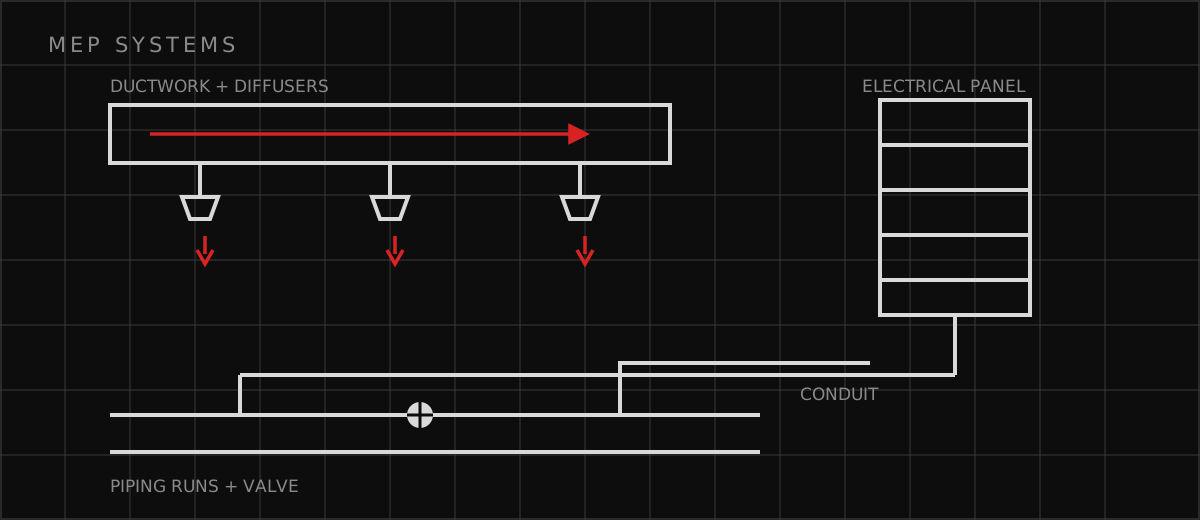
NFPA 33 sets the rules for spray application: construction of the booth, the ventilation rates, the electrical classification, and the separation from other operations. The engineer applies it to the aircraft scale — booths tens of feet tall and long enough for a fuselage — where the airflow pattern matters more than in any cabinet shop. Downdraft supply through a full-filtered ceiling with exhaust through floor trenches gives the most uniform sweep and the best finish quality, and the engineer details the pit and trench construction for drainage, cleaning, and filter access. Recirculation is restricted by NFPA 33 for good reason; where the design recirculates any air, it does so only within the standard's strict limits with continuous vapor monitoring. The booth's location within the hangar respects the required separations from ignition sources, fueling, and unprotected openings.
Classified Electrical, Interlocks, and Static Control
The area classification drawings define the classified zones in and around the booth, and every device inside them — exhaust fans, motors, luminaires, switches, sensors — carries the rating the classification demands. Exhaust fans are non-sparking construction with motors outside the airstream where the design allows; lighting is sealed and rated; wiring uses the methods the NEC requires for the location. The spray interlock is the life-safety heart of the controls: airflow-proving switches on the exhaust, hardwired to cut power to the spray equipment and electrostatic systems on low flow, with alarm annunciation. Static bonding ties the aircraft, booth structure, fluid handling, and painter together into one grounded system, because a static spark in a vapor-rich booth is the accident the entire standard is written to prevent. The engineer commissions the interlocks by actually failing the airflow and watching the system respond.
Aircraft Paint Booth Ventilation Design Checklist
Use this checklist before the paint booth design goes to plan check: • Booth designed to NFPA 33: construction, ventilation, classification, and separations all documented • Airflow pattern selected (downdraft preferred for aircraft) with exhaust covering the full floor footprint • Airflow rates proving required velocities through the working zone at loaded-filter pressure drop • Area classification drawings complete; all electrical equipment rated for the location • Hardwired spray interlocks on exhaust airflow proof, tested by simulated airflow failure • Static bonding and grounding of aircraft, booth, fluid systems, and personnel in the documents • Tempered, filtered makeup air sized for the full exhaust rate, with cure-cycle heating and controls • Staged intake and exhaust filtration with access for change-out; ductwork detailed for cleaning
Which related engineering resources can help?
What else do project teams ask?
Why do aircraft paint booths use downdraft airflow?
What happens if the exhaust fan fails during spraying?
How is static electricity controlled in a paint booth?
Does a paint booth need its own makeup air system?
Ready to discuss your engineering scope?
Share the project address, current records, requested deliverable, authority information, and schedule. Apex Grid confirms professional responsibility, availability, and scope before work begins.
Request a Project Review